High Protein Korean Beef Rice Bowls – Fast, Flavorful, and Satisfying
This is the kind of weeknight meal that checks every box: bold flavor, quick cook time, and plenty of protein to keep you full. Korean-style beef gets caramelized and saucy in minutes, then lands on a bed of hot rice with fresh toppings for crunch and brightness. You can scale it for meal prep or keep it simple for dinner tonight.
Stop wondering what's for dinner.
Get 7 healthy, family-friendly dinners complete with recipes and simple meal plans delivered straight to your inbox.
The ingredients are easy to find, and the technique is forgiving. If you like takeout vibes without the wait, this bowl is your friend.
Ingredients
Method
- Cook the rice. Start your preferred rice so it’s ready when the beef is done. Fluff and keep warm.
- Prep the sauce. In a small bowl, whisk soy sauce, brown sugar, gochujang, sesame oil, and rice vinegar. Taste and adjust sweetness or heat.
- Slice and chop toppings. Prep scallions, cucumber, carrot, and kimchi. Keep them separate so each bite gets texture and freshness.
- Brown the beef. Heat neutral oil in a large skillet over medium-high. Add ground beef, break it up, and season lightly with salt and pepper. Let it sit briefly to brown, then continue cooking until most moisture evaporates and edges begin to crisp.
- Add aromatics. Stir in garlic, ginger, and the white parts of the scallions. Cook 30–60 seconds until fragrant.
- Sauce it up. Pour in the prepared sauce. Toss to coat and let it bubble for 1–2 minutes until glossy and slightly thickened.
- Fry or boil the eggs (optional). For fried eggs, cook in a nonstick pan with a touch of oil until edges are lacy and yolk is still runny. For soft-boiled, simmer 6–7 minutes, then peel.
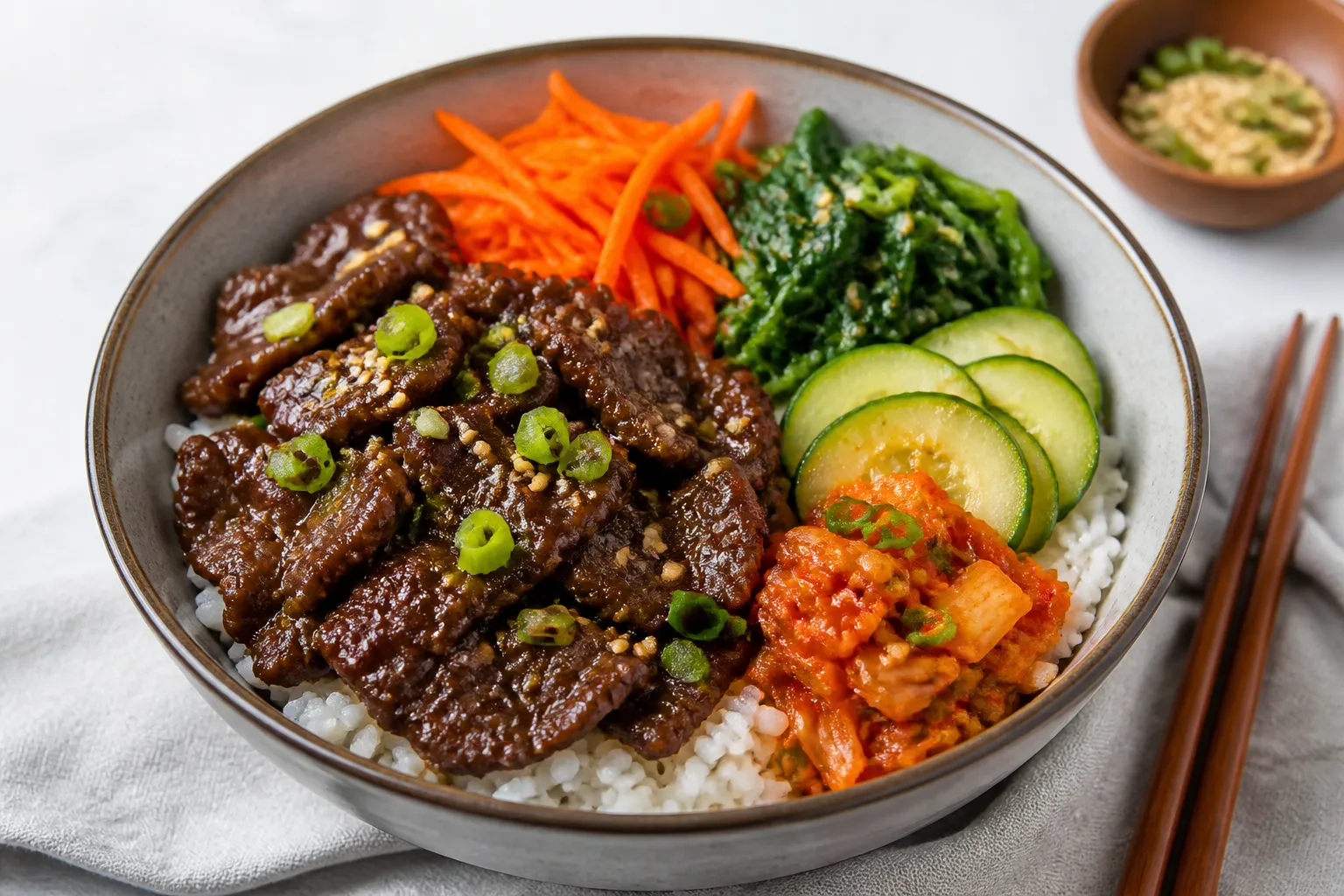
- Assemble the bowls. Add rice to bowls, top with saucy beef, cucumber, carrot, kimchi, and green parts of the scallions. Add egg if using. Sprinkle with sesame seeds.
- Finish and serve. Taste and add a splash of soy sauce or a squeeze of lime if you want extra brightness. Serve hot.
Why This Recipe Works
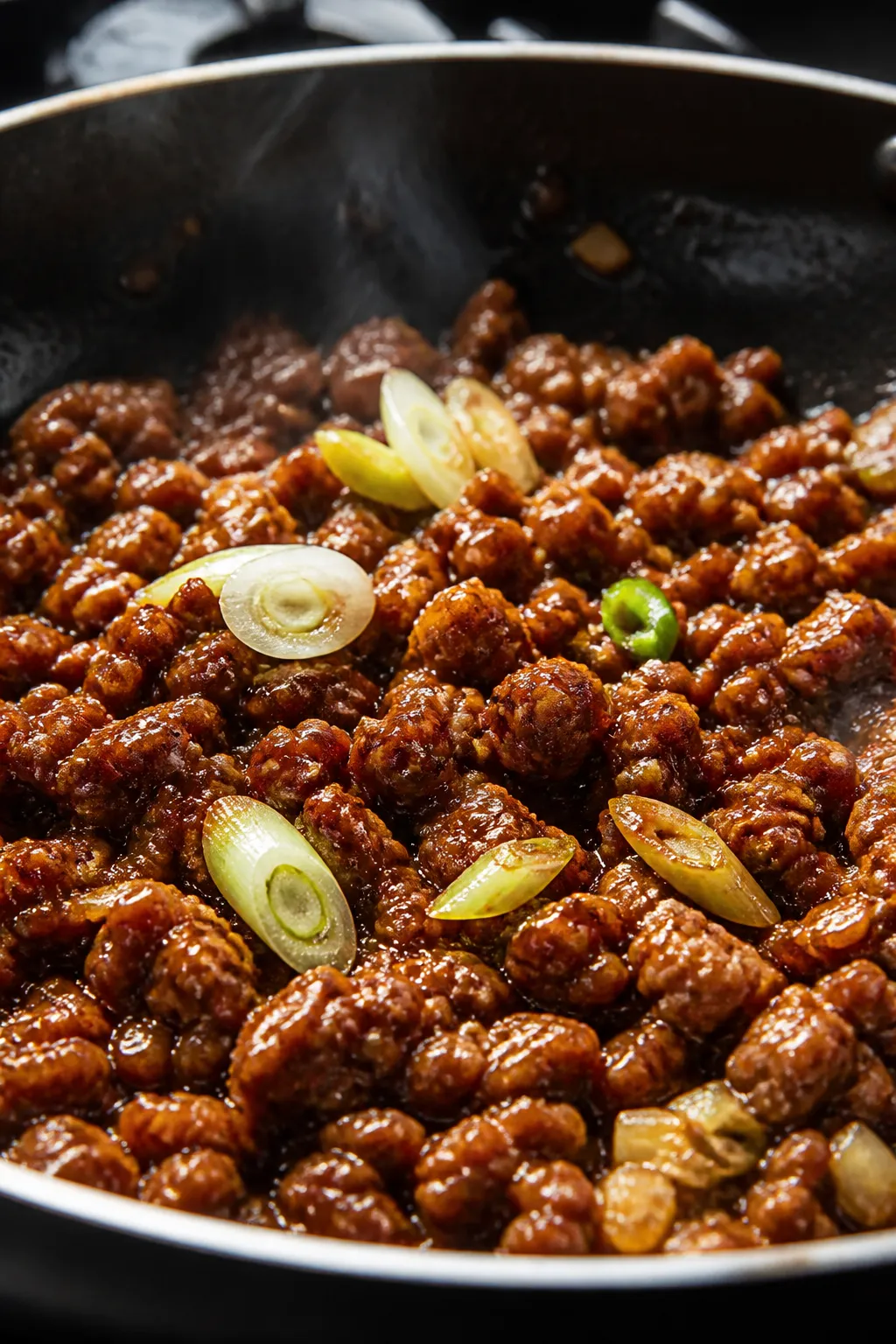
Ground beef cooks fast and takes on seasoning beautifully, which means big flavor with minimal effort. A mix of soy sauce, garlic, ginger, and a touch of sweetness creates that classic Korean-inspired balance of savory, sweet, and salty.
Cooking the beef until it gets slightly crispy at the edges builds texture and caramelization. Fresh toppings like cucumber, scallions, and kimchi add crunch and acidity, which keeps the bowl from feeling heavy. With rice and veggies, the meal feels complete—and it’s easy to make it your own.
What You’ll Need
- Lean ground beef (90–93% lean): About 1 pound for 4 servings.
- Cooked rice: White jasmine, sushi rice, or brown rice.
About 4 cups cooked.
- Soy sauce or tamari: 1/4 cup for umami and salt.
- Dark brown sugar or honey: 1–2 tablespoons to balance savory notes.
- Garlic: 4 cloves, minced.
- Fresh ginger: 1 tablespoon, grated.
- Gochujang (Korean chili paste): 1–2 tablespoons for heat and depth. Adjust to taste.
- Sesame oil: 1 teaspoon for nuttiness.
- Rice vinegar or lime juice: 1 tablespoon for brightness.
- Neutral oil: 1 tablespoon (avocado, canola, or grapeseed) for sautéing.
- Scallions: 4, sliced (white and green parts separated).
- English cucumber: 1 small, thinly sliced or julienned.
- Carrot: 1 medium, grated or matchsticked.
- Kimchi: 1 cup, chopped (optional but great).
- Sesame seeds: 1 tablespoon for garnish.
- Eggs: 4, fried or jammy soft-boiled for extra protein (optional but recommended).
- Salt and black pepper: To taste.
Step-by-Step Instructions
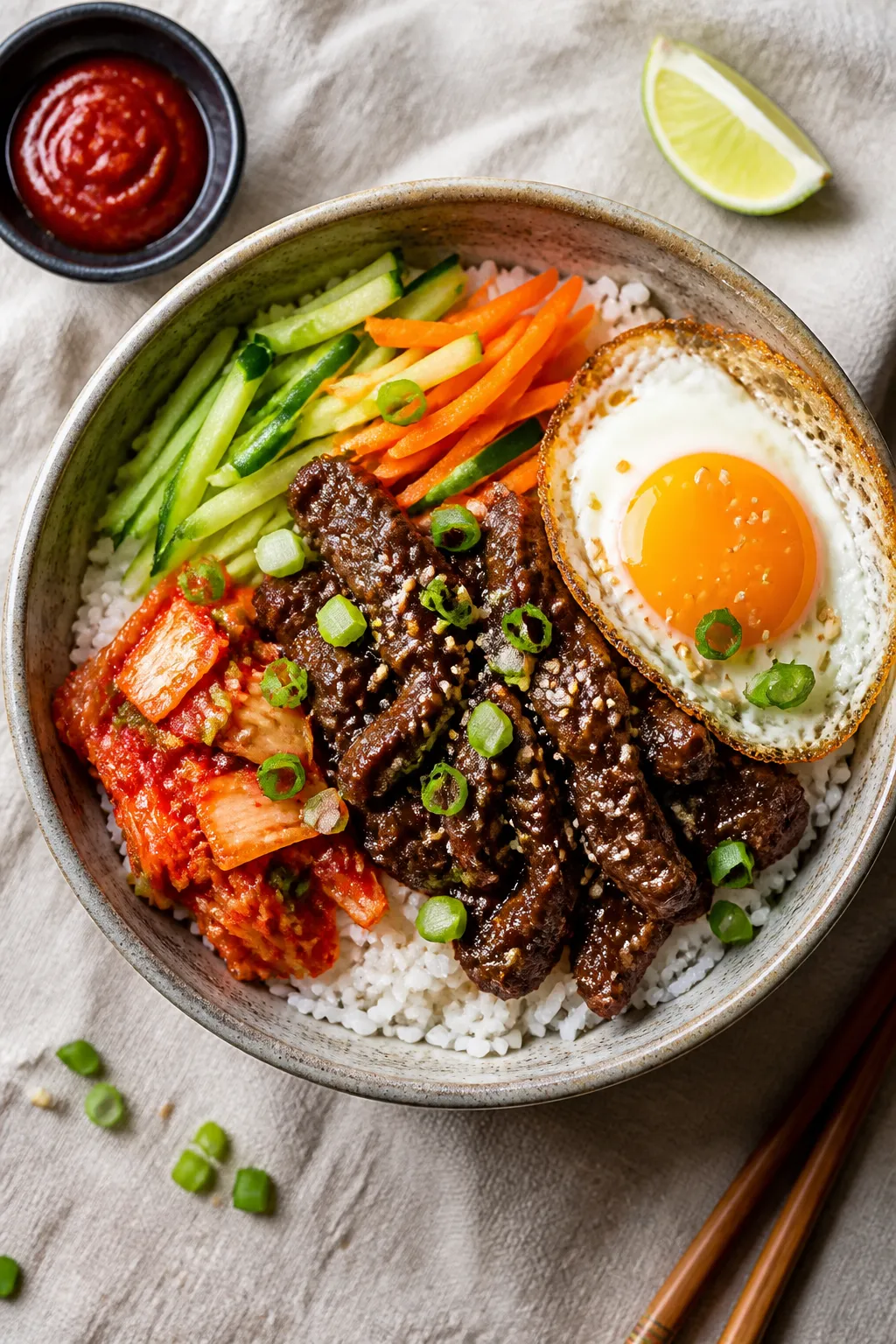
- Cook the rice. Start your preferred rice so it’s ready when the beef is done. Fluff and keep warm.
- Prep the sauce. In a small bowl, whisk soy sauce, brown sugar, gochujang, sesame oil, and rice vinegar.
Taste and adjust sweetness or heat.
- Slice and chop toppings. Prep scallions, cucumber, carrot, and kimchi. Keep them separate so each bite gets texture and freshness.
- Brown the beef. Heat neutral oil in a large skillet over medium-high. Add ground beef, break it up, and season lightly with salt and pepper.
Let it sit briefly to brown, then continue cooking until most moisture evaporates and edges begin to crisp.
- Add aromatics. Stir in garlic, ginger, and the white parts of the scallions. Cook 30–60 seconds until fragrant.
- Sauce it up. Pour in the prepared sauce. Toss to coat and let it bubble for 1–2 minutes until glossy and slightly thickened.
- Fry or boil the eggs (optional). For fried eggs, cook in a nonstick pan with a touch of oil until edges are lacy and yolk is still runny.
For soft-boiled, simmer 6–7 minutes, then peel.
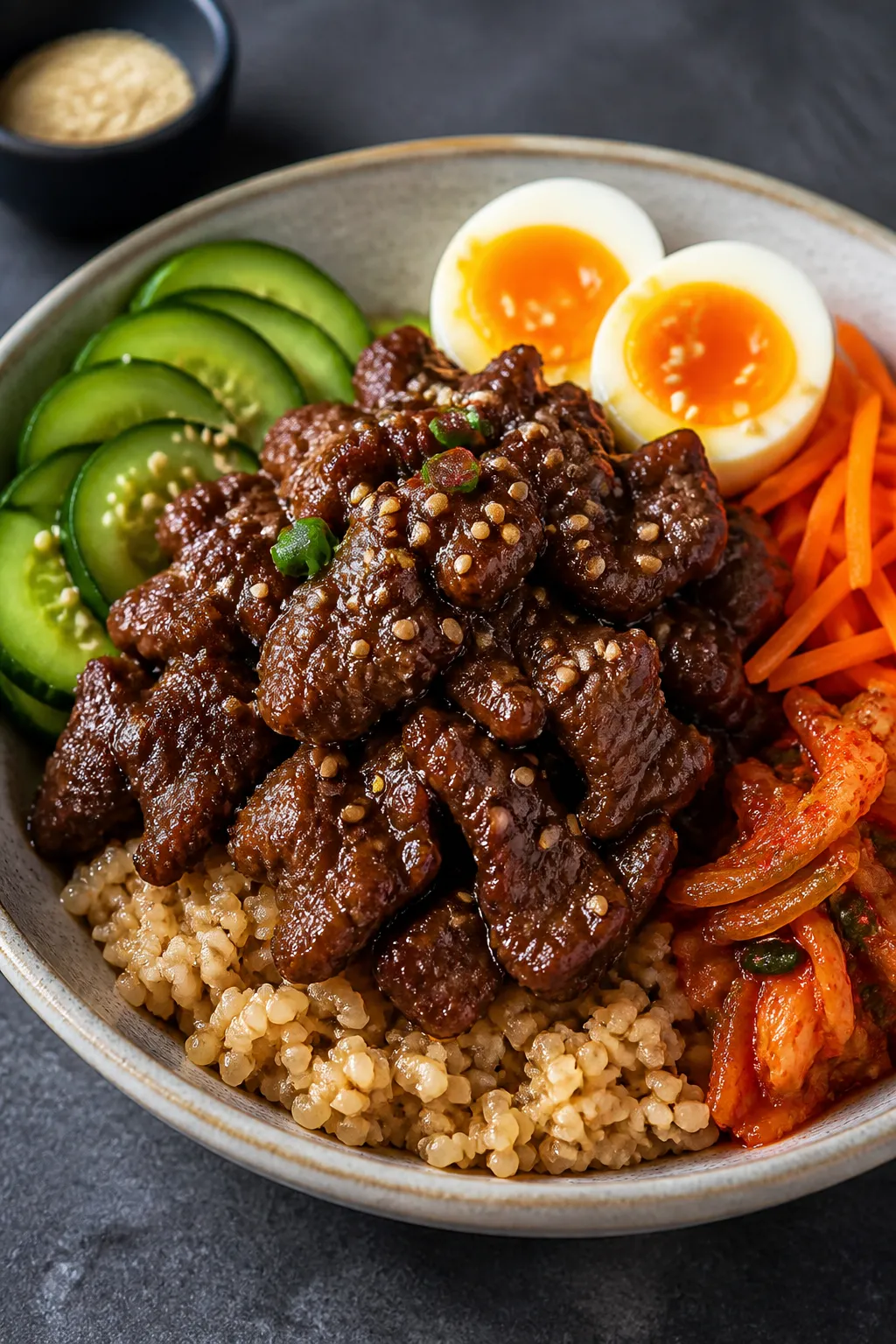
- Assemble the bowls. Add rice to bowls, top with saucy beef, cucumber, carrot, kimchi, and green parts of the scallions. Add egg if using. Sprinkle with sesame seeds.
- Finish and serve. Taste and add a splash of soy sauce or a squeeze of lime if you want extra brightness.
Serve hot.
Storage Instructions
- Beef and rice: Store separately in airtight containers in the fridge for up to 4 days.
- Toppings: Keep cucumbers and carrots in a separate container lined with a paper towel to stay crisp. Kimchi can be stored in its own jar.
- Reheating: Reheat beef and rice gently in the microwave or on the stovetop with a splash of water. Add fresh toppings after reheating.
- Freezing: The cooked beef freezes well for up to 2 months.
Thaw overnight in the fridge and reheat before serving.
Benefits of This Recipe
- High in protein: Lean ground beef and optional eggs deliver a satisfying protein boost to support recovery and fullness.
- Balanced bowl: Carbs from rice, fiber from veggies, and healthy fats from sesame make a complete meal.
- Weeknight friendly: From fridge to table in about 25 minutes, with simple steps and minimal cleanup.
- Customizable heat: Gochujang lets you control spice without losing flavor.
- Great for meal prep: Scales easily and reheats well, especially if you keep toppings fresh.
Common Mistakes to Avoid
- Overcrowding the pan: If the beef steams instead of browns, you’ll miss out on caramelization. Use a large skillet or cook in two batches.
- Skipping aromatics: Garlic and ginger deliver essential flavor. Don’t rush this step.
- Too much sauce too soon: Add the sauce after the beef browns so it reduces and clings, not pools.
- Soggy toppings: Add cucumbers and carrots at the end.
Don’t microwave them with the beef or rice.
- Unseasoned rice: A pinch of salt or a drizzle of sesame oil in the rice goes a long way toward better overall flavor.
Recipe Variations
- Extra-lean and higher protein: Use 96% lean beef or swap half the beef for ground turkey. Add an extra egg white per bowl.
- Lower carb: Serve over cauliflower rice or shredded cabbage sautéed with garlic.
- Bulgogi-style twist: Add grated pear or apple (1–2 tablespoons) to the sauce for gentle sweetness and tenderness.
- Veggie-loaded: Stir-fry mushrooms, bell peppers, or zucchini with the beef for more volume and fiber.
- Gluten-free: Use tamari or coconut aminos instead of soy sauce, and confirm your gochujang is gluten-free.
- Spice swap: If you don’t have gochujang, use a mix of chili-garlic sauce and a touch of miso or soy to mimic depth.
- Crispy rice base: Press cooked rice in a hot oiled pan until the bottom crisps for extra texture.
FAQ
Can I make this without gochujang?
Never wonder what's for dinner again.
Get 7 healthy, family-friendly dinners complete with recipes, grocery lists, and simple meal plans delivered straight to your inbox.
Yes. Use 1–2 teaspoons chili-garlic sauce or sriracha plus 1 teaspoon miso or an extra splash of soy for umami.
It won’t be the same flavor profile, but it will still be delicious and balanced.
What type of rice works best?
Jasmine or short-grain white rice gives the best texture and chew. Brown rice is a great higher-fiber option. If you’re short on time, microwaveable rice pouches work well too.
How do I keep the beef tender?
Don’t overcook it after adding the sauce.
Brown first, then simmer briefly with the sauce until just glossy. If using lean beef, avoid high heat for too long once liquid is added.
Is this spicy?
It’s mildly spicy if you use 1 tablespoon of gochujang. For less heat, start with 1 teaspoon.
For more heat, add more gochujang or a pinch of red pepper flakes.
Can I meal prep this for the week?
Absolutely. Portion rice and beef into containers, keep fresh toppings separate, and add them right before eating. The beef and rice reheat well for up to 4 days.
What vegetables pair well with this?
Cucumbers, carrots, shredded cabbage, bean sprouts, sautéed spinach, and mushrooms all fit.
Pick a mix of crisp and cooked for the best texture contrast.
How do I make it dairy-free?
It’s naturally dairy-free as written. Just confirm any store-bought gochujang or kimchi aligns with your dietary needs.
Can I use leftover steak instead of ground beef?
Yes. Thinly slice leftover steak and quickly sauté it with the sauce until warmed through.
Don’t cook it too long or it can turn tough.
Final Thoughts
High Protein Korean Beef Rice Bowls are fast, flavorful, and flexible. With a short ingredient list and a simple method, you get a complete meal that tastes like it took much longer. Make it spicy or mild, load it with crunchy vegetables, and top it with an egg for extra protein.
Once you try it, you’ll keep it in your weekly rotation. It’s the kind of dinner that satisfies without slowing you down.
Printable Recipe Card
Want just the essential recipe details without scrolling through the article? Get our printable recipe card with just the ingredients and instructions.
Loved This Recipe?
If you're looking for more simple, healthy dinners your family will actually eat, grab my FREE 7-Day Easy Dinner Reset. You'll get 7 easy dinner recipes, simple grocery lists, and a done-for-you plan that takes the stress out of mealtime.