Protein Packed Shrimp Lo Mein – A Fast, Flavorful Weeknight Dinner
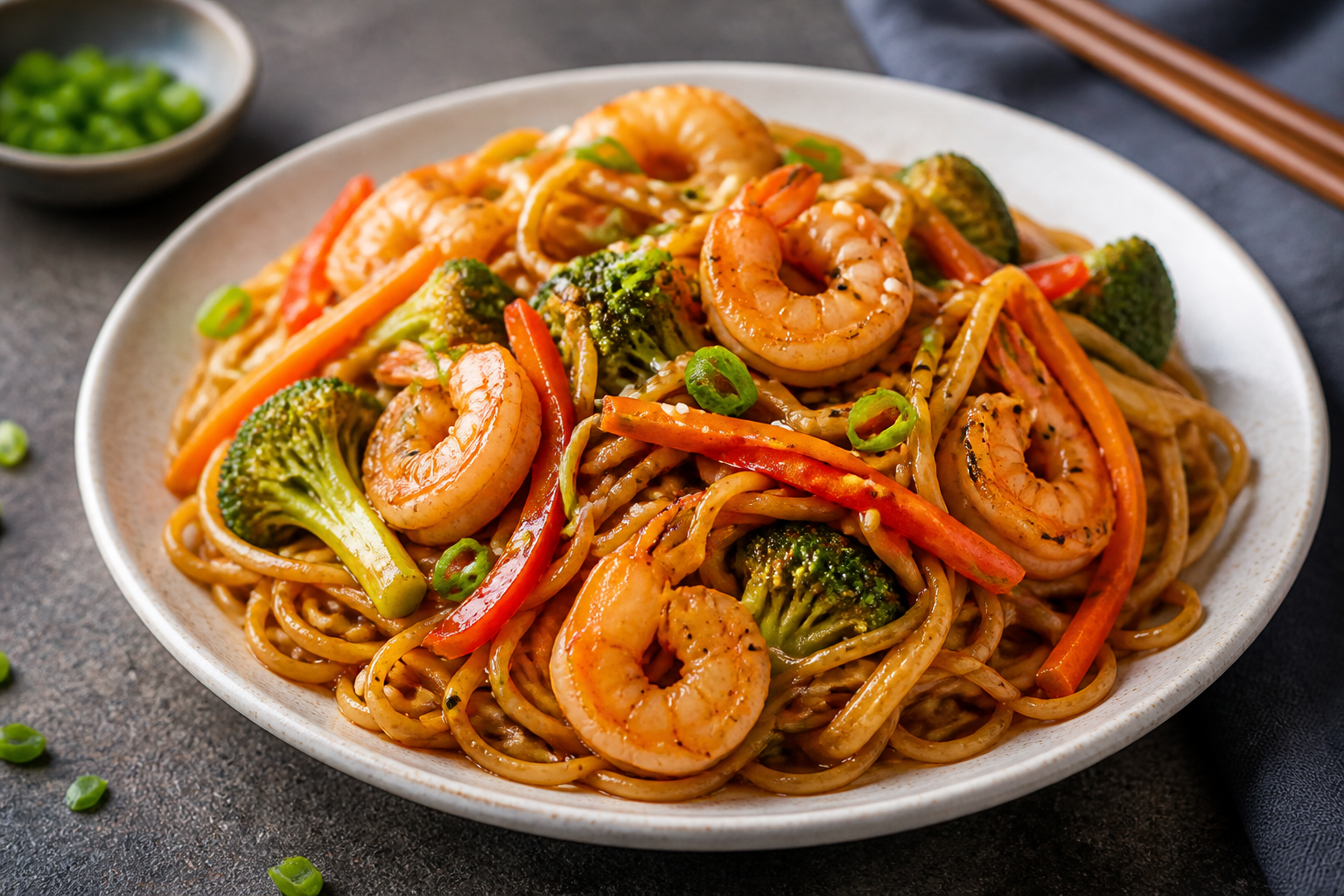
Shrimp lo mein checks all the boxes: fast, flavorful, and satisfying without weighing you down. This version leans into lean protein, crisp veggies, and a glossy sauce that clings to every noodle. It’s the kind of meal you can make after work and still feel like you treated yourself.
Stop wondering what's for dinner.
Get 7 healthy, family-friendly dinners complete with recipes and simple meal plans delivered straight to your inbox.
The flavors are familiar—savory, a little sweet, and gently garlicky—yet bright and fresh. If you’re looking for a simple stir-fry that tastes like takeout but feels better, this is it.
Ingredients
Method
- Mix the sauce. In a small bowl, whisk soy sauce, oyster sauce, hoisin, sesame oil, rice vinegar, chili-garlic sauce, cornstarch, and honey until smooth. Set aside. The cornstarch gives the sauce a light, glossy cling without turning it heavy.
- Prep the shrimp. Pat shrimp dry and season lightly with salt and pepper. Dry shrimp sear better and cook more evenly.
- Boil the noodles. Cook lo mein noodles according to package directions until just shy of al dente. Drain, rinse briefly under cool water to stop cooking, and toss with a teaspoon of oil to prevent sticking.
- Heat the pan. Set a large skillet or wok over medium-high heat. Add 1 tablespoon oil and let it shimmer. A hot pan means quick cooking and bright vegetables.
- Cook the shrimp. Add shrimp in a single layer. Sear 1–2 minutes per side until just pink and curled. Remove to a plate. Don’t overcook—they’ll finish in the sauce later.
- Stir-fry the aromatics. Add the remaining 1 tablespoon oil. Toss in garlic, ginger, and the white parts of the green onions. Stir 30 seconds until fragrant.
- Add the vegetables. Stir in cabbage, bell pepper, carrot, and snap peas. Cook 2–3 minutes, tossing often. You want a tender-crisp bite, not limp veggies.
- Combine noodles and sauce. Add noodles to the pan and pour the sauce over. Toss with tongs for 1–2 minutes until the noodles soak up the sauce and everything looks glossy.
- Return the shrimp. Add shrimp and the green parts of the onions. Toss just to heat through, 30–60 seconds. Taste and adjust with a splash of soy sauce or a squeeze of lime if needed.
- Finish and serve. Sprinkle with sesame seeds. Serve hot, with extra chili sauce or lime on the side.
What Makes This Special
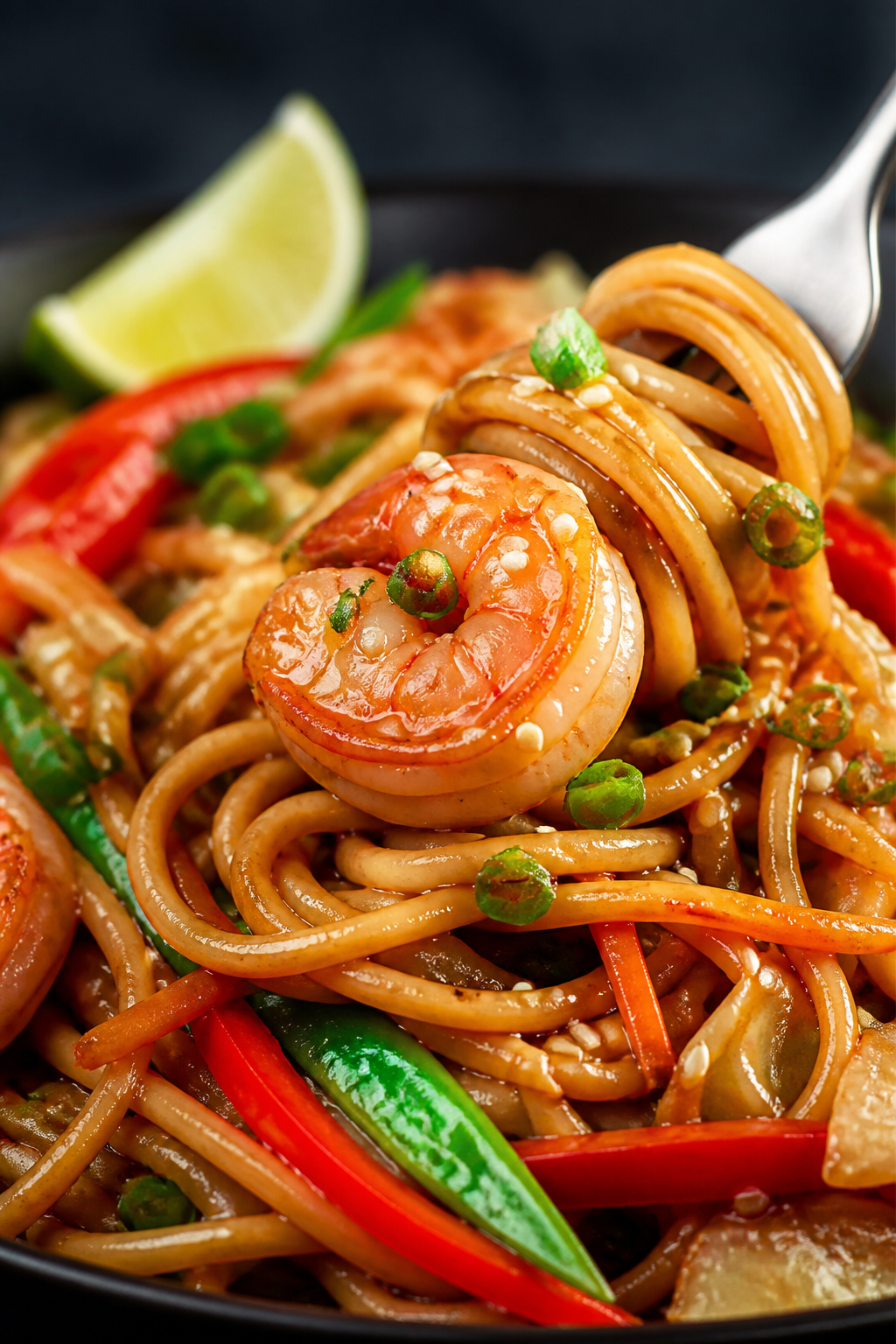
This recipe puts protein front and center with juicy shrimp and a sauce balanced to highlight—not drown—them. You’ll get a mix of fiber-rich vegetables for crunch and color, and springy noodles that soak up every drop of flavor.
The steps are straightforward, and everything cooks in minutes once the prep is done. It’s flexible, too: swap veggies, tweak the heat, and adjust the sauce to your taste without losing the soul of the dish.
Shopping List
- Shrimp: 1 pound large shrimp, peeled and deveined (tail on or off)
- Lo mein noodles: 12 ounces fresh or dried (or spaghetti if needed)
- Vegetables:
- 1 cup shredded green cabbage (or coleslaw mix)
- 1 red bell pepper, thinly sliced
- 1 medium carrot, julienned
- 1 cup sugar snap peas or snow peas, trimmed
- 4 green onions, sliced (whites and greens separated)
- 3 cloves garlic, minced
- 1 tablespoon fresh ginger, grated
- Sauce:
- 3 tablespoons low-sodium soy sauce (or tamari)
- 1 tablespoon oyster sauce (adds depth)
- 1 tablespoon hoisin sauce (for a touch of sweetness)
- 1 tablespoon toasted sesame oil
- 1 tablespoon rice vinegar
- 1 teaspoon chili-garlic sauce or sriracha (optional for heat)
- 1 teaspoon cornstarch (for light thickening)
- 2 teaspoons honey or brown sugar (to balance salt and acid)
- Cooking oil: 2 tablespoons neutral oil (canola, avocado, or peanut)
- Garnishes: Sesame seeds and lime wedges (optional)
How to Make It
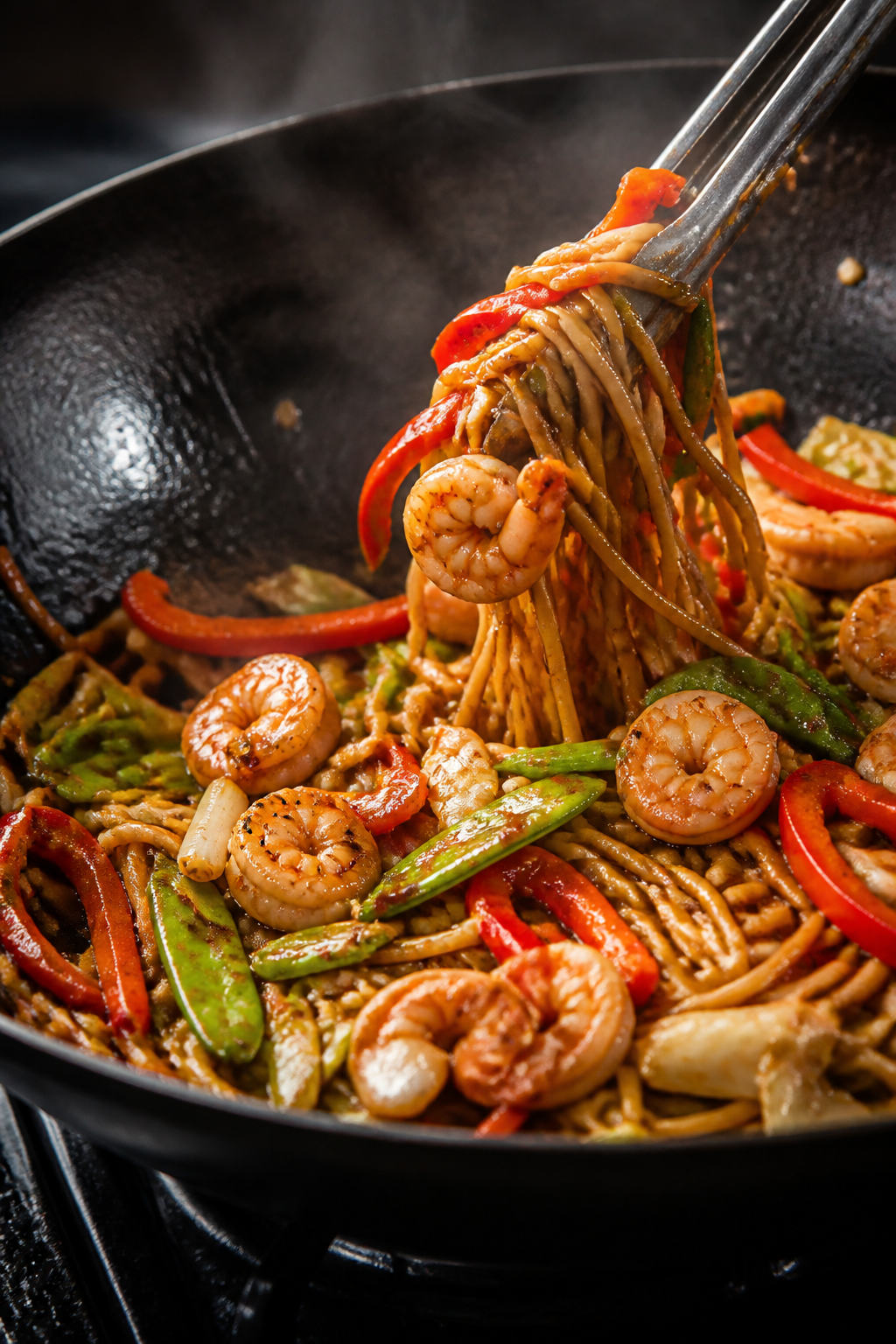
- Mix the sauce. In a small bowl, whisk soy sauce, oyster sauce, hoisin, sesame oil, rice vinegar, chili-garlic sauce, cornstarch, and honey until smooth. Set aside.
The cornstarch gives the sauce a light, glossy cling without turning it heavy.
- Prep the shrimp. Pat shrimp dry and season lightly with salt and pepper. Dry shrimp sear better and cook more evenly.
- Boil the noodles. Cook lo mein noodles according to package directions until just shy of al dente. Drain, rinse briefly under cool water to stop cooking, and toss with a teaspoon of oil to prevent sticking.
- Heat the pan. Set a large skillet or wok over medium-high heat.
Add 1 tablespoon oil and let it shimmer. A hot pan means quick cooking and bright vegetables.
- Cook the shrimp. Add shrimp in a single layer. Sear 1–2 minutes per side until just pink and curled.
Remove to a plate. Don’t overcook—they’ll finish in the sauce later.
- Stir-fry the aromatics. Add the remaining 1 tablespoon oil. Toss in garlic, ginger, and the white parts of the green onions.
Stir 30 seconds until fragrant.
- Add the vegetables. Stir in cabbage, bell pepper, carrot, and snap peas. Cook 2–3 minutes, tossing often. You want a tender-crisp bite, not limp veggies.
- Combine noodles and sauce. Add noodles to the pan and pour the sauce over.
Toss with tongs for 1–2 minutes until the noodles soak up the sauce and everything looks glossy.
- Return the shrimp. Add shrimp and the green parts of the onions. Toss just to heat through, 30–60 seconds. Taste and adjust with a splash of soy sauce or a squeeze of lime if needed.
- Finish and serve. Sprinkle with sesame seeds.
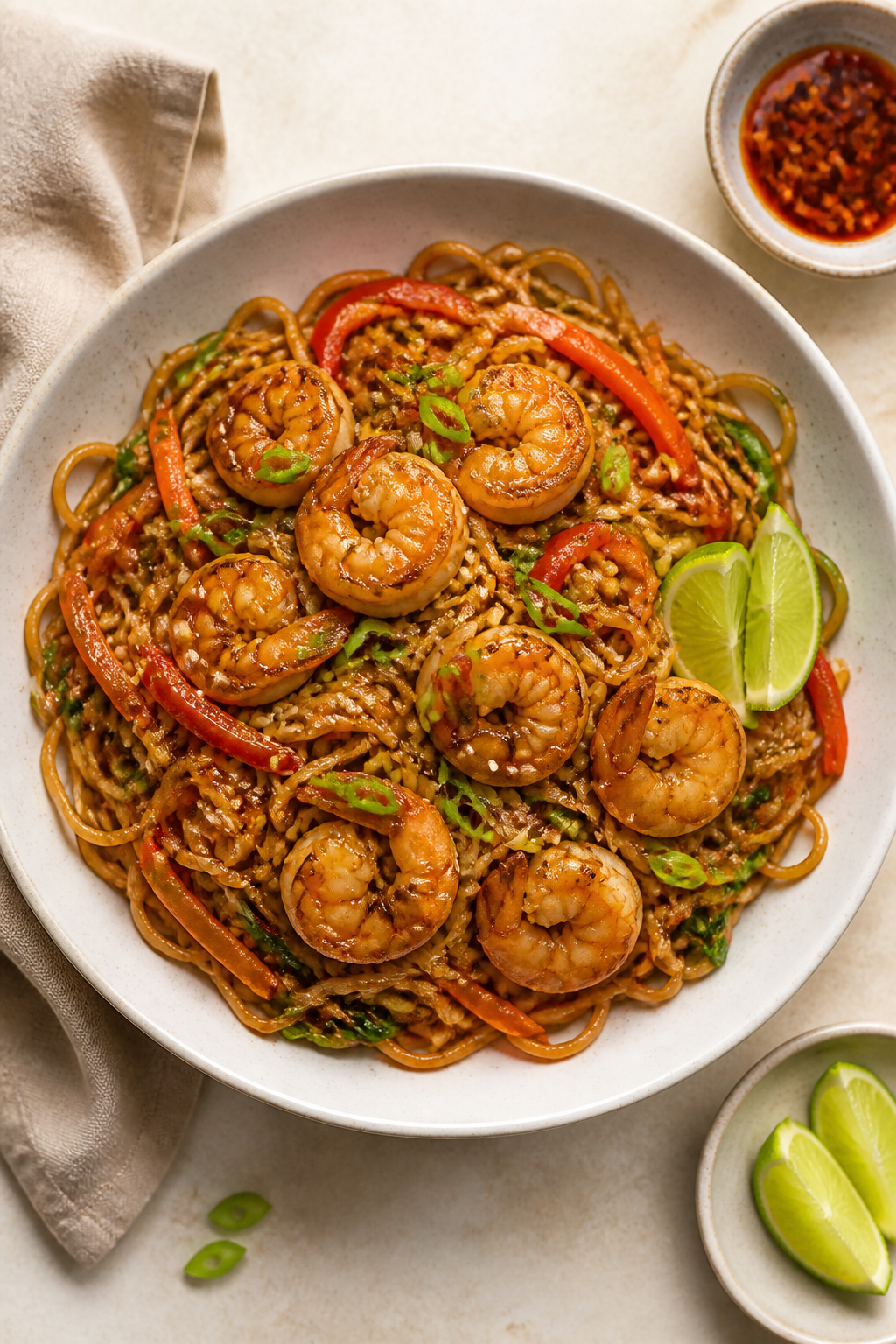
Serve hot, with extra chili sauce or lime on the side.
Storage Instructions
Let leftovers cool until just warm, then pack into an airtight container. Refrigerate for up to 3 days. Reheat in a skillet over medium heat with a splash of water to loosen the sauce, stirring gently until hot.
You can microwave in short bursts, but a skillet helps keep the noodles from drying out. This dish doesn’t freeze well, as the noodles can turn mushy and the shrimp can toughen.
Why This is Good for You
- High-quality protein: Shrimp delivers lean protein that supports muscle repair and helps keep you full.
- Colorful vegetables: Bell peppers, carrots, cabbage, and peas add fiber, vitamins A and C, and antioxidants.
- Smart sodium choices: Using low-sodium soy sauce and balancing flavors with vinegar and a touch of sweetness keeps salt in check without losing taste.
- Better fats: Toasted sesame oil adds flavor in small amounts, so you use less overall fat without sacrificing richness.
What Not to Do
- Don’t overcook the shrimp. They turn rubbery fast. Pull them as soon as they’re pink and slightly curled.
- Don’t crowd the pan. Overloading drops the temperature and leads to steaming instead of searing.
- Don’t skip drying the shrimp and rinsing the noodles briefly. These small steps prevent soggy textures.
- Don’t dump the sauce in too early. Wait until the veggies are tender-crisp and noodles are in the pan for the right consistency.
- Don’t rely only on salt. Balance is key.
Taste at the end and tweak with vinegar, lime, or heat.
Variations You Can Try
- Extra protein: Add scrambled egg ribbons or toss in edamame for even more protein per serving.
- Low-carb swap: Use shirataki or zucchini noodles. Keep in mind you’ll have a lighter, brothier sauce cling—reduce the sauce by a tablespoon or two of liquid.
- Different noodles: Chow mein, udon, or whole-wheat spaghetti all work. Adjust cooking time and sauce to taste.
- Spicy garlic: Bloom a teaspoon of chili flakes or add more chili-garlic sauce for a kick.
- Sauce tweak: For a deeper savory note, add 1 teaspoon fish sauce.
For a citrus pop, finish with orange zest.
- Veggie swap: Broccoli florets, baby bok choy, or mushrooms are great. Keep total veggie volume similar so the sauce ratio works.
- Gluten-free: Use tamari instead of soy sauce and gluten-free noodles like rice noodles; watch the cook time closely.
Never wonder what's for dinner again.
Get 7 healthy, family-friendly dinners complete with recipes, grocery lists, and simple meal plans delivered straight to your inbox.
FAQ
Can I use frozen shrimp?
Yes. Thaw them overnight in the fridge or quickly under cold running water.
Pat very dry before cooking to get a good sear and avoid excess moisture in the pan.
What can I use instead of oyster sauce?
Use an extra tablespoon of soy sauce plus 1/2 teaspoon fish sauce for depth. If you need a shellfish-free option, try a vegetarian oyster-style sauce made from mushrooms.
Do I have to rinse the noodles?
A brief rinse stops the cooking and washes away extra starch so they don’t clump. Toss with a bit of oil after rinsing to keep them separate.
How do I prevent soggy veggies?
Use high heat, preheat your pan, and keep the vegetables moving.
Cut them into similar sizes so they cook evenly, and pull them while they still have some snap.
Can I make this ahead?
It’s best fresh, but you can prep everything: mix the sauce, slice vegetables, and peel shrimp. Cook the noodles just before stir-frying, or cook and chill them with a touch of oil, then reheat quickly in the pan.
What if my sauce is too salty?
Balance with a splash of rice vinegar or a squeeze of lime and a touch more honey. Adding extra vegetables or noodles can also spread out the saltiness.
Is there a good vegetarian version?
Absolutely.
Swap shrimp for extra-firm tofu or tempeh. Press tofu to remove moisture, sear until golden, and use a mushroom-based oyster-style sauce for depth.
Can I use pre-cooked shrimp?
You can, but add them at the very end and warm briefly to avoid rubbery texture. Since they won’t sear, boost flavor with a little extra garlic and ginger.
Wrapping Up
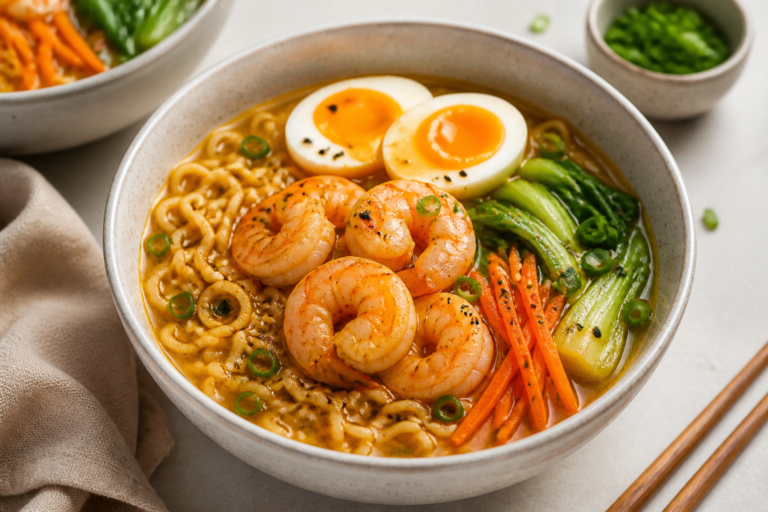
Protein Packed Shrimp Lo Mein is a quick, reliable dinner that feels special without extra work.
It’s balanced, flexible, and built on simple steps that deliver great texture and big flavor. Keep the pan hot, the shrimp tender, and the sauce balanced, and you’ll have a weeknight staple worth repeating. Serve it hot, share generously, and enjoy the kind of meal that turns a regular night into something a little brighter.
Printable Recipe Card
Want just the essential recipe details without scrolling through the article? Get our printable recipe card with just the ingredients and instructions.
Loved This Recipe?
If you're looking for more simple, healthy dinners your family will actually eat, grab my FREE 7-Day Easy Dinner Reset. You'll get 7 easy dinner recipes, simple grocery lists, and a done-for-you plan that takes the stress out of mealtime.