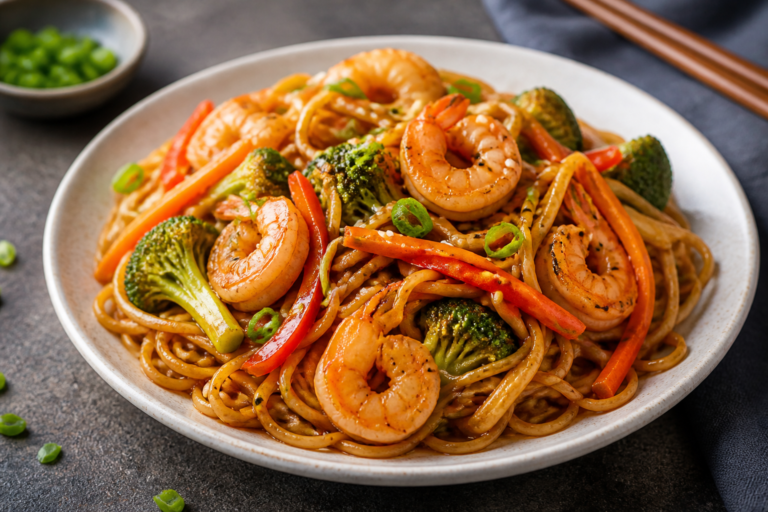
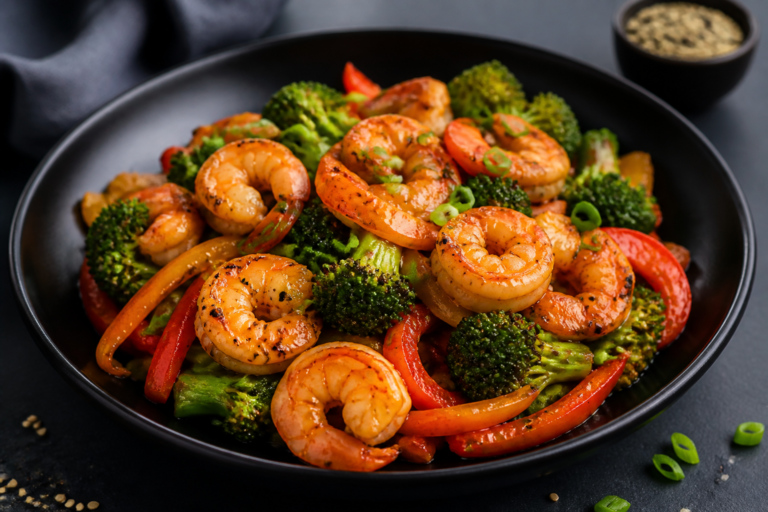
High Protein Shrimp & Veggie Stir Fry – Quick, Fresh, and Satisfying
This stir fry is a weeknight hero: fast to make, big on flavor, and packed with protein. Juicy shrimp cook in minutes, and the colorful vegetables stay crisp-tender for a fresh bite. The sauce is simple and balanced—savory, a little sweet, and just enough heat if you want it.
Stop wondering what's for dinner.
Get 7 healthy, family-friendly dinners complete with recipes and simple meal plans delivered straight to your inbox.
It’s the kind of dish that makes you feel good after you eat, without extra fuss or complicated steps.
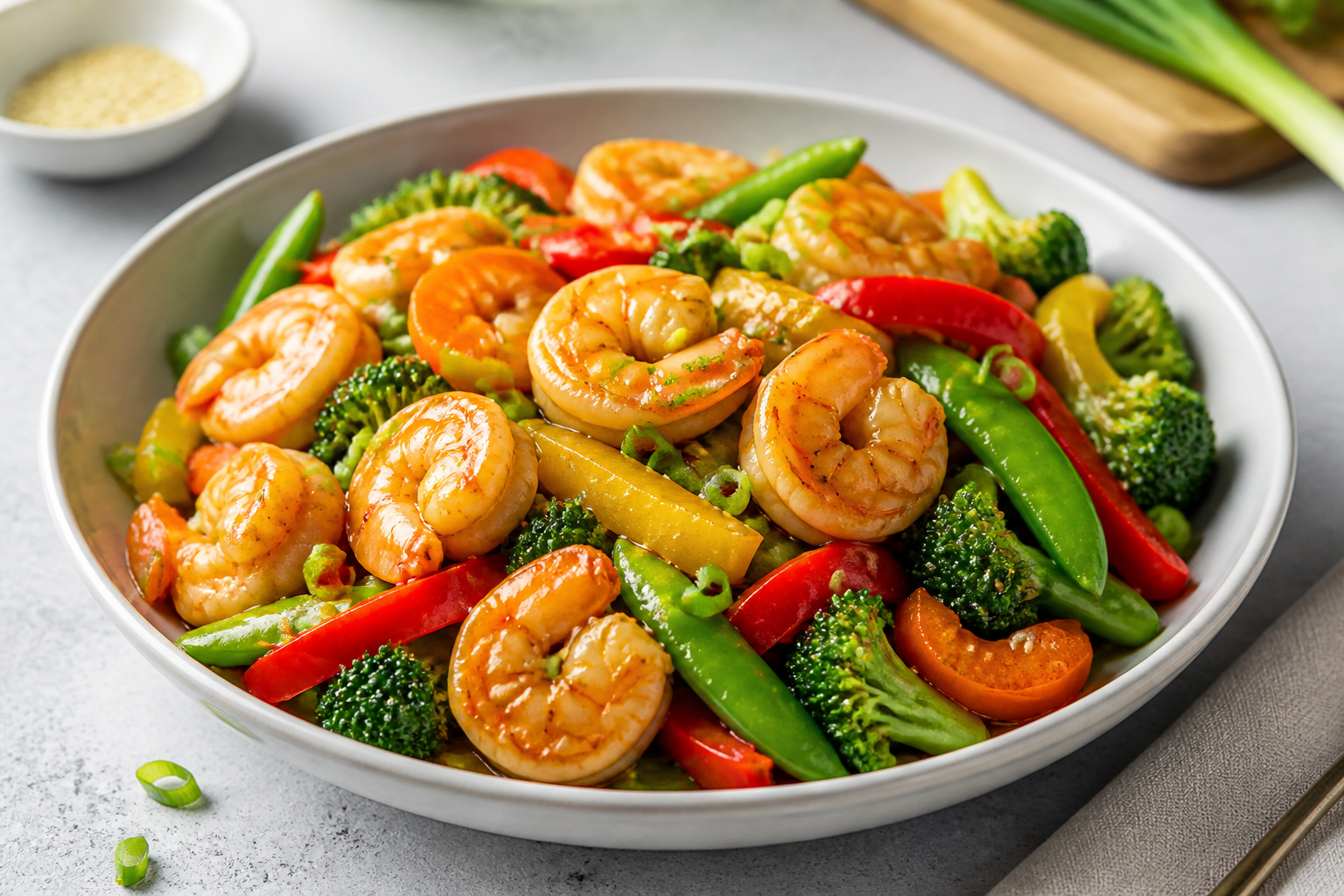
Ingredients
Method
- Prep the shrimp. Pat the shrimp dry with paper towels. Season lightly with salt and pepper. Dry shrimp sear better and don’t steam.
- Make the sauce. In a small bowl, whisk soy sauce, oyster sauce, rice vinegar, honey, sesame oil, red pepper flakes (if using), broth, and cornstarch until smooth. Set aside.
- Heat the pan. Place a large skillet or wok over medium-high heat. Add 1 tablespoon oil and let it shimmer.
- Sear the shrimp. Add shrimp in a single layer. Cook 1 to 2 minutes per side until just pink and starting to curl. Transfer to a plate. They will finish in the sauce later; don’t overcook.
- Cook the hard veggies. Add another drizzle of oil if needed. Toss in broccoli and carrots with a pinch of salt. Stir-fry 2 to 3 minutes until they start to brighten and soften.
- Add the quick-cook veggies. Add bell peppers, onion (or scallions), and snap peas. Stir-fry 2 to 3 minutes until crisp-tender.
- Stir in aromatics. Push veggies to the sides. Add garlic and ginger to the center. Cook 30 seconds until fragrant, then mix through the veggies.
- Pour in the sauce. Whisk the sauce again (cornstarch settles), then pour over the veggies. Stir continuously 1 to 2 minutes until glossy and slightly thickened.
- Finish with shrimp. Return shrimp and any juices to the pan. Toss to coat and warm through for 30 to 60 seconds. Taste and adjust salt, pepper, or heat.
- Serve. Spoon over rice, cauliflower rice, or noodles. Garnish with sesame seeds, scallions, and a squeeze of lime if you like.
What Makes This Special
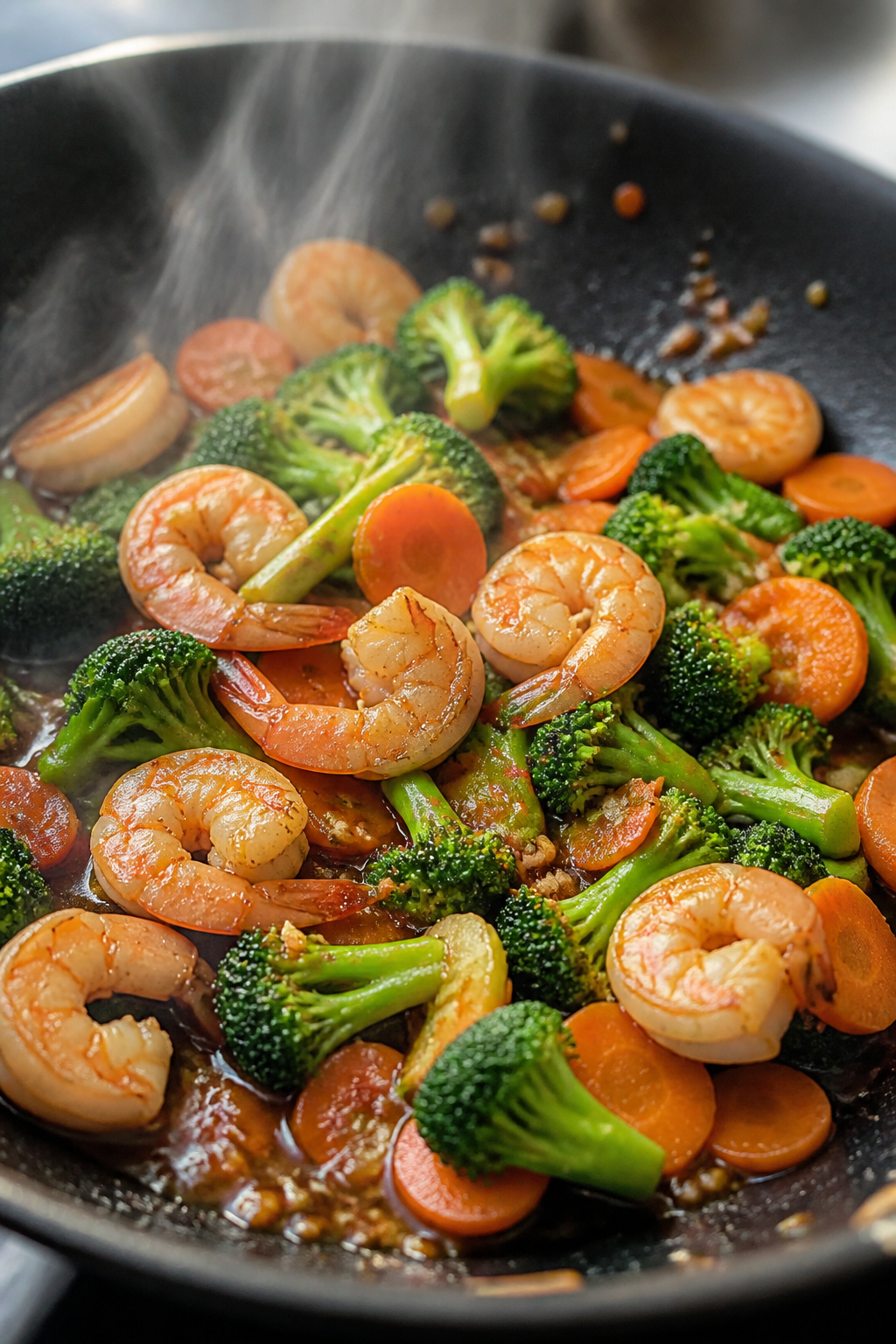
This recipe brings together lean protein, vibrant veggies, and a sauce that clings just right. Shrimp are naturally high in protein and cook quickly, which makes this perfect for busy nights. You don’t need a wok, and you can swap in whatever vegetables you have on hand.
It’s also customizable—go low-carb by serving over cauliflower rice, or keep it classic with jasmine rice or noodles. Most of all, it tastes like takeout but feels cleaner and fresher.
Ingredients
- Shrimp: 1 to 1.25 pounds large shrimp, peeled and deveined (tails on or off)
- Vegetables:
- 1 red bell pepper, sliced
- 1 yellow bell pepper, sliced
- 2 cups broccoli florets
- 1 medium carrot, thinly sliced
- 1 small red onion, sliced (or 4 scallions, chopped)
- 1 cup snap peas or snow peas
- 3 cloves garlic, minced
- 1 tablespoon fresh ginger, minced or grated
- For the Sauce:
- 1/3 cup low-sodium soy sauce or tamari
- 2 tablespoons oyster sauce (or hoisin for sweeter flavor)
- 1 tablespoon rice vinegar or lime juice
- 1 tablespoon honey or maple syrup
- 1 to 2 teaspoons toasted sesame oil
- 1/2 teaspoon crushed red pepper flakes or 1 teaspoon sriracha (optional)
- 1/2 cup low-sodium chicken or vegetable broth
- 2 teaspoons cornstarch (for thickening)
- For Cooking:
- 1 to 2 tablespoons neutral oil (avocado, canola, or grapeseed)
- Salt and black pepper, to taste
- To Serve:
- Cooked rice, cauliflower rice, or noodles
- Sesame seeds and chopped scallions for garnish (optional)
- Lime wedges (optional)
Instructions
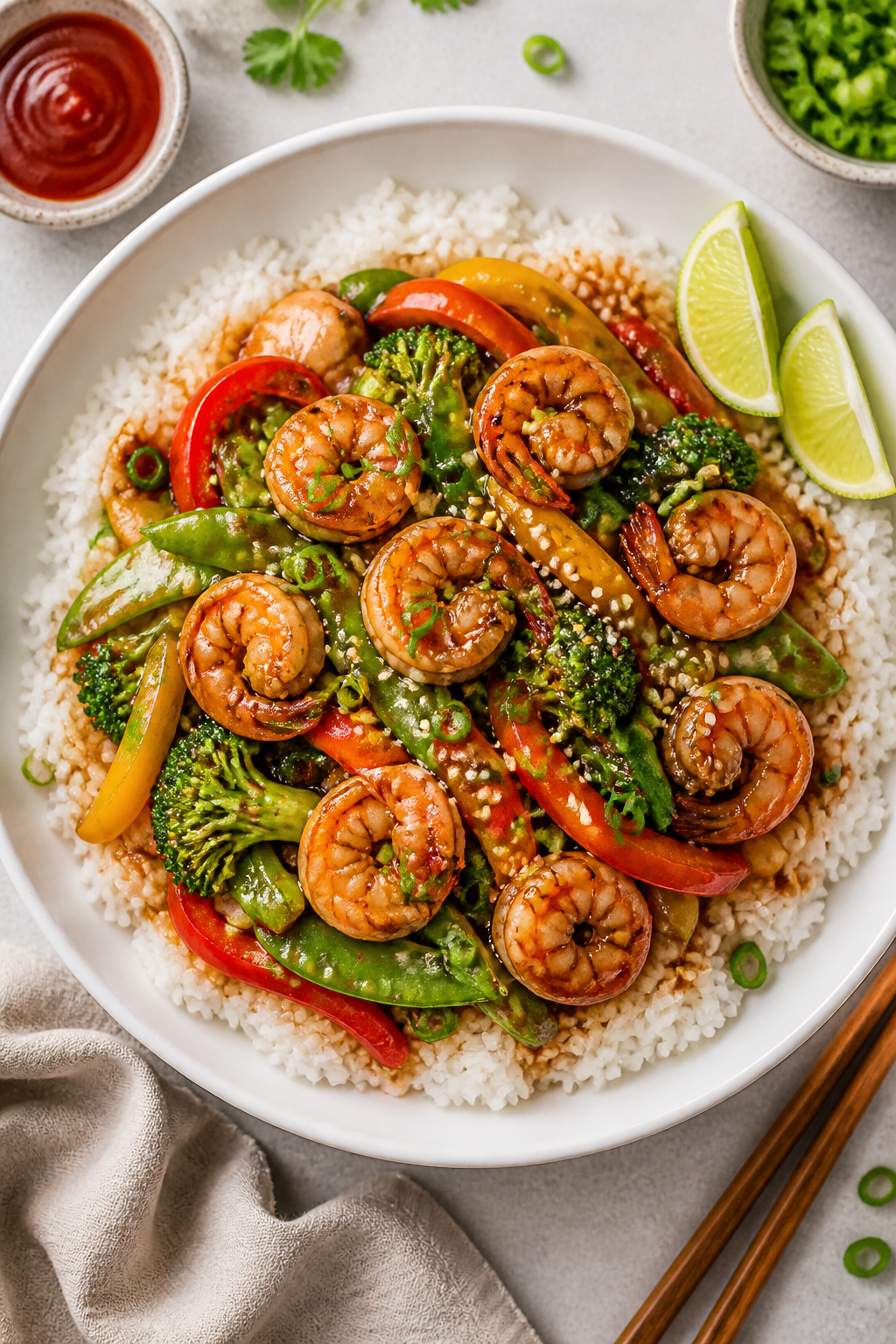
- Prep the shrimp. Pat the shrimp dry with paper towels. Season lightly with salt and pepper.
Dry shrimp sear better and don’t steam.
- Make the sauce. In a small bowl, whisk soy sauce, oyster sauce, rice vinegar, honey, sesame oil, red pepper flakes (if using), broth, and cornstarch until smooth. Set aside.
- Heat the pan. Place a large skillet or wok over medium-high heat. Add 1 tablespoon oil and let it shimmer.
- Sear the shrimp. Add shrimp in a single layer.
Cook 1 to 2 minutes per side until just pink and starting to curl. Transfer to a plate. They will finish in the sauce later; don’t overcook.
- Cook the hard veggies. Add another drizzle of oil if needed.
Toss in broccoli and carrots with a pinch of salt. Stir-fry 2 to 3 minutes until they start to brighten and soften.
- Add the quick-cook veggies. Add bell peppers, onion (or scallions), and snap peas. Stir-fry 2 to 3 minutes until crisp-tender.
- Stir in aromatics. Push veggies to the sides.
Add garlic and ginger to the center. Cook 30 seconds until fragrant, then mix through the veggies.
- Pour in the sauce. Whisk the sauce again (cornstarch settles), then pour over the veggies. Stir continuously 1 to 2 minutes until glossy and slightly thickened.
- Finish with shrimp. Return shrimp and any juices to the pan.
Toss to coat and warm through for 30 to 60 seconds. Taste and adjust salt, pepper, or heat.
- Serve. Spoon over rice, cauliflower rice, or noodles. Garnish with sesame seeds, scallions, and a squeeze of lime if you like.
How to Store
Cool the stir fry to room temperature, then store in an airtight container for up to 3 days in the fridge.
Reheat gently in a skillet over medium heat with a splash of water to loosen the sauce. The microwave works too—heat in 30-second bursts, stirring between, to avoid overcooking the shrimp. For longer storage, freeze in single portions for up to 2 months.
Thaw overnight in the fridge before reheating.
Why This is Good for You
- High-quality protein: Shrimp packs lean protein that helps with muscle repair and keeps you full longer.
- Fiber and micronutrients: Broccoli, peppers, carrots, and peas bring vitamins A, C, K, folate, and fiber for gut and immune health.
- Balanced macros: Protein from shrimp, complex carbs from veggies and rice, and healthy fats from sesame oil create steady energy without a crash.
- Lower sodium option: Using low-sodium soy sauce and broth helps control salt while keeping flavor strong.
- Light but satisfying: Stir-frying uses minimal oil, so you get big flavor without heaviness.
Common Mistakes to Avoid
- Overcrowding the pan: This steams the shrimp and veggies. Cook in batches if your pan is small.
- Overcooking shrimp: They only need a couple of minutes. Pull them as soon as they turn pink and curl into a loose C.
- Skipping the cornstarch: Without it, the sauce won’t cling.
A small amount gives that silky, takeout-style finish.
- Not drying the shrimp: Extra moisture prevents browning and dilutes the sauce.
- Adding garlic too early: It burns fast. Add near the end for a fragrant, not bitter, flavor.
Variations You Can Try
- Spicy garlic: Add extra chili flakes, sriracha, or a spoon of chili crisp. Boost garlic to 4 or 5 cloves.
- Ginger-scallion twist: Double the ginger and finish with a handful of sliced scallions and a splash of rice vinegar.
- Teriyaki-style: Swap oyster sauce for teriyaki, reduce honey, and add pineapple chunks for sweet-savory balance.
- Extra protein: Toss in edamame or tofu cubes with the veggies for even more protein per serving.
- Low-carb: Serve over cauliflower rice and increase non-starchy veggies like broccoli and snap peas.
- Gluten-free: Use tamari instead of soy sauce and confirm your oyster or hoisin sauce is gluten-free.
- Citrus lift: Finish with fresh lime zest and juice for brightness without extra sodium.
FAQ
Can I use frozen shrimp?
Never wonder what's for dinner again.
Get 7 healthy, family-friendly dinners complete with recipes, grocery lists, and simple meal plans delivered straight to your inbox.
Yes.
Thaw them in the fridge overnight or quickly under cold running water in a colander. Pat very dry before cooking. Frozen shrimp are often flash-frozen at peak freshness and work great here.
Do I need a wok?
No.
A large, heavy skillet works well. The key is high heat and not crowding the pan so the ingredients sear instead of steam.
What if I don’t have oyster sauce?
Use hoisin for a sweeter profile or add an extra teaspoon of soy sauce plus a touch more honey. A small splash of fish sauce can also deepen the umami if you have it.
How can I make it less salty?
Use low-sodium soy sauce and broth, and avoid adding extra salt until the end.
A squeeze of lime or a bit more honey can balance perceived saltiness without diluting the sauce.
Can I meal prep this?
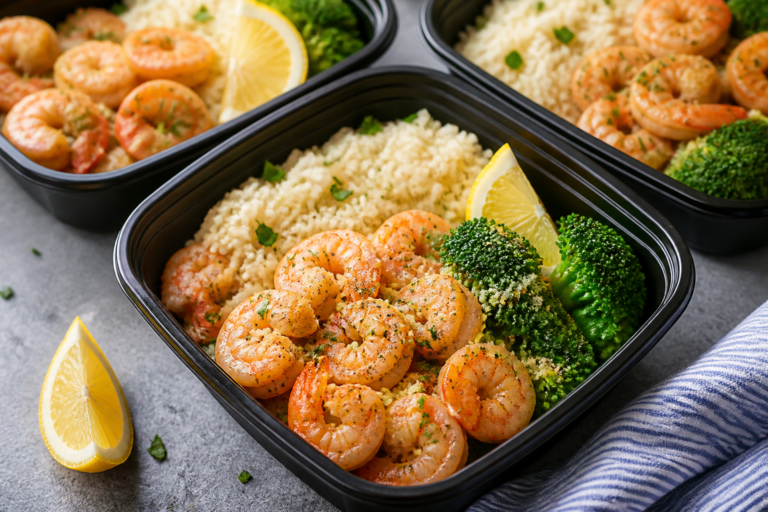
Yes. Portion the stir fry over rice or cauliflower rice in containers. Keep garnishes separate.
Reheat gently to keep the shrimp tender. It stays fresh for about three days.
What vegetables work best?
Choose veggies that hold up to heat: broccoli, bell peppers, snap peas, carrots, zucchini, mushrooms, and baby corn. Cut them into similar sizes so they cook evenly.
How do I make it spicier?
Add more red pepper flakes, sriracha, or a spoon of sambal oelek to the sauce.
You can also sauté a sliced fresh chili with the aromatics.
Can I swap the protein?
Absolutely. Try chicken breast or thigh, thinly sliced beef, firm tofu, or tempeh. Adjust cooking time so the protein cooks through before adding the sauce.
What’s the best oil for stir-frying?
Use a high-heat neutral oil like avocado, canola, or grapeseed.
Save extra-virgin olive oil for finishing; its smoke point is lower and can burn.
How do I keep vegetables crisp?
Cook over high heat, don’t overcrowd the pan, and add sturdier vegetables first. Stop cooking when they’re just tender; they’ll soften a bit more in the sauce.
Wrapping Up
This High Protein Shrimp & Veggie Stir Fry is simple, flexible, and full of fresh flavor. With a fast sear, a balanced sauce, and plenty of colorful vegetables, it hits that sweet spot between healthy and satisfying.
Keep the ingredients prepped, and you can have dinner on the table in 20 minutes. Once you try it, you’ll find yourself coming back to it on repeat—easy, bright, and reliably delicious.
Printable Recipe Card
Want just the essential recipe details without scrolling through the article? Get our printable recipe card with just the ingredients and instructions.
Loved This Recipe?
If you're looking for more simple, healthy dinners your family will actually eat, grab my FREE 7-Day Easy Dinner Reset. You'll get 7 easy dinner recipes, simple grocery lists, and a done-for-you plan that takes the stress out of mealtime.