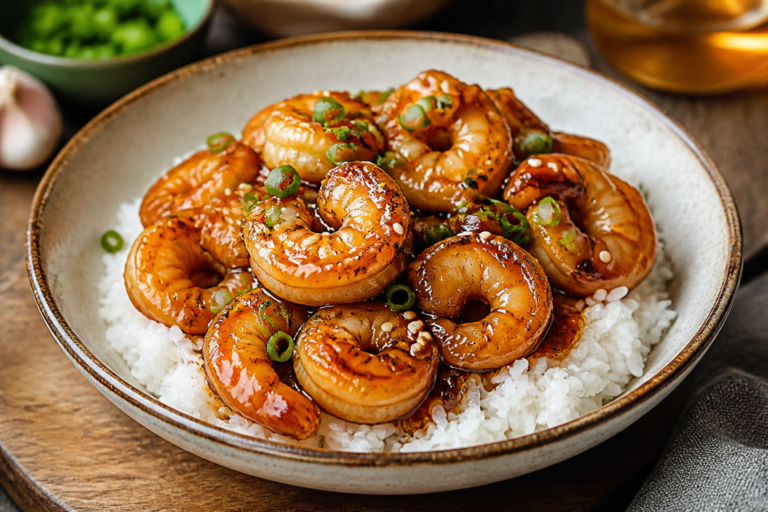
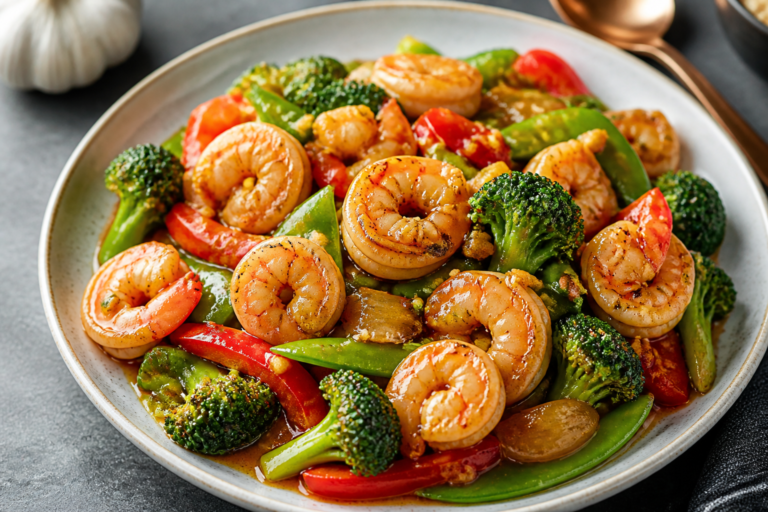
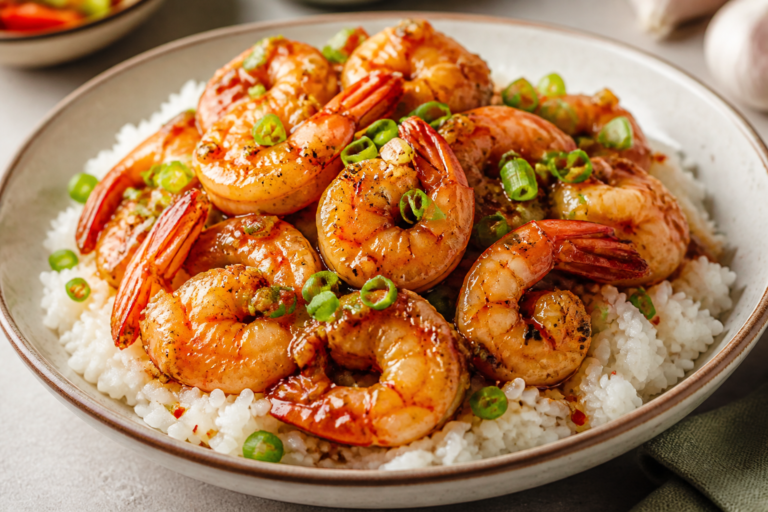
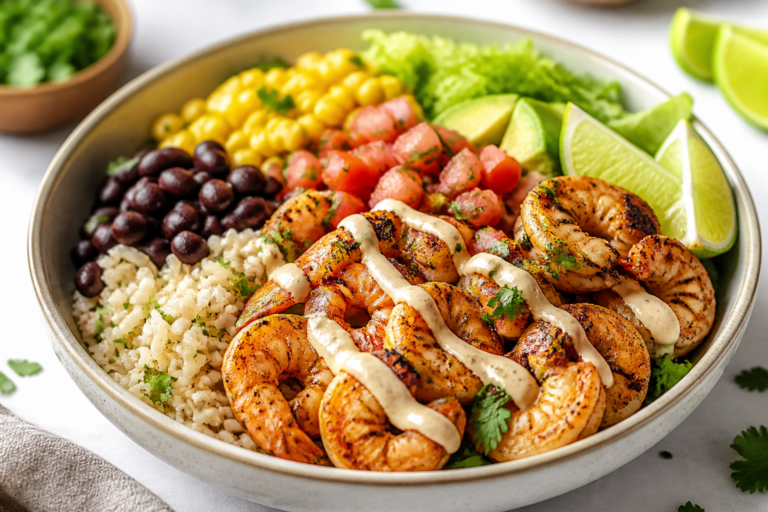
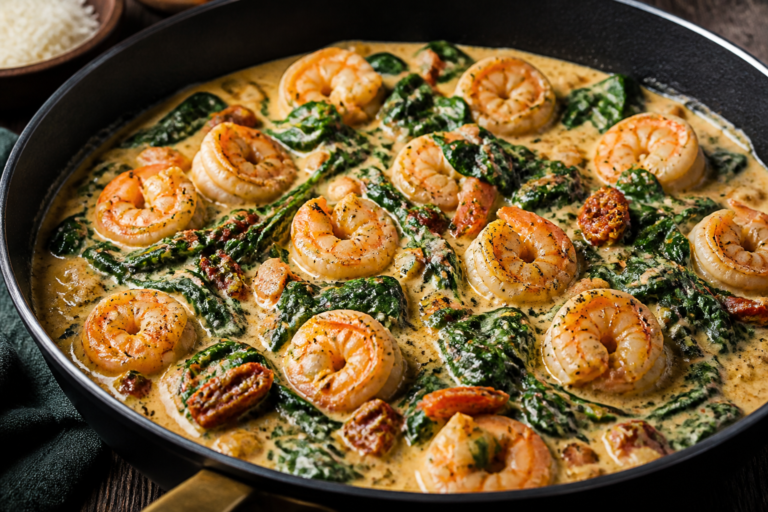
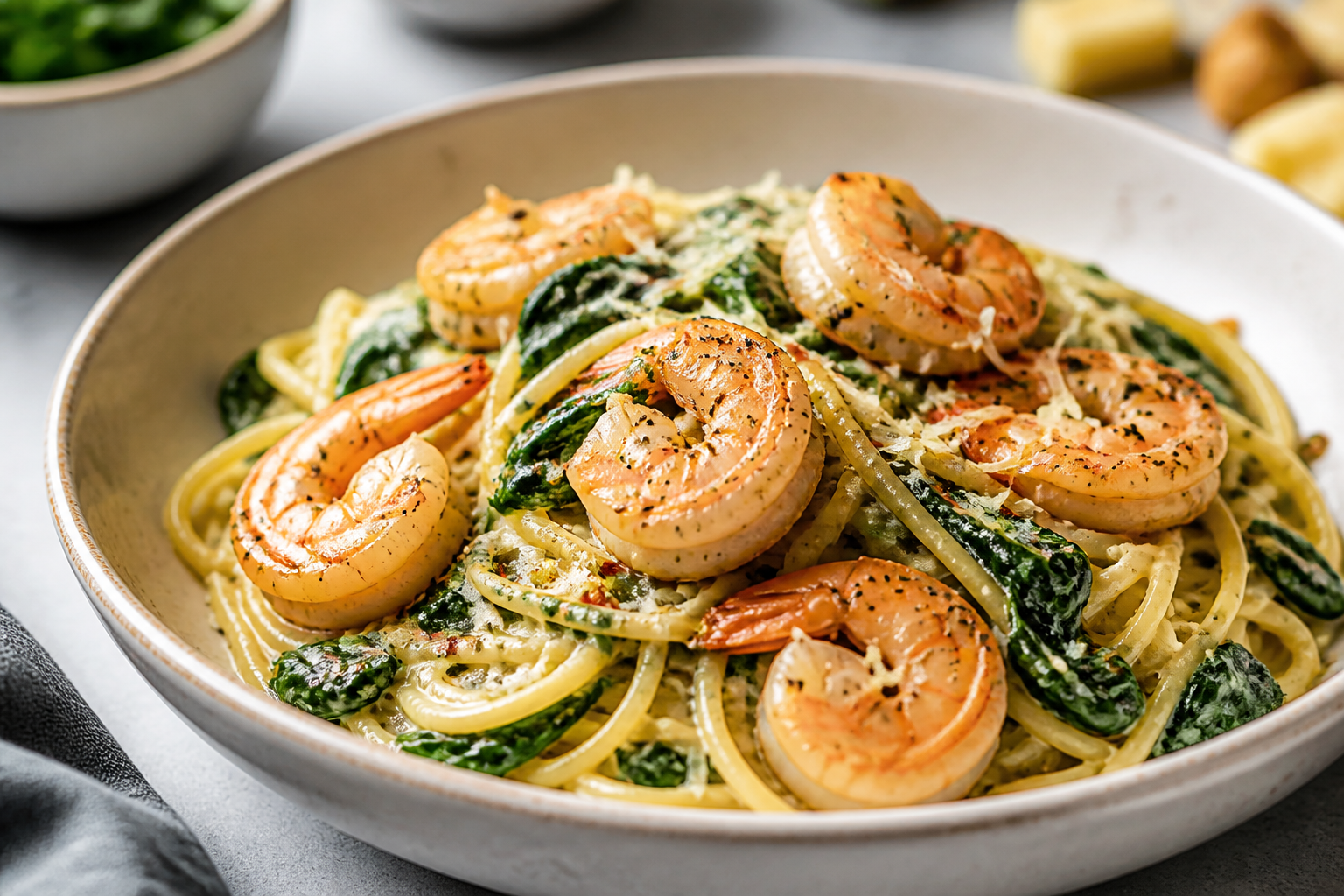
High Protein Shrimp & Spinach Pasta – A Fast, Satisfying Weeknight Dinner
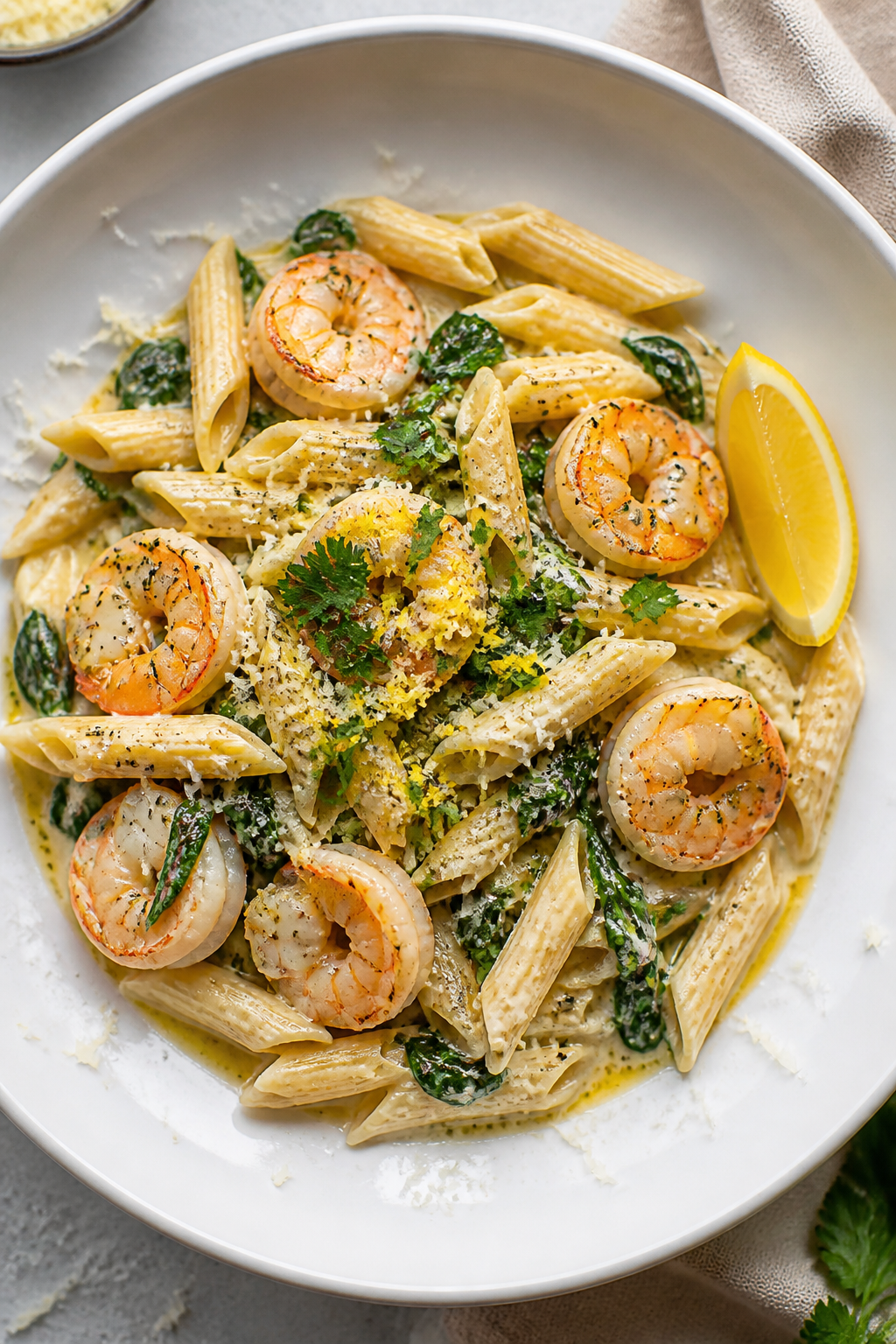
This shrimp and spinach pasta is one of those meals that makes you feel like you put in way more effort than you actually did. It’s creamy without being heavy, full of juicy shrimp, and packs in a serious amount of protein. You’ll get a good serving of greens from the spinach, and the lemon-garlic flavor keeps it bright and fresh.
Stop wondering what's for dinner.
Get 7 healthy, family-friendly dinners complete with recipes and simple meal plans delivered straight to your inbox.
It’s perfect for busy weeknights, but nice enough to serve to guests. If you’ve got 25 minutes and a pot of boiling water, dinner is basically done.
Ingredients
Method
- Boil the pasta: Bring a large pot of salted water to a boil. Cook pasta until just al dente. Reserve 1 cup of pasta water, then drain.
- Pat shrimp dry: While the pasta cooks, pat shrimp dry with paper towels. Season with salt, pepper, and a pinch of red pepper flakes.
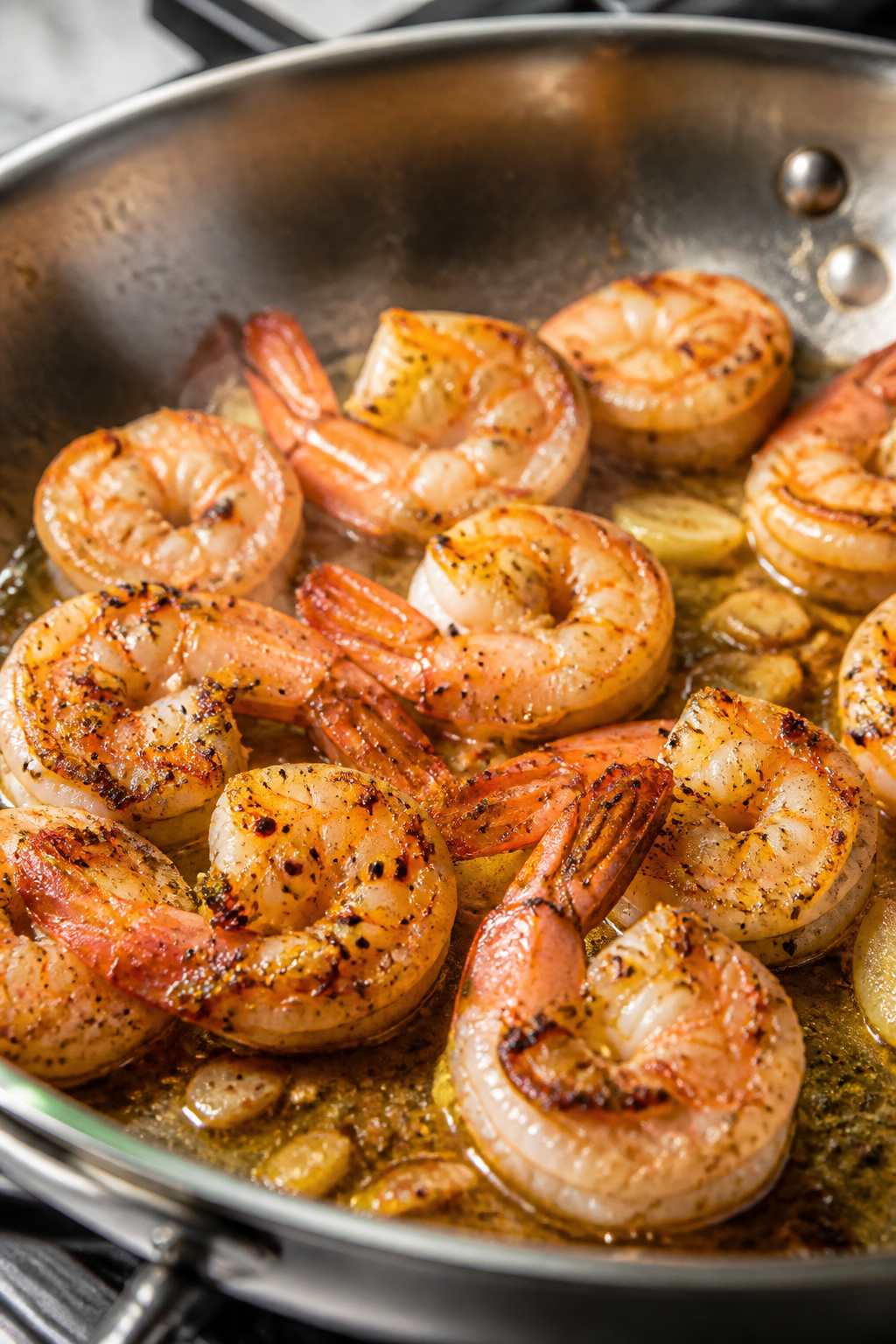
- Sear the shrimp: Heat 1 tbsp olive oil in a large skillet over medium-high. Add shrimp in a single layer. Cook 1–2 minutes per side until just pink and opaque. Remove to a plate.
- Sauté aromatics: Lower heat to medium. Add remaining 1 tbsp olive oil. Add garlic (and more red pepper flakes if you like). Cook 30–60 seconds until fragrant, not brown.
- Wilt the spinach: Add spinach to the skillet with a pinch of salt. Toss until wilted (2–3 minutes). If using frozen spinach, add and warm through, breaking up clumps.
- Build the sauce: Pour in broth and bring to a gentle simmer. In a small bowl, whisk Greek yogurt with a few tablespoons of hot pasta water to loosen it. Off the heat, stir the yogurt into the skillet. Add Parmesan and lemon zest.
- Adjust consistency: Return skillet to low heat. Add drained pasta and a splash of reserved pasta water, tossing until glossy and lightly creamy. Add more water as needed to coat.
- Finish with shrimp: Add the cooked shrimp and any juices from the plate. Warm gently for 1 minute. Stir in lemon juice. Taste and season with salt and pepper.
- Optional richness: Swirl in 1 tbsp butter for a silkier finish and add chopped parsley if using.
- Serve: Plate with extra Parmesan, black pepper, and a squeeze of lemon. Enjoy right away.
Why This Recipe Works
- High protein without heaviness: Shrimp brings lean protein, while Greek yogurt or cottage cheese boosts the protein in the sauce without tons of fat.
- Balanced flavors: Garlic, lemon zest, and a little Parmesan create a savory, tangy base that pairs well with sweet shrimp and mild spinach.
- Fast cook time: Shrimp cooks in minutes, and the sauce comes together while the pasta boils. You’re not spending an hour in the kitchen.
- Flexible and forgiving: Use any pasta shape, fresh or frozen spinach, and adjust the creaminess with a splash of pasta water.
- Meal-prep friendly: Holds up well for a couple of days and reheats easily with a bit of water or broth.
Ingredients
- 10–12 oz pasta (penne, fusilli, or spaghetti)
- 1 lb raw shrimp, peeled and deveined (medium or large)
- 2 tbsp olive oil (divided)
- 3–4 cloves garlic, minced
- 1/2 tsp red pepper flakes (optional, to taste)
- 5–6 oz fresh baby spinach (about 5 cups) or 10 oz frozen, thawed and squeezed dry
- 1/2 cup low-sodium chicken or vegetable broth
- 1/2 cup plain Greek yogurt (2% or 5%) or blended cottage cheese
- 1/3 cup grated Parmesan (plus more for serving)
- Zest of 1 lemon and 2–3 tsp lemon juice
- Salt and black pepper, to taste
- Optional add-ins: 1 tbsp butter for richness, 1/4 cup chopped parsley, 1/2 cup peas for extra veg
How to Make It
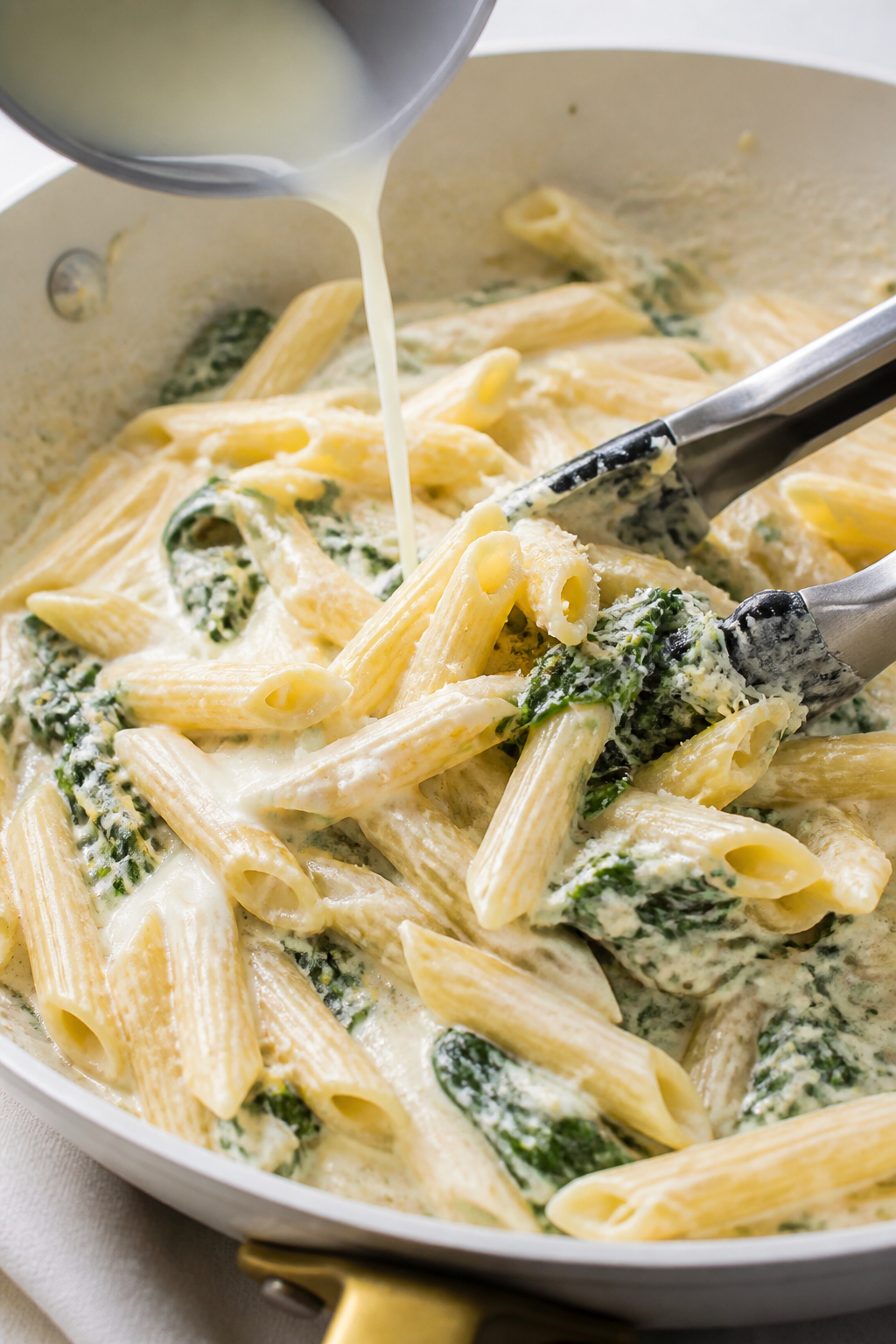
- Boil the pasta: Bring a large pot of salted water to a boil.
Cook pasta until just al dente. Reserve 1 cup of pasta water, then drain.
- Pat shrimp dry: While the pasta cooks, pat shrimp dry with paper towels. Season with salt, pepper, and a pinch of red pepper flakes.
- Sear the shrimp: Heat 1 tbsp olive oil in a large skillet over medium-high.
Add shrimp in a single layer. Cook 1–2 minutes per side until just pink and opaque. Remove to a plate.
- Sauté aromatics: Lower heat to medium.
Add remaining 1 tbsp olive oil. Add garlic (and more red pepper flakes if you like). Cook 30–60 seconds until fragrant, not brown.
- Wilt the spinach: Add spinach to the skillet with a pinch of salt.
Toss until wilted (2–3 minutes). If using frozen spinach, add and warm through, breaking up clumps.
- Build the sauce: Pour in broth and bring to a gentle simmer. In a small bowl, whisk Greek yogurt with a few tablespoons of hot pasta water to loosen it.
Off the heat, stir the yogurt into the skillet. Add Parmesan and lemon zest.
- Adjust consistency: Return skillet to low heat. Add drained pasta and a splash of reserved pasta water, tossing until glossy and lightly creamy.
Add more water as needed to coat.
- Finish with shrimp: Add the cooked shrimp and any juices from the plate. Warm gently for 1 minute. Stir in lemon juice.
Taste and season with salt and pepper.
- Optional richness: Swirl in 1 tbsp butter for a silkier finish and add chopped parsley if using.
- Serve: Plate with extra Parmesan, black pepper, and a squeeze of lemon. Enjoy right away.
Storage Instructions
- Refrigerate: Cool completely, then store in an airtight container for up to 2 days. Shrimp is best within this window.
- Reheat: Warm gently on the stovetop with a splash of water or broth to loosen the sauce.
Avoid high heat to prevent curdling and overcooking the shrimp.
- Freezing: Not ideal. The yogurt-based sauce can separate, and shrimp texture suffers. If you must freeze, undercook the shrimp slightly and thaw gently in the fridge before reheating.
Health Benefits
- Protein-packed: Shrimp and Greek yogurt deliver a solid protein boost to support muscle repair and keep you full.
- Rich in micronutrients: Spinach adds iron, folate, and vitamin K, while shrimp provides selenium, iodine, and vitamin B12.
- Heart-smart fats: Olive oil contributes monounsaturated fats, and shrimp contains omega-3s in smaller amounts.
- Lighter creaminess: Using yogurt or blended cottage cheese keeps calories and saturated fat lower than heavy cream.
Pitfalls to Watch Out For
- Overcooking shrimp: They turn rubbery fast.
Pull them as soon as they’re pink and just opaque.
- Curdled sauce: Add yogurt off the heat and temper with hot pasta water. Keep the final simmer low and brief.
- Bland seasoning: Salt the pasta water well and taste the sauce at the end. Lemon, salt, and Parmesan should pop.
- Watery spinach: If using frozen, squeeze out excess moisture.
Too much water dilutes the sauce.
- Dry pasta: Reserve pasta water. It’s your secret to a glossy, cohesive sauce.
Variations You Can Try
- Extra-high protein: Swap in chickpea or lentil pasta, and use blended cottage cheese for the sauce.
- Tomato twist: Add 1/2 cup halved cherry tomatoes or 1/3 cup sun-dried tomatoes for sweetness and acidity.
- Creamier version: Replace half the yogurt with light cream or half-and-half for a richer texture.
- Herb-forward: Stir in fresh basil, dill, or chives at the end for a brighter, garden-fresh finish.
- Spicy kick: Use Calabrian chili paste or more red pepper flakes, and finish with a drizzle of chili oil.
- Veg boost: Toss in peas, asparagus tips, or zucchini ribbons during the spinach step.
- Dairy-free: Use a creamy unsweetened oat or cashew yogurt and skip the Parmesan or use a dairy-free alternative.
Never wonder what's for dinner again.
Get 7 healthy, family-friendly dinners complete with recipes, grocery lists, and simple meal plans delivered straight to your inbox.
FAQ
Can I use pre-cooked shrimp?
Yes, but add it at the very end just to warm through for 30–60 seconds. Pre-cooked shrimp can overcook quickly, so be gentle with heat.
What pasta shape works best?
Short shapes like penne or fusilli hold the sauce well, but spaghetti or linguine are great too.
Use what you have and love.
How do I prevent the yogurt from curdling?
Temper the yogurt with a few spoonfuls of hot pasta water, add it off the heat, and keep the final heating low and brief. Avoid boiling once the yogurt is in.
Can I make it gluten-free?
Absolutely. Use your favorite gluten-free pasta and check that your broth and Parmesan are certified gluten-free if needed.
What if I don’t have fresh spinach?
Frozen spinach works well.
Thaw and squeeze out excess water before adding so the sauce stays thick and flavorful.
How can I make it more lemony?
Add extra zest and finish with another squeeze of lemon. You can also stir in a spoonful of preserved lemon for a deeper citrus note.
Is there a substitute for Parmesan?
Grana Padano or Pecorino Romano both work. Romano is saltier and sharper, so start with a bit less and taste.
In Conclusion
High Protein Shrimp & Spinach Pasta checks all the boxes: quick, satisfying, and balanced.
With minimal prep and a handful of pantry staples, you get a bright, garlicky pasta that feels special but fits into any weeknight. Keep an eye on the shrimp, save your pasta water, and finish with lemon and Parmesan for that perfect final touch. It’s a simple formula you’ll come back to again and again.
Printable Recipe Card
Want just the essential recipe details without scrolling through the article? Get our printable recipe card with just the ingredients and instructions.
Loved This Recipe?
If you're looking for more simple, healthy dinners your family will actually eat, grab my FREE 7-Day Easy Dinner Reset. You'll get 7 easy dinner recipes, simple grocery lists, and a done-for-you plan that takes the stress out of mealtime.