High Protein Shrimp Teriyaki Meal Prep – Fast, Flavorful, and Ready for the Week
Shrimp teriyaki is the kind of meal prep that actually makes you look forward to lunch. It’s fast, high in protein, and loaded with savory-sweet flavor without weighing you down. With a simple homemade teriyaki sauce and a quick cook time, you can prep several balanced meals in under an hour.
Stop wondering what's for dinner.
Get 7 healthy, family-friendly dinners complete with recipes and simple meal plans delivered straight to your inbox.
This recipe is flexible, budget-friendly, and easy to customize with your favorite veggies and grains. If you’re aiming for a clean, satisfying meal that keeps you fueled, this one checks every box.
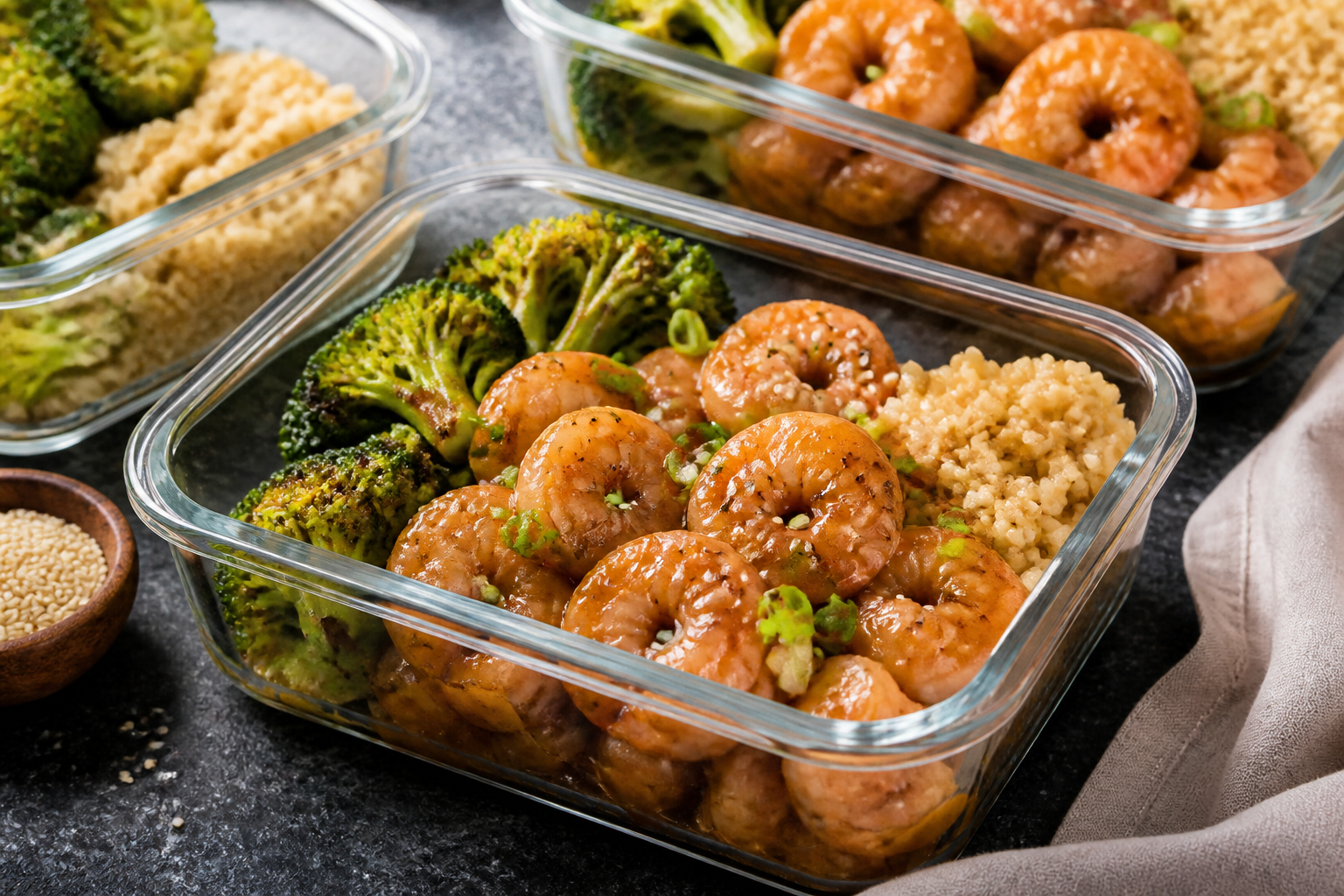
High Protein Shrimp Teriyaki Meal Prep - Fast, Flavorful, and Ready for the Week
Ingredients
Method
- Cook your base: Make your rice or quinoa according to package directions. Fluff and set aside. For a lighter option, use cauliflower rice and warm it just before serving.
- Prep the sauce: In a small bowl, whisk soy sauce, water, honey, rice vinegar, sesame oil, garlic, ginger, and sriracha if using. In a separate cup, stir together cornstarch and water to make a slurry.
- Sauté the veggies: Heat a large nonstick skillet over medium-high. Add a splash of oil, then the broccoli, peppers, and snap peas. Cook 4–5 minutes until crisp-tender. Transfer to a plate.
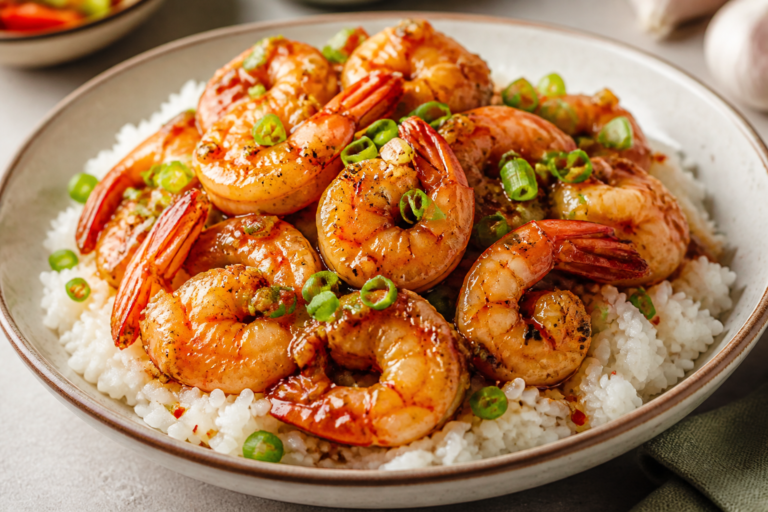
- Season and sear the shrimp: Pat shrimp dry. Toss with salt and pepper. Add 1 tablespoon oil to the skillet and cook shrimp 1–2 minutes per side until just pink. Do this in batches if needed to avoid crowding. Remove to a plate.
- Thicken the sauce: Reduce heat to medium. Pour the teriyaki mixture into the pan and bring to a gentle simmer. Stir in the cornstarch slurry and cook 30–60 seconds until glossy and slightly thickened.
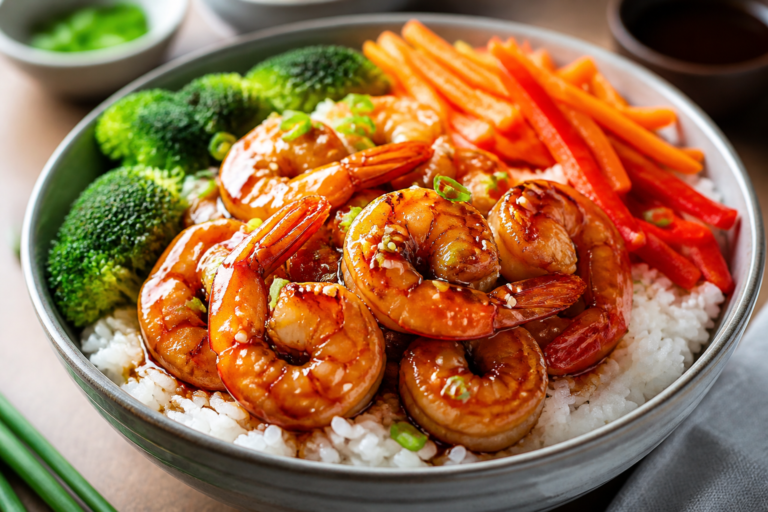
- Combine: Return shrimp and veggies to the skillet and toss to coat in the sauce. Cook 1 more minute to warm through. Avoid overcooking the shrimp.
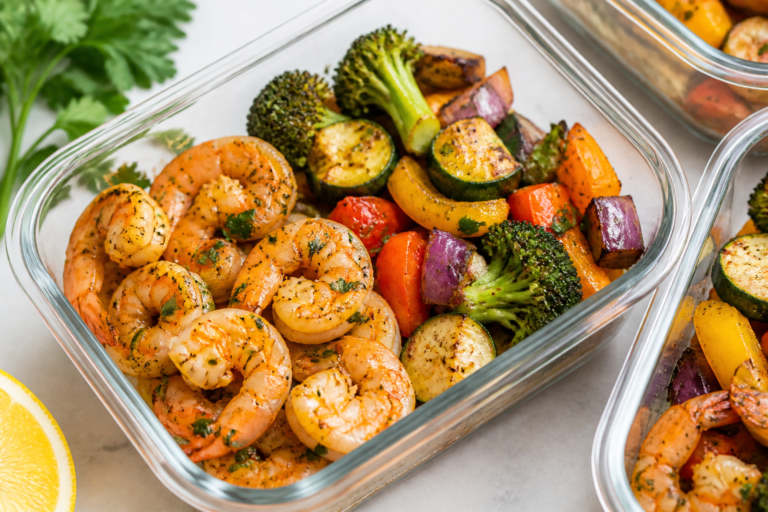
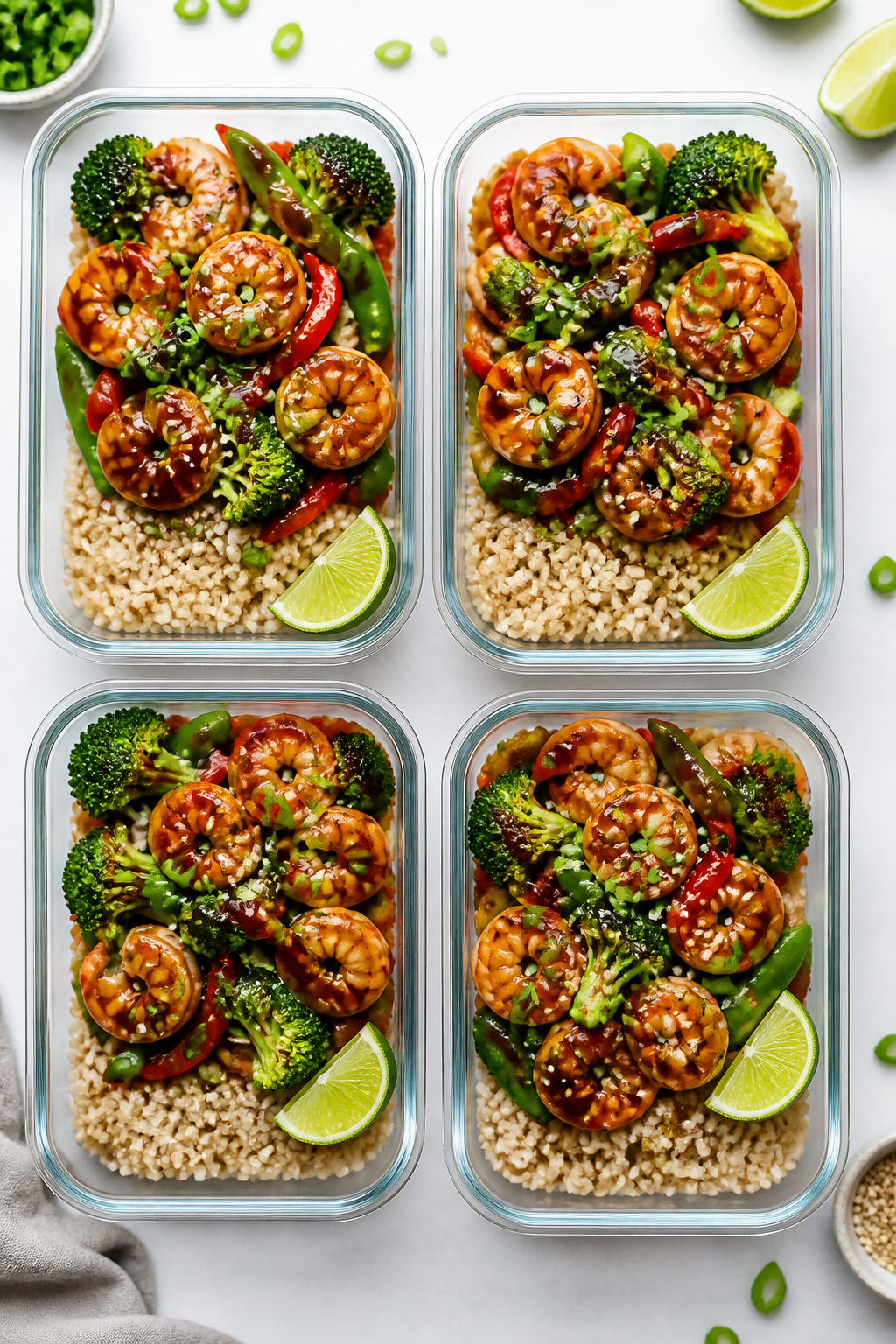
- Assemble meal prep: Divide rice or quinoa among 4–5 containers. Top with shrimp and veggies. Spoon any extra sauce over the top. Add green onions, sesame seeds, and a squeeze of lime.
What Makes This Recipe So Good
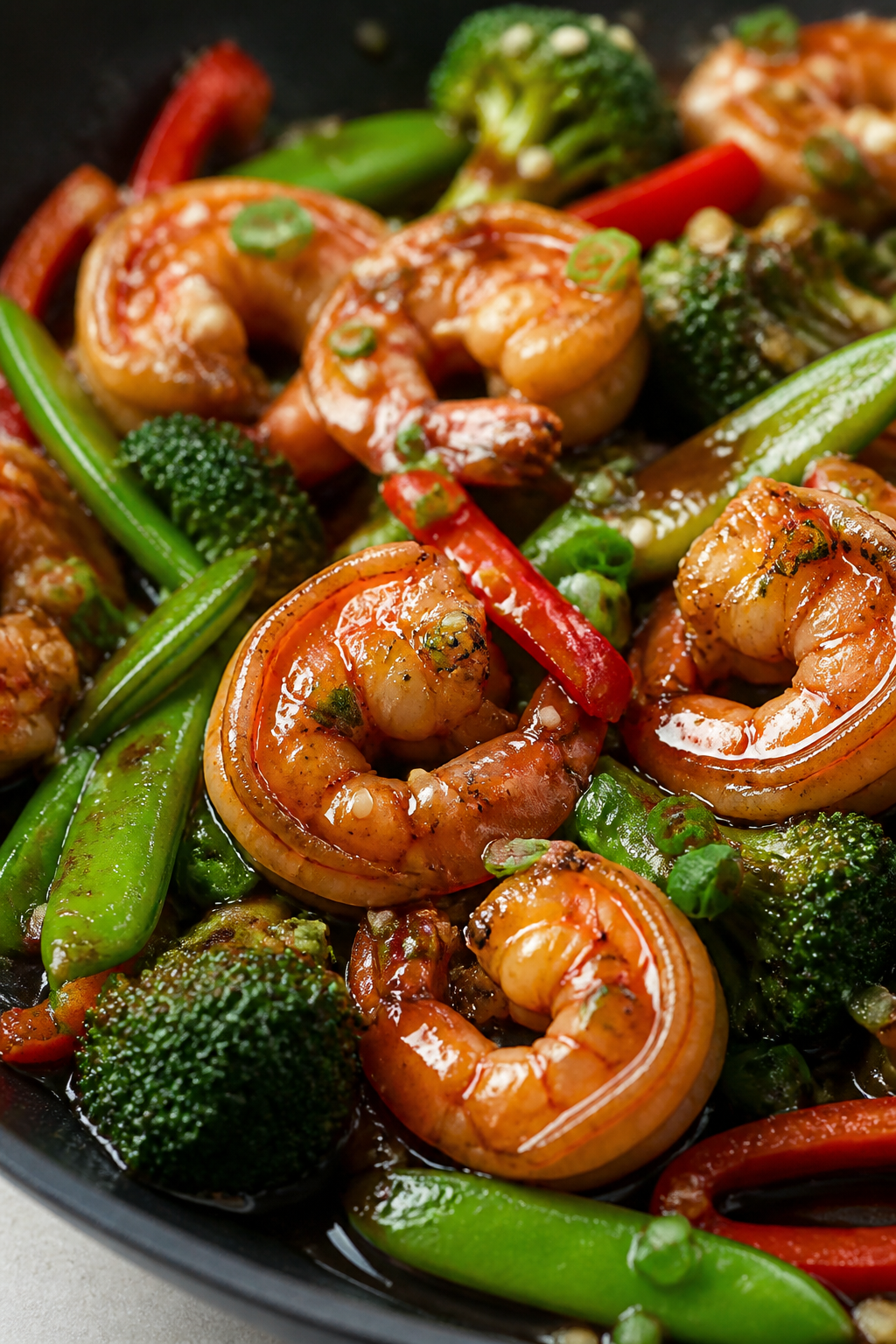
- High protein, low fuss: Shrimp cook in minutes and deliver lean protein that helps you stay full and recover after workouts.
- Homemade teriyaki sauce: A quick mix of pantry staples gives you better flavor control and less added sugar than store-bought.
- Great for meal prep: Shrimp, rice, and crisp veggies portion nicely into containers for grab-and-go meals all week.
- Balanced and customizable: Pair with brown rice, quinoa, or cauliflower rice, and mix in any veggies you love.
- Big flavor, light ingredients: Ginger, garlic, and sesame make it taste restaurant-worthy without heavy sauces.
Ingredients
- For the Shrimp:
- 1.5 pounds raw shrimp, peeled and deveined (medium or large)
- 1 tablespoon avocado or olive oil
- 1/2 teaspoon kosher salt
- 1/4 teaspoon black pepper
- For the Teriyaki Sauce:
- 1/3 cup low-sodium soy sauce or tamari
- 3 tablespoons water
- 2 tablespoons honey or maple syrup
- 1 tablespoon rice vinegar
- 2 teaspoons toasted sesame oil
- 2 cloves garlic, minced
- 1 tablespoon fresh ginger, grated (or 1 teaspoon ground ginger)
- 1 tablespoon cornstarch mixed with 2 tablespoons cold water (slurry)
- Optional: 1–2 teaspoons sriracha for heat
- Veggies and Base:
- 2 cups broccoli florets
- 1 red bell pepper, sliced
- 1 cup snap peas or green beans
- 2 cups cooked brown rice, white rice, or quinoa
- Garnishes (optional but recommended):
- Sliced green onions
- Toasted sesame seeds
- Lime wedges
Instructions
- Cook your base: Make your rice or quinoa according to package directions. Fluff and set aside.
For a lighter option, use cauliflower rice and warm it just before serving.
- Prep the sauce: In a small bowl, whisk soy sauce, water, honey, rice vinegar, sesame oil, garlic, ginger, and sriracha if using. In a separate cup, stir together cornstarch and water to make a slurry.
- Sauté the veggies: Heat a large nonstick skillet over medium-high. Add a splash of oil, then the broccoli, peppers, and snap peas.
Cook 4–5 minutes until crisp-tender. Transfer to a plate.
- Season and sear the shrimp: Pat shrimp dry. Toss with salt and pepper.
Add 1 tablespoon oil to the skillet and cook shrimp 1–2 minutes per side until just pink. Do this in batches if needed to avoid crowding. Remove to a plate.
- Thicken the sauce: Reduce heat to medium.
Pour the teriyaki mixture into the pan and bring to a gentle simmer. Stir in the cornstarch slurry and cook 30–60 seconds until glossy and slightly thickened.
- Combine: Return shrimp and veggies to the skillet and toss to coat in the sauce. Cook 1 more minute to warm through.
Avoid overcooking the shrimp.
- Assemble meal prep: Divide rice or quinoa among 4–5 containers. Top with shrimp and veggies. Spoon any extra sauce over the top.
Add green onions, sesame seeds, and a squeeze of lime.
How to Store
- Refrigerator: Store in airtight containers for up to 3 days. Shrimp are delicate, so shorter storage keeps the texture best.
- Freezer: You can freeze cooked rice and veggies, but shrimp can get rubbery after freezing. If you must freeze, do 1–2 portions and thaw gently in the fridge before reheating.
- Reheating: Warm in the microwave for 60–90 seconds, just until hot.
Or heat in a skillet over medium for 2–3 minutes. Do not overheat; shrimp toughen quickly.
- Make-ahead tip: Keep sauce separate and add after reheating if you prefer ultra-fresh texture.
Why This is Good for You
- Lean protein: Shrimp pack about 20–24 grams of protein per 4 ounces with minimal fat, supporting muscle repair and satiety.
- Complex carbs and fiber: Brown rice or quinoa offers slow-burning energy and fiber that helps keep blood sugar steady.
- Micronutrients: Broccoli, peppers, and snap peas bring vitamin C, vitamin K, potassium, and antioxidants that support immune and metabolic health.
- Smarter sauce: Making your own teriyaki lets you control sodium and sugar, so you get flavor without the heavy extras.
- Healthy fats: Sesame oil adds satisfying flavor and helps absorb fat-soluble vitamins from the veggies.
Common Mistakes to Avoid
- Overcooking the shrimp: They cook fast. As soon as they turn pink and curl into a loose “C,” they’re done.
A tight “O” shape means overcooked.
- Skipping the slurry: Without cornstarch, the sauce won’t cling. Mix the slurry with cold water and add once the sauce is simmering.
- Crowding the pan: Too many shrimp at once steam instead of sear. Cook in batches for the best texture.
- Soggy veggies: Keep heat medium-high and cook until crisp-tender.
Soft veggies won’t hold up for meal prep.
- Too much sauce: You want the shrimp and vegetables coated, not drowning. Extra liquid makes reheating watery.
Variations You Can Try
Never wonder what's for dinner again.
Get 7 healthy, family-friendly dinners complete with recipes, grocery lists, and simple meal plans delivered straight to your inbox.
- High-fiber boost: Swap half the rice for cauliflower rice or add edamame for extra protein and fiber.
- No soy: Use coconut aminos and adjust sweetness by reducing the honey slightly.
- Gluten-free: Choose tamari instead of regular soy sauce and make sure your cornstarch is certified gluten-free.
- Spicy teriyaki: Add chili-garlic sauce, red pepper flakes, or extra sriracha to the sauce.
- Sheet pan version: Roast broccoli and peppers at 425°F (220°C) for 12–15 minutes. Pan-sear shrimp separately, then toss everything with thickened sauce.
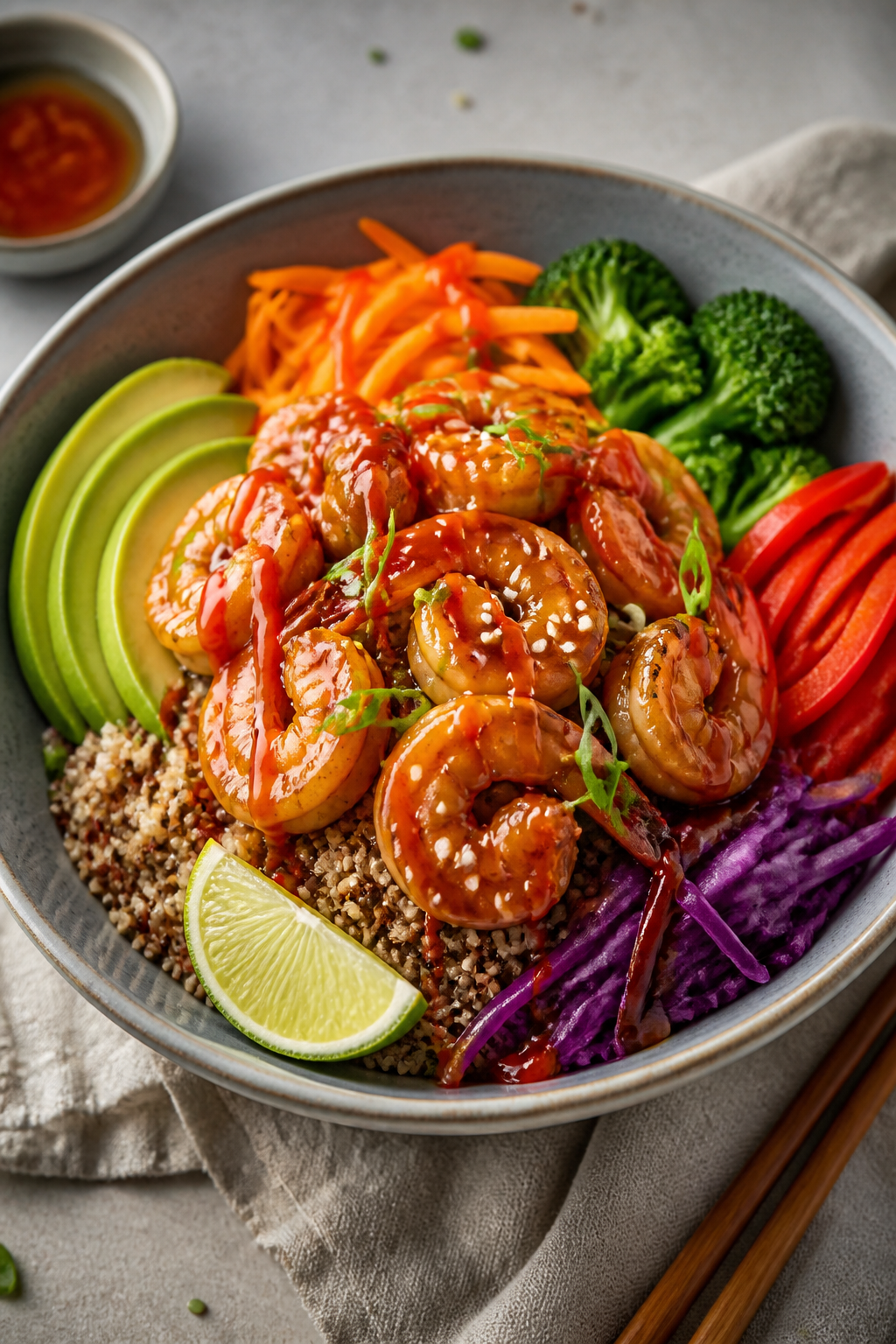
- Different bases: Try soba noodles, jasmine rice, or a crunchy slaw mix for a lighter bowl.
- Pineapple twist: Add pineapple chunks to the skillet for a sweet-savory combo and extra vitamin C.
FAQ
How much protein is in a serving?
A typical portion with 6 ounces of shrimp and a modest scoop of rice lands around 35–45 grams of protein, depending on shrimp size and additions.
Edamame or quinoa can nudge that even higher.
Can I use frozen shrimp?
Yes. Thaw overnight in the fridge or place in a colander under cold water for 5–7 minutes. Pat very dry before cooking so they sear instead of steam.
What can I use instead of cornstarch?
Arrowroot starch works well.
Use the same amount and add it at a gentle simmer. Avoid boiling arrowroot too long or it can thin out.
Is this good for weight loss?
It can be. The meal is high protein, veggie-forward, and portionable.
Keep an eye on rice amounts and sauce sweetness if you’re tracking calories.
How do I keep the shrimp from getting rubbery when reheating?
Reheat just until warm, not piping hot. Short bursts in the microwave with a quick stir in between help. A splash of water in the container generates steam and keeps the texture tender.
Can I swap the shrimp for another protein?
Absolutely.
Chicken breast, tofu, or tempeh all work. Adjust cook time accordingly—chicken needs to be fully cooked through, while tofu benefits from pressing and searing for crisp edges.
What vegetables work best?
Sturdy, quick-cooking veggies are ideal: broccoli, bell peppers, snap peas, carrots, mushrooms, and baby corn. They hold their bite after reheating.
Wrapping Up
High Protein Shrimp Teriyaki Meal Prep gives you a fast, flavorful way to stock your fridge with balanced meals.
The sauce is simple, the cook time is short, and the results taste like takeout without the heavy after-feel. Keep the shrimp juicy, the veggies crisp, and the portions tidy, and you’ll have satisfying lunches ready in no time. Make a batch on Sunday, and you’ll thank yourself all week.
Printable Recipe Card
Want just the essential recipe details without scrolling through the article? Get our printable recipe card with just the ingredients and instructions.
Loved This Recipe?
If you're looking for more simple, healthy dinners your family will actually eat, grab my FREE 7-Day Easy Dinner Reset. You'll get 7 easy dinner recipes, simple grocery lists, and a done-for-you plan that takes the stress out of mealtime.