Korean Beef Cabbage Bowls – A Fast, Flavor-Packed Weeknight Dinner
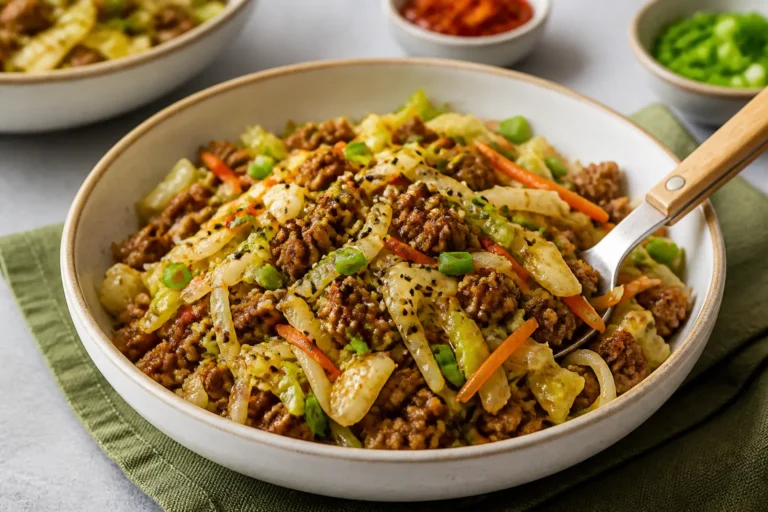
Korean Beef Cabbage Bowls are the kind of meal that checks every box: quick, craveable, and surprisingly healthy. You get savory-sweet beef, tender cabbage, and bright toppings in one hearty bowl. It feels like takeout, but it comes together in your own kitchen in about 30 minutes.
Stop wondering what's for dinner.
Get 7 healthy, family-friendly dinners complete with recipes and simple meal plans delivered straight to your inbox.
The best part? You can customize it with what you already have. If you love bold flavor without a long prep list, this is your new weeknight go-to.
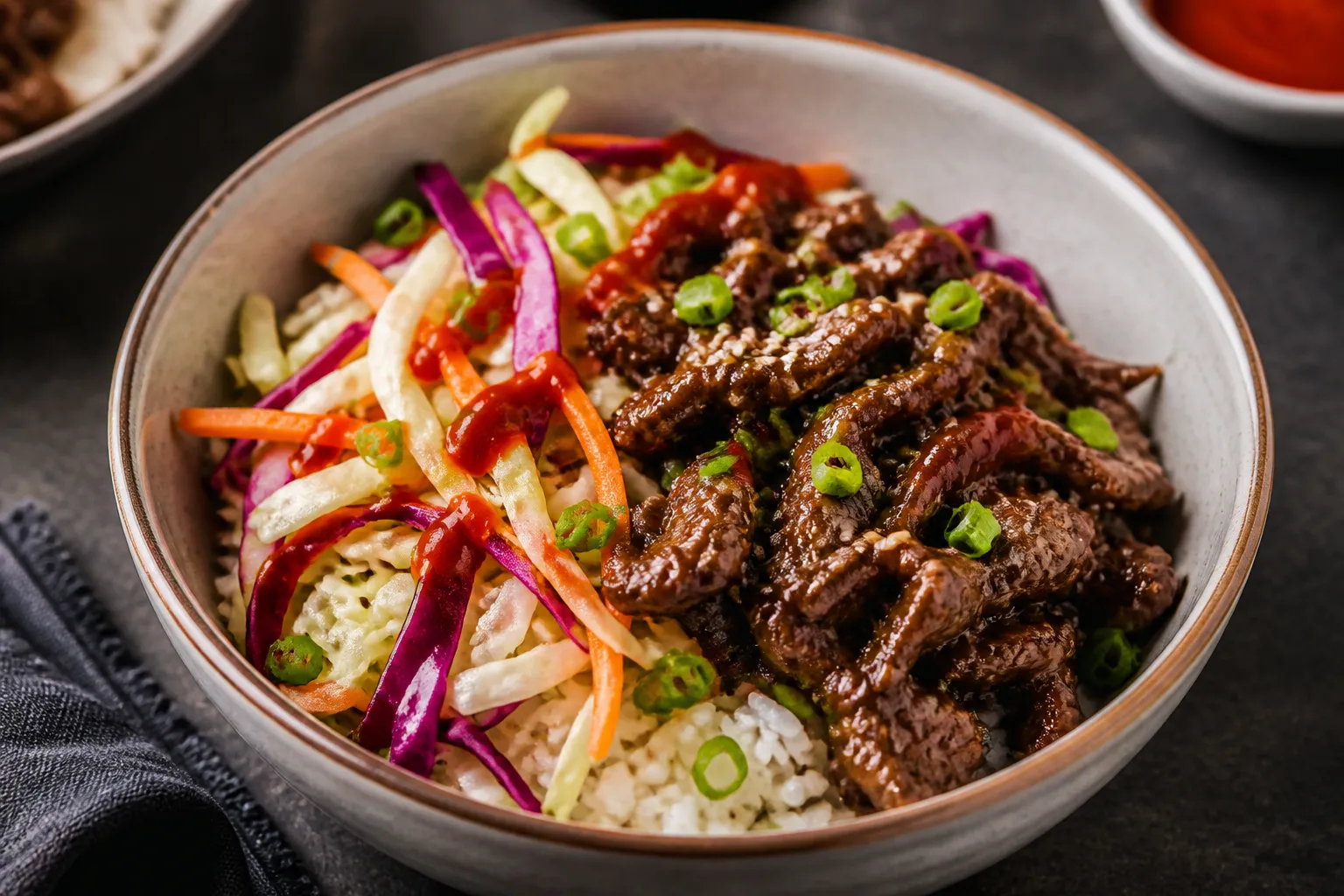
Ingredients
Method
- Make the sauce. In a small bowl, whisk soy sauce, gochujang, brown sugar, rice vinegar, sesame oil, and 1 tablespoon water. Taste and adjust heat or sweetness. Set aside.
- Prep your veggies. Thinly slice the cabbage and onion. Mince the garlic and grate the ginger. Slice the green onions and prep the carrot.
- Brown the beef. Heat 1 tablespoon oil in a large skillet over medium-high. Add the ground beef and a pinch of salt. Cook, breaking it up, until well browned and slightly crispy in spots, about 6–8 minutes. Drain excess fat if needed.
- Add aromatics. Push the beef to one side. Add the remaining oil and toss in garlic, ginger, and onion. Cook 1–2 minutes until fragrant, then stir into the beef.
- Sauce it up. Pour the sauce over the beef. Let it simmer 1–2 minutes until glossy and the flavors meld. If it looks too thick, add another splash of water.
- Cook the cabbage. Add the cabbage and carrot. Toss to coat in the saucy beef. Cook 3–5 minutes until the cabbage softens but still has a little bite. Stir in most of the green onions; save some for garnish.
- Taste and finish. Adjust salt, sweetness, or heat. A squeeze of citrus can brighten it up. Sprinkle with sesame seeds and remaining green onions.
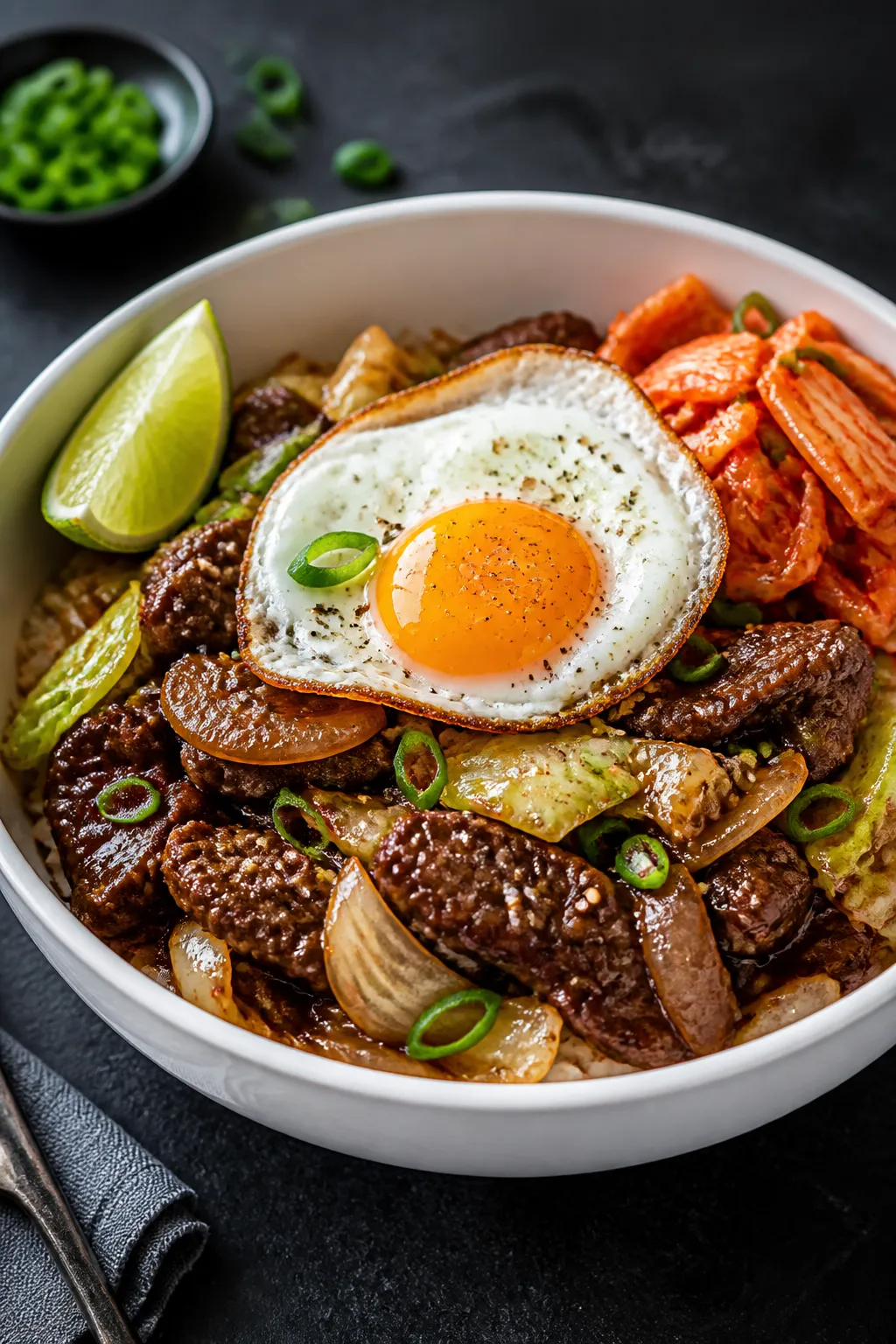
- Serve. Spoon over warm rice or keep it low-carb and serve as-is. Top with kimchi or a fried egg if you like.
What Makes This Special
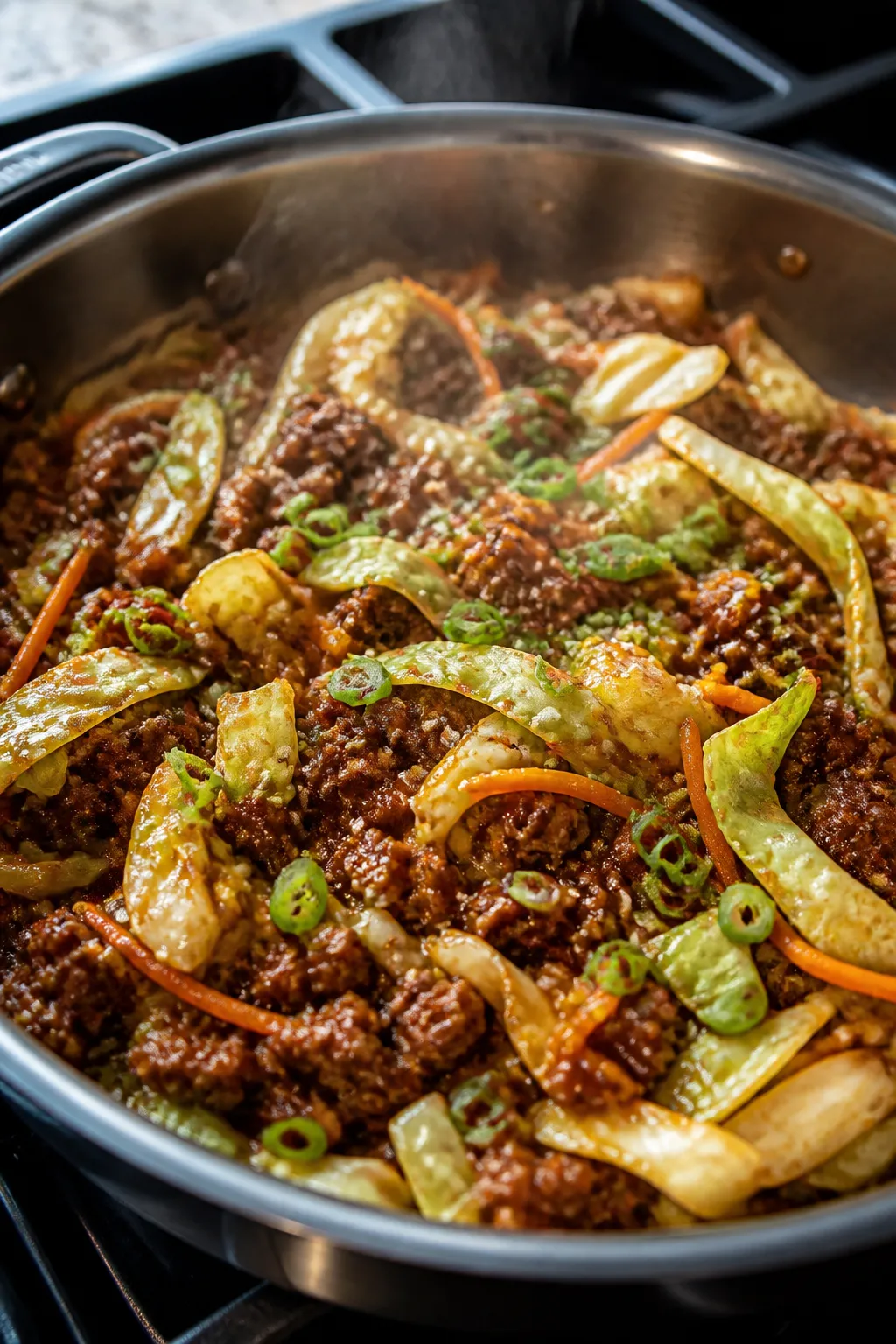
This bowl balances salty, sweet, spicy, and tangy in a way that keeps every bite interesting.
The sauce is inspired by Korean flavors—think soy sauce, garlic, ginger, and a touch of sesame. Instead of rice as the base, cabbage gets lightly sautéed until just tender, adding volume and crunch without making the dish heavy. It’s simple to cook and easy to scale, so it works for meal prep or a quick family dinner.
And with a few smart swaps, you can make it gluten-free, low-carb, or even vegetarian.
Ingredients
- 1 lb (450 g) ground beef (85–90% lean works best)
- 1 small green cabbage, cored and thinly sliced (about 5–6 cups)
- 1 medium onion, thinly sliced
- 3–4 cloves garlic, minced
- 1 tablespoon fresh ginger, grated
- 2 tablespoons neutral oil (avocado, canola, or grapeseed)
- 2 green onions, thinly sliced (plus more for garnish)
- 1 medium carrot, julienned or grated
- 1 tablespoon sesame seeds, for garnish
For the sauce:
- 1/4 cup low-sodium soy sauce (or tamari for gluten-free)
- 1–2 tablespoons gochujang (Korean chili paste), to taste
- 1 tablespoon brown sugar or honey
- 1 tablespoon rice vinegar
- 1 teaspoon toasted sesame oil
- 1–2 tablespoons water, as needed to loosen the sauce
Optional for serving:
- Cooked rice or cauliflower rice
- Kimchi
- Fried or jammy egg
- Sliced cucumbers
- Lime or lemon wedges
Step-by-Step Instructions
- Make the sauce. In a small bowl, whisk soy sauce, gochujang, brown sugar, rice vinegar, sesame oil, and 1 tablespoon water. Taste and adjust heat or sweetness. Set aside.
- Prep your veggies. Thinly slice the cabbage and onion.
Mince the garlic and grate the ginger. Slice the green onions and prep the carrot.
- Brown the beef. Heat 1 tablespoon oil in a large skillet over medium-high. Add the ground beef and a pinch of salt.
Cook, breaking it up, until well browned and slightly crispy in spots, about 6–8 minutes. Drain excess fat if needed.
- Add aromatics. Push the beef to one side. Add the remaining oil and toss in garlic, ginger, and onion.
Cook 1–2 minutes until fragrant, then stir into the beef.
- Sauce it up. Pour the sauce over the beef. Let it simmer 1–2 minutes until glossy and the flavors meld. If it looks too thick, add another splash of water.
- Cook the cabbage. Add the cabbage and carrot.
Toss to coat in the saucy beef. Cook 3–5 minutes until the cabbage softens but still has a little bite. Stir in most of the green onions; save some for garnish.
- Taste and finish. Adjust salt, sweetness, or heat.
A squeeze of citrus can brighten it up. Sprinkle with sesame seeds and remaining green onions.
- Serve. Spoon over warm rice or keep it low-carb and serve as-is. Top with kimchi or a fried egg if you like.
Storage Instructions
- Refrigerator: Store in an airtight container for 3–4 days.
Keep rice separate if using.
- Freezer: Freeze the beef-cabbage mixture (without rice or egg) for up to 2 months. Thaw overnight in the fridge.
- Reheat: Warm in a skillet over medium heat with a splash of water to loosen the sauce, or microwave in 60–90 second bursts, stirring between.
- Meal prep tip: Pack bowls with a wedge of lime and a separate container of kimchi to keep textures fresh.
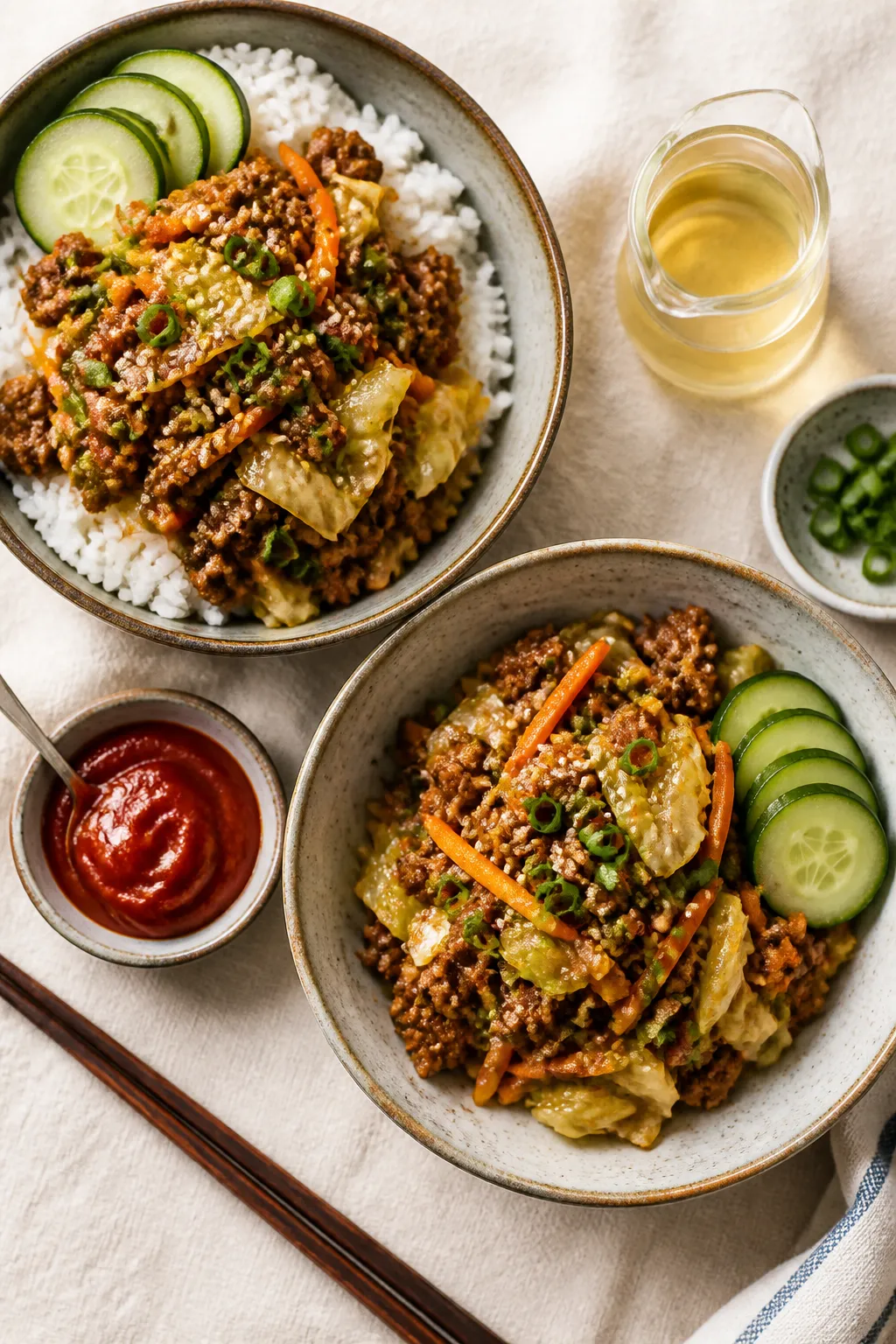
Why This is Good for You
This bowl delivers a solid balance of protein, fiber, and healthy fats. Cabbage is packed with vitamins C and K, plus it adds volume for a more satisfying meal without a lot of calories.
Ginger and garlic bring more than flavor; they add antioxidants and a little digestion support. If you use lean beef and control the sauce, you get bold taste with fewer added sugars and less sodium than takeout.
Pitfalls to Watch Out For
Never wonder what's for dinner again.
Get 7 healthy, family-friendly dinners complete with recipes, grocery lists, and simple meal plans delivered straight to your inbox.
- Overcooking the cabbage: It should be tender-crisp, not mushy. Pull it off the heat as soon as it softens.
- Skipping the browning step: Letting the beef develop a little crust adds big flavor.
Don’t stir constantly.
- Too salty or too sweet: Taste the sauce before it hits the pan. Adjust gochujang and sugar to your preference.
- Watery sauce: If the skillet gets watery after adding cabbage, cook another minute on medium-high to reduce, or avoid washing cabbage right before cooking.
- Wrong heat level: Gochujang varies by brand. Start with less, then add more if you want extra heat.
Recipe Variations
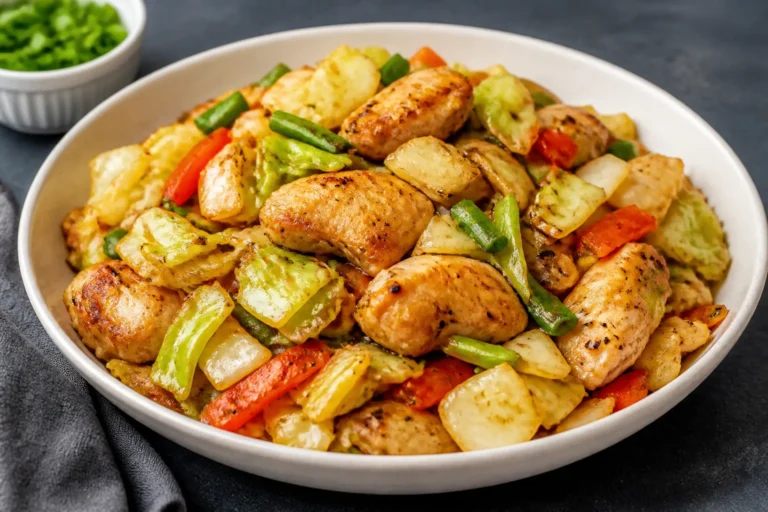
- Turkey or chicken: Swap in ground turkey or chicken for a lighter version.
Add a drizzle of oil to prevent dryness.
- Vegetarian: Use crumbled extra-firm tofu or tempeh. Press tofu first, then crisp it before adding the sauce.
- Gluten-free: Use tamari or coconut aminos and check your gochujang label for gluten-free certification.
- Extra veggies: Add mushrooms, bell peppers, zucchini, or snap peas. Stir-fry quickly so they keep their texture.
- Lower carb: Skip rice and serve over cauliflower rice or just enjoy the bowl as is.
- Saucy or dry: For a saucier bowl, add 2–3 extra tablespoons of water and an extra teaspoon of brown sugar.
For a drier, more caramelized mix, cook uncovered a little longer.
- Egg on top: A fried egg with runny yolk adds richness and feels restaurant-level with almost no effort.
FAQ
What is gochujang, and can I substitute it?
Gochujang is a Korean fermented chili paste that’s savory, slightly sweet, and gently spicy. If you don’t have it, mix 1 tablespoon chili-garlic sauce with 1 teaspoon honey as a quick stand-in. It won’t be the same depth, but it works in a pinch.
Do I need to use green cabbage, or can I use purple or Napa?
Green cabbage holds up best to the heat and stays pleasantly crisp.
Napa cabbage cooks faster and gets softer, which is also nice but changes the texture. Purple cabbage works too, though it may slightly tint the sauce.
How can I make this less spicy?
Use 1 teaspoon gochujang or skip it and add a little extra brown sugar and soy sauce. You can also stir in a spoonful of plain yogurt or a drizzle of sesame oil at the end to mellow the heat.
Can I make it ahead?
Yes.
Cook the beef and cabbage mixture and store it separately from rice and toppings. Reheat on the stove and add fresh green onions and sesame seeds just before serving.
What’s the best pan to use?
A large stainless steel or cast-iron skillet gives great browning and handles the cabbage volume well. A nonstick pan will work too; just avoid overcrowding so the beef caramelizes instead of steaming.
How do I add more protein without more meat?
Toss in edamame or top with a soft-boiled or fried egg.
You can also mix in cooked lentils—they soak up the sauce nicely.
Is this freezer-friendly?
Yes, the beef-cabbage base freezes well. Cool completely, portion into freezer-safe containers, and freeze up to 2 months. Reheat gently and refresh with a splash of soy sauce and vinegar.
Final Thoughts
Korean Beef Cabbage Bowls bring big flavor to the table with minimal fuss.
The ingredients are easy to find, the steps are simple, and the result feels special enough for a Friday night. Once you’ve made it once, it becomes a flexible template you can tweak to match your mood and what’s in your fridge. Keep gochujang and soy sauce on hand, and you’ll always be just one skillet away from a satisfying, weeknight-worthy dinner.
Printable Recipe Card
Want just the essential recipe details without scrolling through the article? Get our printable recipe card with just the ingredients and instructions.
Loved This Recipe?
If you're looking for more simple, healthy dinners your family will actually eat, grab my FREE 7-Day Easy Dinner Reset. You'll get 7 easy dinner recipes, simple grocery lists, and a done-for-you plan that takes the stress out of mealtime.