Protein Packed Chicken Fried Rice – Fast, Flavorful, and Satisfying
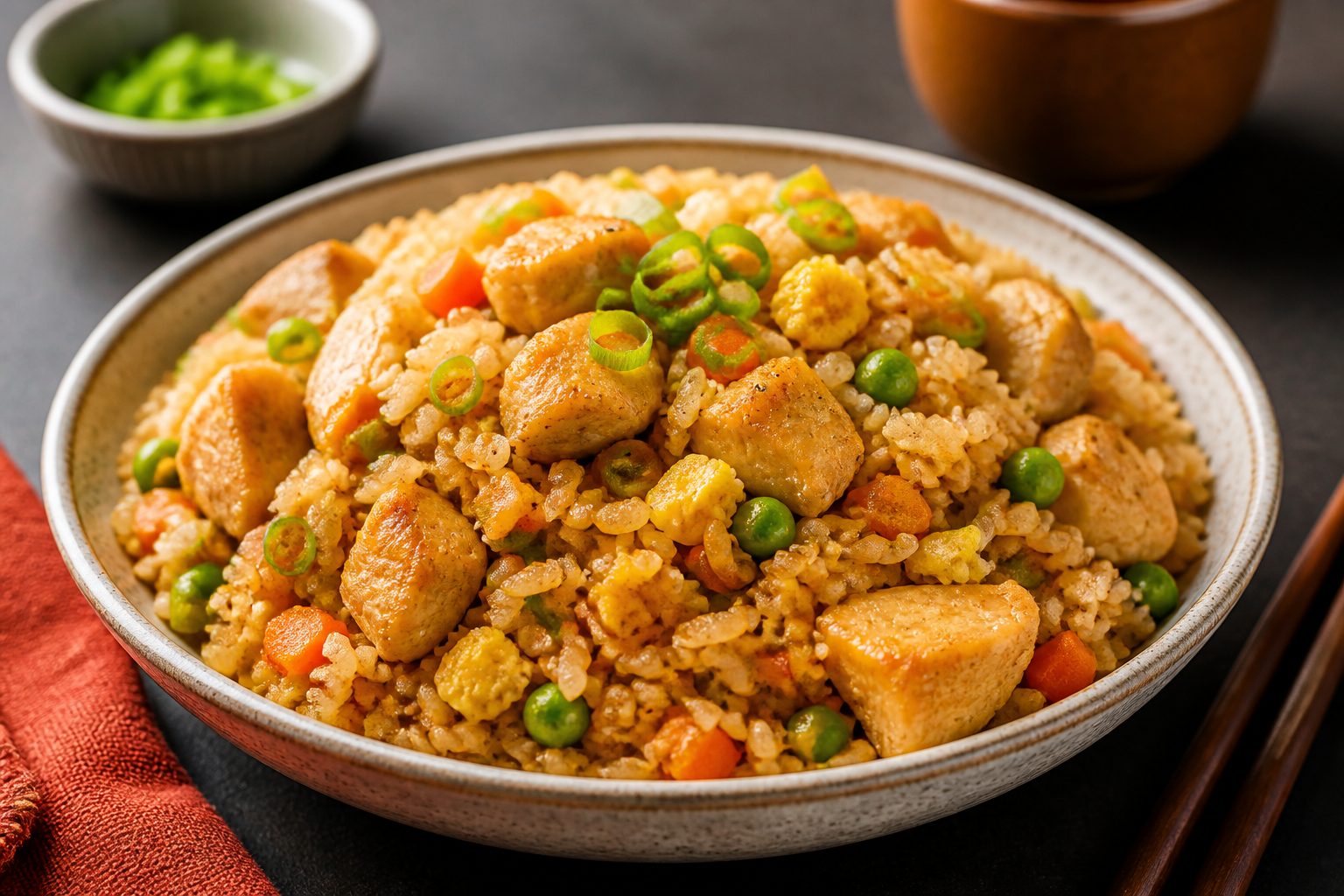
If you’re craving a hearty weeknight meal that’s quick to make and actually fills you up, this Protein Packed Chicken Fried Rice is your answer. It’s loaded with lean chicken, fluffy eggs, and plenty of veggies, so every bite feels balanced and satisfying. The best part: it’s made in one pan and comes together faster than takeout.
Stop wondering what's for dinner.
Get 7 healthy, family-friendly dinners complete with recipes and simple meal plans delivered straight to your inbox.
You’ll get big flavor from simple pantry staples, and it reheats beautifully for lunches. Make a double batch and you’ve got a high-protein meal prep ready to go.
Ingredients
Method
- Prep the rice: Break up any clumps with clean hands or a fork. Cold, separated grains are key for frying.
- Season the chicken: Toss the diced chicken with a pinch of salt, pepper, and 1 tsp soy sauce. This light seasoning adds flavor from the inside out.
- Make the sauce: In a small bowl, mix 3 tbsp soy sauce, 1 tbsp oyster sauce, and 1–2 tsp sesame oil. Set aside.
- Heat the pan: Set a large wok or wide skillet over medium-high heat. Add 1 tbsp oil and swirl to coat.
- Cook the eggs: Pour in the beaten eggs, let them set for 15–20 seconds, then gently scramble until just cooked. Remove to a plate.
- Sear the chicken: Add another 1 tbsp oil to the hot pan. Add chicken in a single layer. Cook undisturbed for 2 minutes, then stir-fry until cooked through and lightly browned, 3–4 more minutes. Remove to the plate with eggs.
- Sauté aromatics: If the pan looks dry, add 1 tsp oil. Add onion and the white parts of green onion. Stir-fry 1–2 minutes until slightly translucent. Add garlic (and ginger if using). Cook 30 seconds until fragrant.
- Add veggies: Stir in peas and carrots (and bell pepper if using). Cook 2–3 minutes until heated through and crisp-tender.
- Fry the rice: Increase heat to high. Add the remaining 1 tbsp oil, then the rice. Spread it out and let it sit for 30–45 seconds to lightly toast. Stir-fry 2–3 minutes, breaking up any remaining clumps.
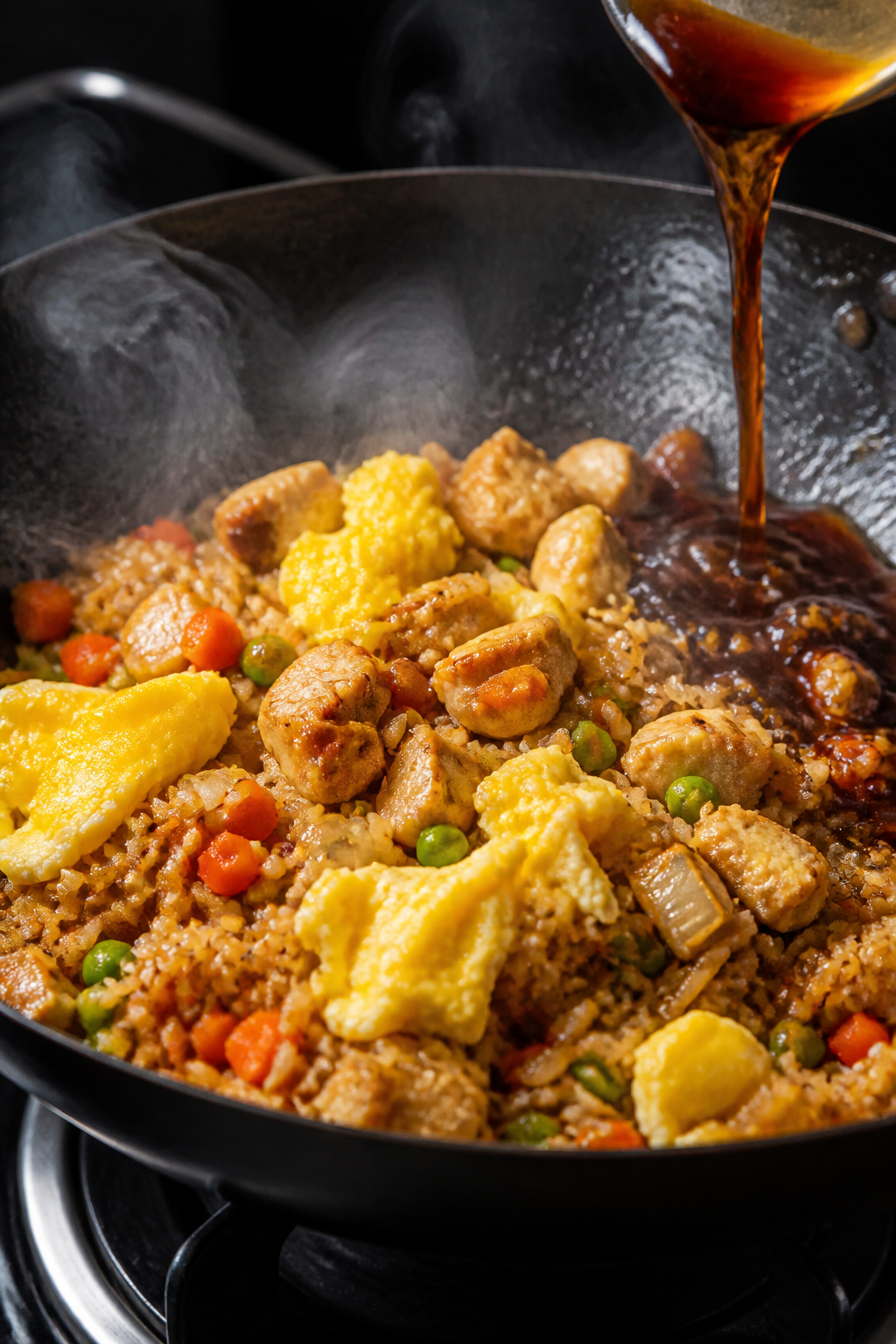
- Combine and sauce: Return chicken and eggs to the pan. Pour the sauce around the edges so it sizzles and distributes. Toss well until everything is evenly coated and glossy.
- Season to taste: Add white pepper. Adjust salt or soy sauce if needed. For heat, add a little chili crisp or sriracha.
- Finish and serve: Turn off heat. Fold in the green parts of the green onions (and spinach, if using, so it just wilts). Serve hot.
Why This Recipe Works
- Cold cooked rice fries better: Day-old rice stays separate and gets that classic fried rice texture without turning mushy.
- High-heat, quick cooking: Stir-frying on medium-high heat keeps veggies crisp and chicken juicy, while building savory wok-style flavor.
- Simple sauce, big payoff: A mix of soy sauce, oyster sauce, and a touch of sesame oil creates a glossy, umami-rich finish.
- Balanced macros: Lean chicken and eggs drive up protein, while rice and veggies round out the meal.
- Flexible and forgiving: Use the veggies you have, swap proteins, and control the sodium. It’s a base recipe that always works.
Ingredients
- 3 cups cold cooked rice (preferably day-old; jasmine or long-grain)
- 1 lb (450 g) boneless, skinless chicken breast, diced into small cubes
- 3 large eggs, lightly beaten
- 1 cup frozen peas and carrots (no need to thaw)
- 1 small onion, finely diced
- 3 cloves garlic, minced
- 2 green onions, thinly sliced (white and green parts separated)
- 3 tbsp soy sauce (use low-sodium if preferred)
- 1 tbsp oyster sauce (optional but recommended)
- 1–2 tsp toasted sesame oil
- 2–3 tbsp neutral oil (such as canola, avocado, or peanut oil)
- 1/2 tsp white pepper (or black pepper)
- Salt, to taste
- Optional add-ins: 1/2 cup diced bell pepper, 1 cup chopped baby spinach, 1 tbsp chili crisp or sriracha, 1 tsp grated ginger
Step-by-Step Instructions
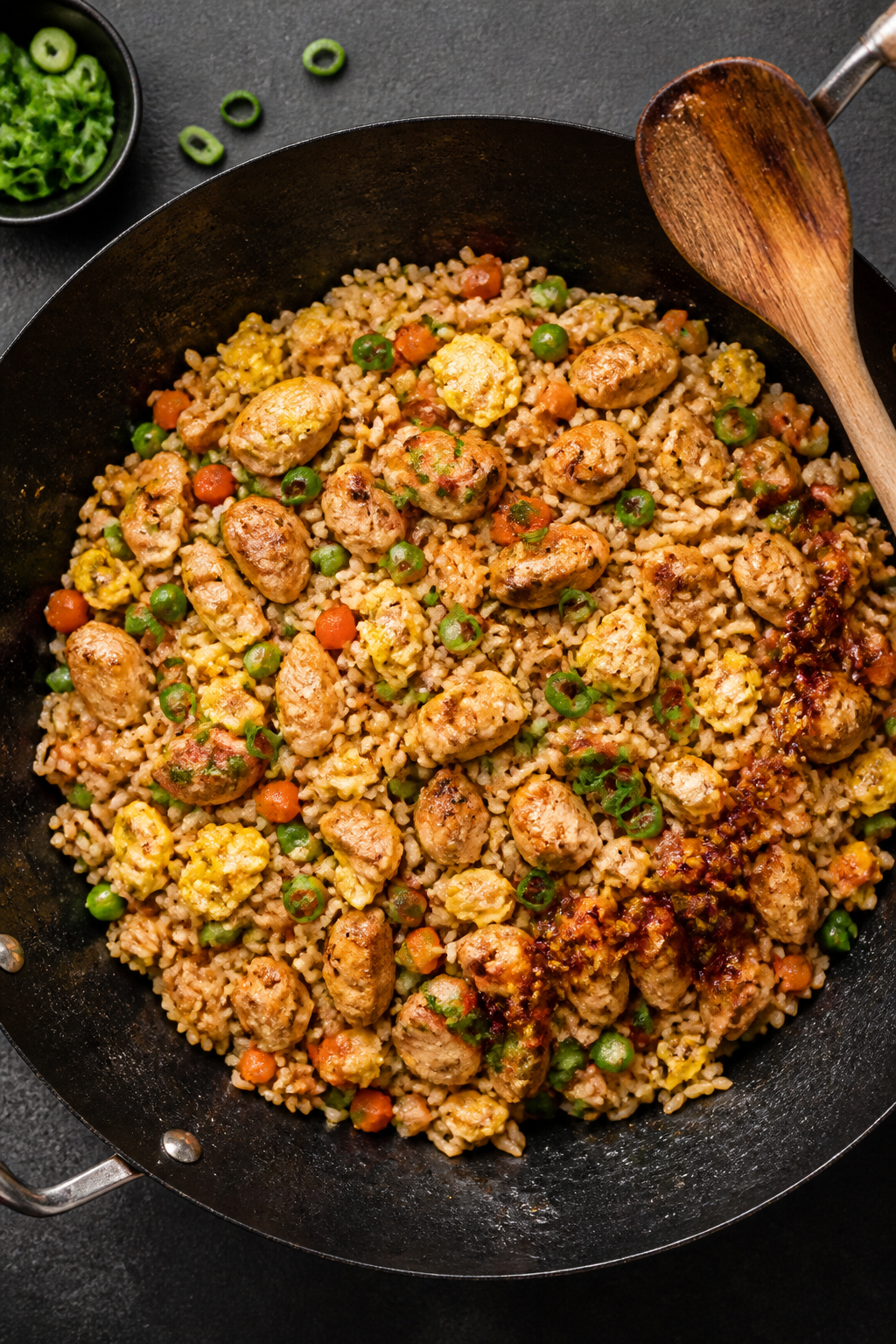
- Prep the rice: Break up any clumps with clean hands or a fork.
Cold, separated grains are key for frying.
- Season the chicken: Toss the diced chicken with a pinch of salt, pepper, and 1 tsp soy sauce. This light seasoning adds flavor from the inside out.
- Make the sauce: In a small bowl, mix 3 tbsp soy sauce, 1 tbsp oyster sauce, and 1–2 tsp sesame oil. Set aside.
- Heat the pan: Set a large wok or wide skillet over medium-high heat.
Add 1 tbsp oil and swirl to coat.
- Cook the eggs: Pour in the beaten eggs, let them set for 15–20 seconds, then gently scramble until just cooked. Remove to a plate.
- Sear the chicken: Add another 1 tbsp oil to the hot pan. Add chicken in a single layer.
Cook undisturbed for 2 minutes, then stir-fry until cooked through and lightly browned, 3–4 more minutes. Remove to the plate with eggs.
- Sauté aromatics: If the pan looks dry, add 1 tsp oil. Add onion and the white parts of green onion.
Stir-fry 1–2 minutes until slightly translucent. Add garlic (and ginger if using). Cook 30 seconds until fragrant.
- Add veggies: Stir in peas and carrots (and bell pepper if using).
Cook 2–3 minutes until heated through and crisp-tender.
- Fry the rice: Increase heat to high. Add the remaining 1 tbsp oil, then the rice. Spread it out and let it sit for 30–45 seconds to lightly toast.
Stir-fry 2–3 minutes, breaking up any remaining clumps.
- Combine and sauce: Return chicken and eggs to the pan. Pour the sauce around the edges so it sizzles and distributes. Toss well until everything is evenly coated and glossy.
- Season to taste: Add white pepper.
Adjust salt or soy sauce if needed. For heat, add a little chili crisp or sriracha.
- Finish and serve: Turn off heat. Fold in the green parts of the green onions (and spinach, if using, so it just wilts).
Serve hot.
How to Store
- Fridge: Cool quickly, then store in an airtight container for up to 4 days.
- Freezer: Portion into freezer-safe containers or bags. Freeze for up to 2 months. Thaw overnight in the fridge.
- Reheat: Reheat in a hot skillet with a splash of water to steam and revive texture, or microwave in short bursts, stirring between rounds.
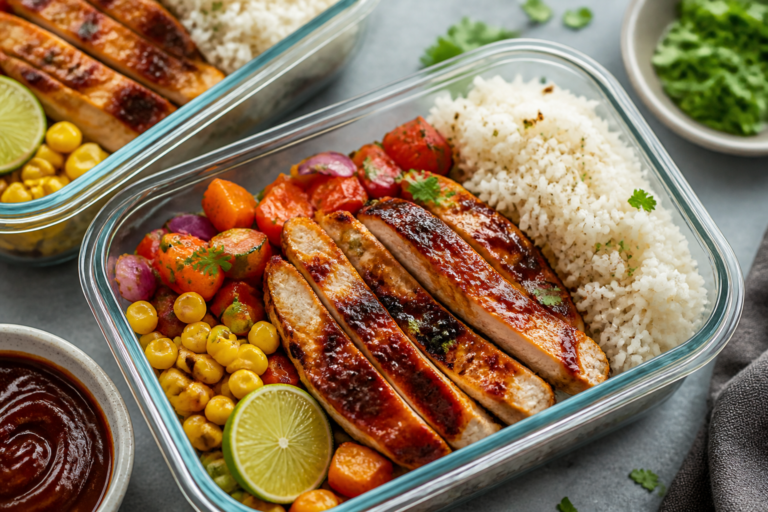
- Meal prep tip: Pack with extra steamed veggies or a side salad to keep meals balanced all week.
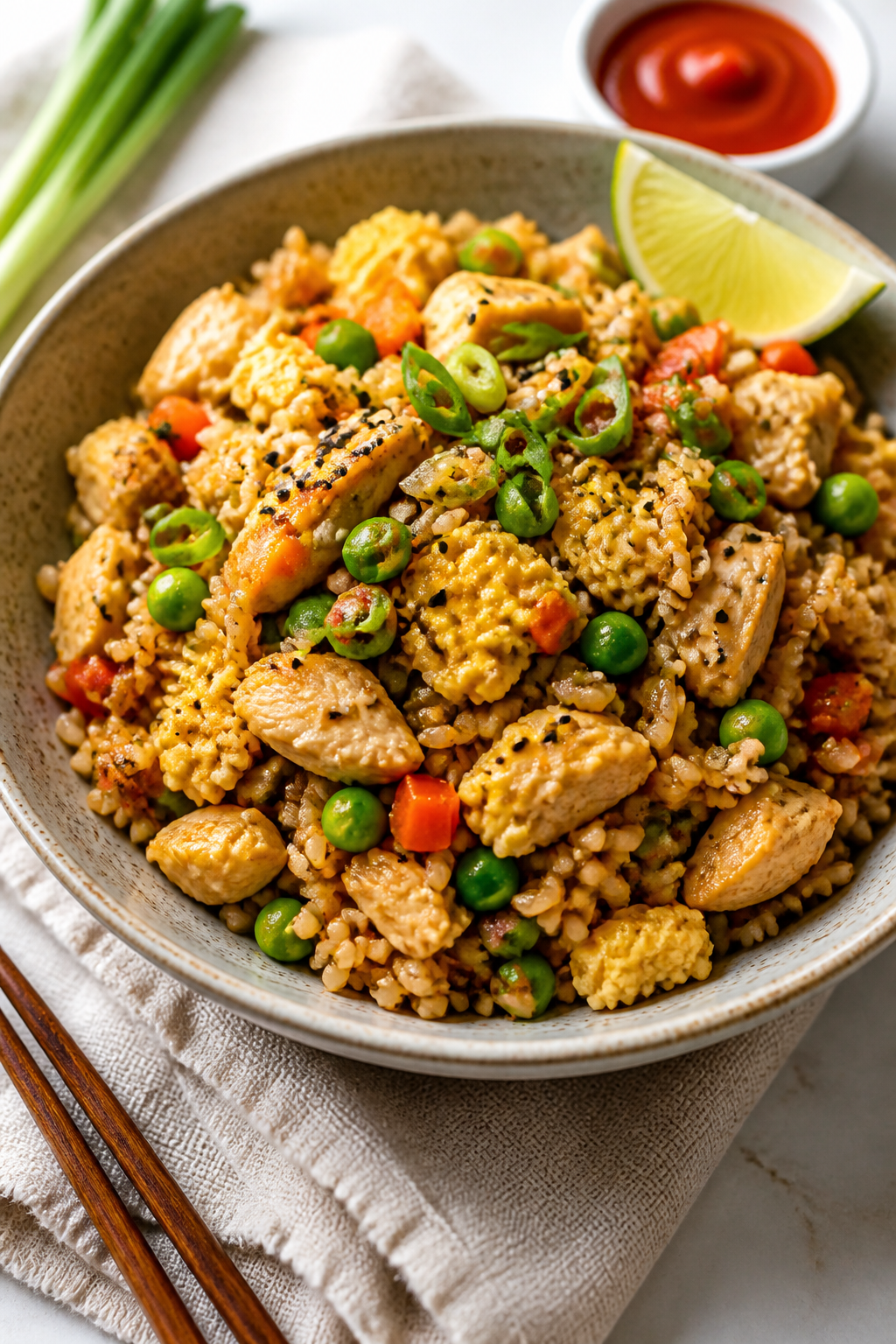
Why This is Good for You
- High-quality protein: Chicken and eggs support muscle repair and satiety, helping you stay full longer.
- Complex carbs for energy: Rice provides steady fuel, especially when paired with protein and fiber-rich veggies.
- Micronutrient boost: Peas, carrots, onions, and greens add vitamins A, C, K, and antioxidants.
- Better control over sodium and oils: Homemade lets you choose low-sodium sauces and heart-healthy oils.
- Smart leftovers: A balanced, ready-to-reheat meal reduces reliance on less nutritious convenience foods.
What Not to Do
- Don’t use freshly cooked hot rice: It clumps and turns gummy.
If you must, spread hot rice on a tray and chill quickly first.
- Don’t overcrowd the pan: Too much food lowers heat and causes steaming instead of frying. Cook in batches if needed.
- Don’t skip preheating: A hot pan prevents sticking and helps you get light browning and that “fried” flavor.
- Don’t drown it in soy sauce: Add gradually and taste. You can always add more at the table.
- Don’t overcook the eggs: Soft, just-set eggs stay tender and mix better into the rice.
Alternatives
- Protein swaps: Try ground chicken or turkey, shrimp, diced tofu, tempeh, or lean pork loin.
For a double-protein hit, use chicken plus edamame.
- Rice options: Jasmine is classic, but long-grain white, basmati, or brown rice work. For extra protein and fiber, use quinoa or a brown rice–quinoa blend.
- Sauce variations: Add 1 tsp fish sauce for depth, a splash of rice vinegar for brightness, or a spoon of gochujang for sweet heat.
- Veggie mix-ins: Corn, broccoli florets, snap peas, mushrooms, or shredded cabbage all fit right in.
- Lower carb: Swap half the rice with riced cauliflower. Fry it briefly to avoid sogginess.
FAQ
Can I make this without a wok?
Never wonder what's for dinner again.
Get 7 healthy, family-friendly dinners complete with recipes, grocery lists, and simple meal plans delivered straight to your inbox.
Yes.
A large nonstick or stainless steel skillet works well. The key is high heat, enough oil to lightly coat, and not overcrowding the pan.
What if I only have freshly cooked rice?
Spread it on a baking sheet, pop it in the fridge or freezer for 20–30 minutes, and let the surface dry slightly. It won’t be as perfect as day-old rice, but it will fry much better.
How do I keep chicken juicy?
Cut it into small, even pieces, cook over medium-high heat, and avoid overcooking.
You can also toss the chicken with 1/2 teaspoon cornstarch for a quick velvety sear.
Is oyster sauce necessary?
No, but it adds a savory-sweet depth. If you skip it, bump the soy sauce slightly and add a pinch of sugar or a dash of fish sauce for complexity.
Can I make it gluten-free?
Use tamari or certified gluten-free soy sauce and a gluten-free oyster sauce alternative. Check all labels to be sure.
How much protein is in a serving?
It varies by ingredients, but with 1 lb chicken and 3 eggs across four servings, you’ll usually land around 25–35 grams of protein per serving, not counting any high-protein add-ins.
What oil is best?
Use a neutral, high-smoke-point oil like canola, avocado, peanut, or grapeseed.
Add sesame oil at the end for flavor, not for frying.
Can I add more vegetables?
Absolutely. Just keep the total volume reasonable so the pan stays hot. If adding watery veggies like zucchini, cook off excess moisture first.
Final Thoughts
Protein Packed Chicken Fried Rice is the kind of recipe that earns a permanent spot in your rotation.
It’s fast, flexible, and consistently delicious, with enough protein to keep you full and focused. With a few smart techniques—cold rice, hot pan, simple sauce—you’ll turn basic ingredients into a takeout-level meal at home. Make it your own with your favorite veggies and heat level, and enjoy the leftovers just as much the next day.
Printable Recipe Card
Want just the essential recipe details without scrolling through the article? Get our printable recipe card with just the ingredients and instructions.
Loved This Recipe?
If you're looking for more simple, healthy dinners your family will actually eat, grab my FREE 7-Day Easy Dinner Reset. You'll get 7 easy dinner recipes, simple grocery lists, and a done-for-you plan that takes the stress out of mealtime.