Protein Packed Chicken Stir Fry – Fast, Flavorful, and Satisfying
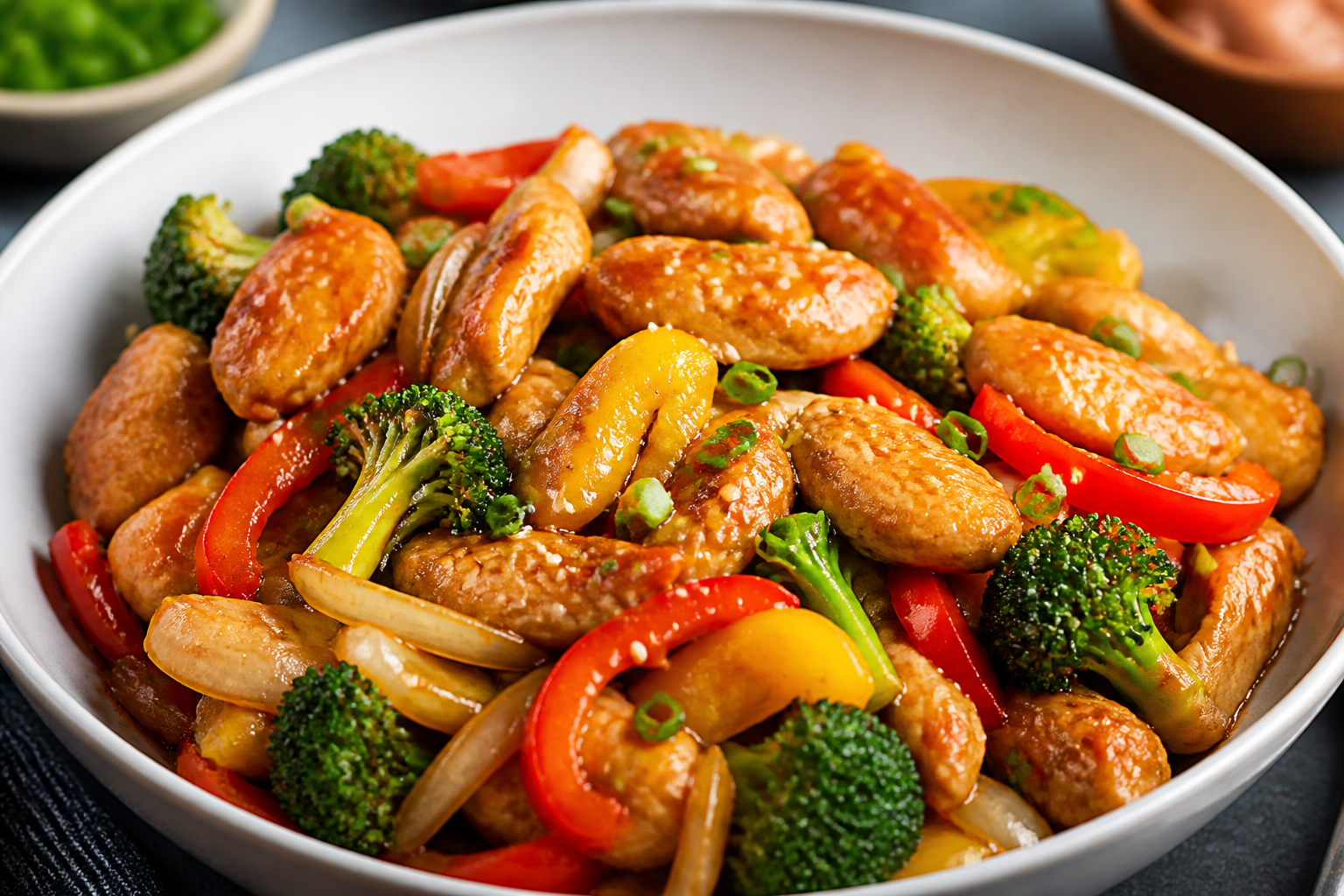
This Protein Packed Chicken Stir Fry is the kind of weeknight hero you keep coming back to. It’s quick to make, loaded with lean protein, and full of vibrant veggies that don’t feel like an afterthought. The sauce hits that sweet-savory-tangy balance, and everything cooks in one pan.
Stop wondering what's for dinner.
Get 7 healthy, family-friendly dinners complete with recipes and simple meal plans delivered straight to your inbox.
You’ll spend more time eating than cooking, and that’s the point. Whether you’re meal prepping or feeding a hungry crew, this stir fry gets it done without fuss.
Ingredients
Method
- Prep the chicken: Thinly slice the chicken breast against the grain. In a bowl, toss with 1 tablespoon soy sauce and 1 tablespoon cornstarch. Set aside while you prep the vegetables.
- Make the sauce: In a measuring cup, whisk the broth, soy sauce, oyster sauce, hoisin, rice vinegar, sriracha, sesame oil, cornstarch, and honey. Stir until smooth and no cornstarch lumps remain.
- Heat the pan: Place a large skillet or wok over medium-high heat. Add 1 tablespoon oil. When it shimmers, add the chicken in a single layer. Cook 3–4 minutes, stirring once or twice, until just cooked through and lightly browned. Transfer to a plate.
- Stir-fry the veggies: Add the remaining 1 tablespoon oil to the pan. Add broccoli and carrots first; cook 2 minutes, stirring often. Add bell pepper, onion, and snap peas; cook another 2–3 minutes until crisp-tender.
- Add aromatics: Push veggies to the edges. Add garlic and ginger to the center. Stir 30 seconds until fragrant, then toss everything together.
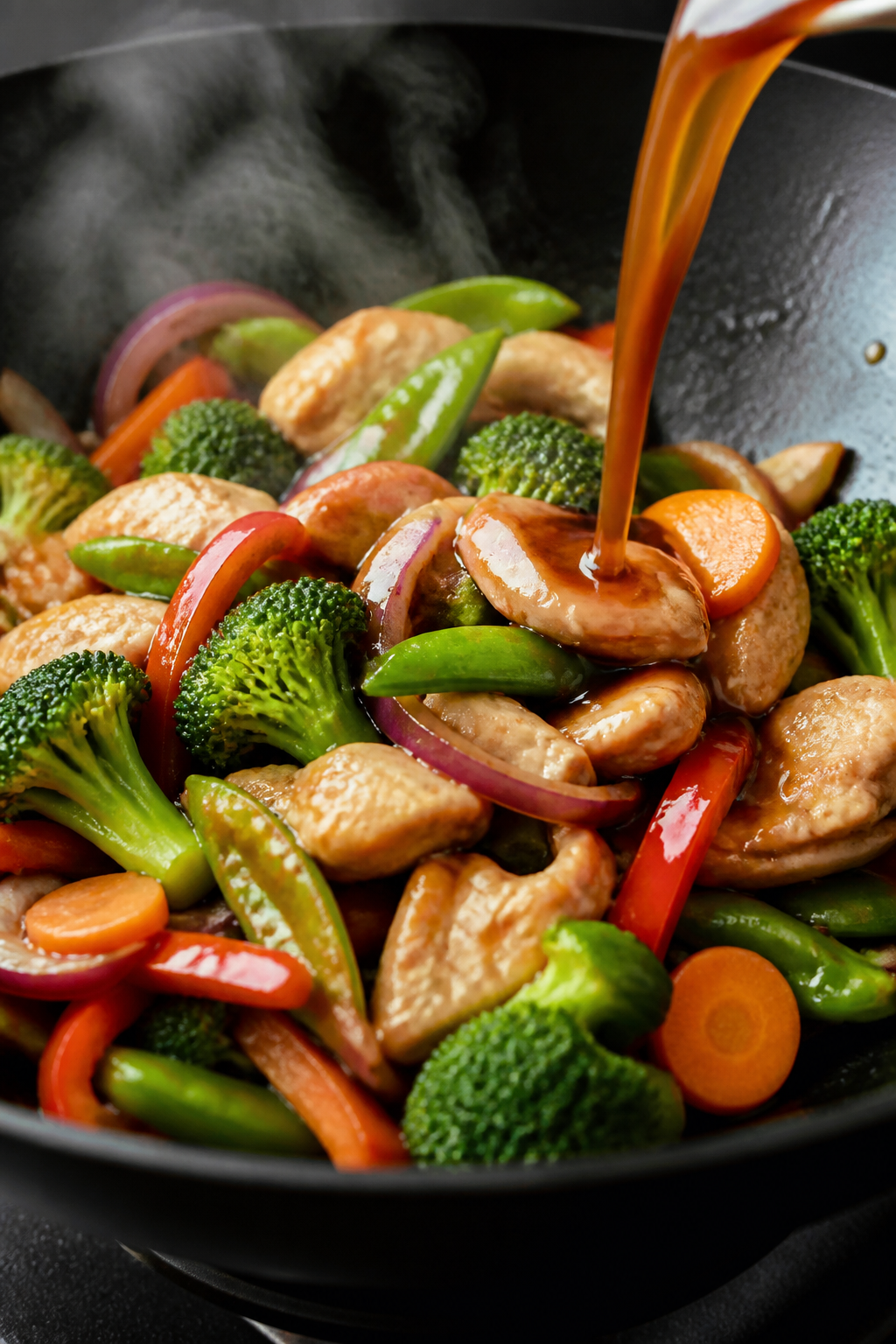
- Sauce it up: Return chicken and any juices to the pan. Give the sauce a quick stir (cornstarch settles), then pour it in. Stir constantly for 1–2 minutes until the sauce thickens and coats everything.
- Taste and finish: Adjust seasoning with a splash more soy sauce for salt, vinegar for brightness, or sriracha for heat. Remove from heat.
- Serve: Spoon over rice or cauliflower rice. Top with green onions, sesame seeds, and a squeeze of lime if you like.
What Makes This Recipe So Good
- High in protein: Lean chicken breast keeps you full and fuels recovery after workouts.
- Balanced nutrition: Colorful veggies add fiber, vitamins, and crunch without extra calories.
- Big flavor, simple sauce: A handful of pantry staples creates a glossy, restaurant-style finish.
- Quick cook time: From chopping to plating in about 30 minutes.
- Flexible and forgiving: Swap veggies based on what you have, and adjust the heat to taste.
Ingredients
- 1.25 pounds (570 g) boneless, skinless chicken breast, thinly sliced against the grain
- 1 tablespoon cornstarch (for coating the chicken)
- 1 tablespoon low-sodium soy sauce (for marinating the chicken)
- 2 tablespoons neutral oil (such as avocado, canola, or peanut), divided
- 1 red bell pepper, sliced into thin strips
- 2 cups broccoli florets
- 1 medium carrot, thinly sliced on a bias
- 1 small red onion, sliced
- 1 cup sugar snap peas (or snow peas)
- 3 cloves garlic, minced
- 1 tablespoon fresh ginger, minced or grated
Sauce:
- 1/3 cup low-sodium chicken broth (or water)
- 3 tablespoons low-sodium soy sauce
- 1 tablespoon oyster sauce (optional but recommended)
- 1 tablespoon hoisin (for a touch of sweetness)
- 2 teaspoons rice vinegar
- 1–2 teaspoons sriracha or chili-garlic sauce (adjust to taste)
- 2 teaspoons toasted sesame oil
- 2 teaspoons cornstarch (to thicken)
- 1 teaspoon honey or brown sugar (optional, balances heat and salt)
To serve (optional):
- Cooked brown rice, white rice, or cauliflower rice
- Sliced green onions and toasted sesame seeds
- Lime wedges for a fresh finish
Instructions
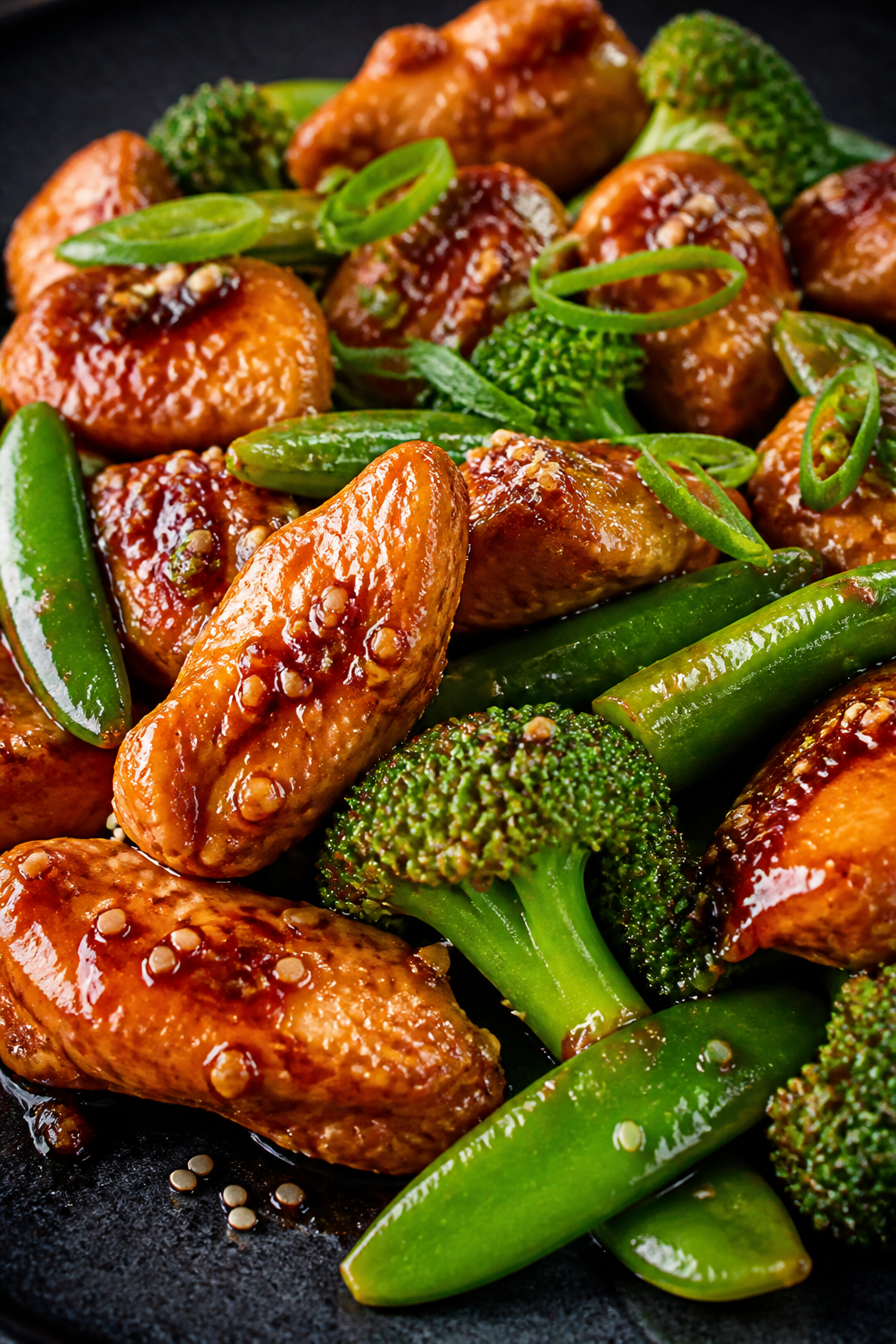
- Prep the chicken: Thinly slice the chicken breast against the grain. In a bowl, toss with 1 tablespoon soy sauce and 1 tablespoon cornstarch.
Set aside while you prep the vegetables.
- Make the sauce: In a measuring cup, whisk the broth, soy sauce, oyster sauce, hoisin, rice vinegar, sriracha, sesame oil, cornstarch, and honey. Stir until smooth and no cornstarch lumps remain.
- Heat the pan: Place a large skillet or wok over medium-high heat. Add 1 tablespoon oil.
When it shimmers, add the chicken in a single layer. Cook 3–4 minutes, stirring once or twice, until just cooked through and lightly browned. Transfer to a plate.
- Stir-fry the veggies: Add the remaining 1 tablespoon oil to the pan.
Add broccoli and carrots first; cook 2 minutes, stirring often. Add bell pepper, onion, and snap peas; cook another 2–3 minutes until crisp-tender.
- Add aromatics: Push veggies to the edges. Add garlic and ginger to the center.
Stir 30 seconds until fragrant, then toss everything together.
- Sauce it up: Return chicken and any juices to the pan. Give the sauce a quick stir (cornstarch settles), then pour it in. Stir constantly for 1–2 minutes until the sauce thickens and coats everything.
- Taste and finish: Adjust seasoning with a splash more soy sauce for salt, vinegar for brightness, or sriracha for heat.
Remove from heat.
- Serve: Spoon over rice or cauliflower rice. Top with green onions, sesame seeds, and a squeeze of lime if you like.
Storage Instructions
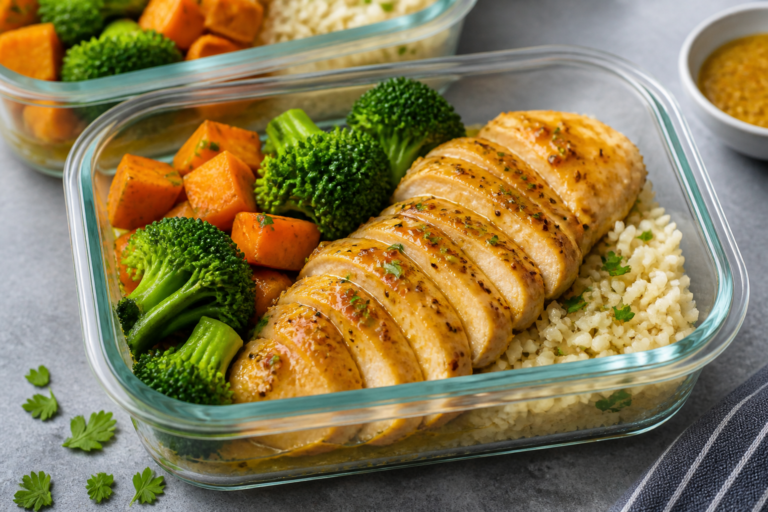
- Refrigerator: Cool completely, then store in an airtight container for up to 4 days.
- Freezer: Portion into freezer-safe containers and freeze for up to 2 months. Thaw overnight in the fridge.
- Reheat: Warm gently in a pan over medium heat with a splash of water to loosen the sauce, or microwave in 45-second bursts, stirring in between.
Avoid overcooking to keep the chicken tender.
- Meal prep tip: Store rice and stir fry separately so textures stay fresh.
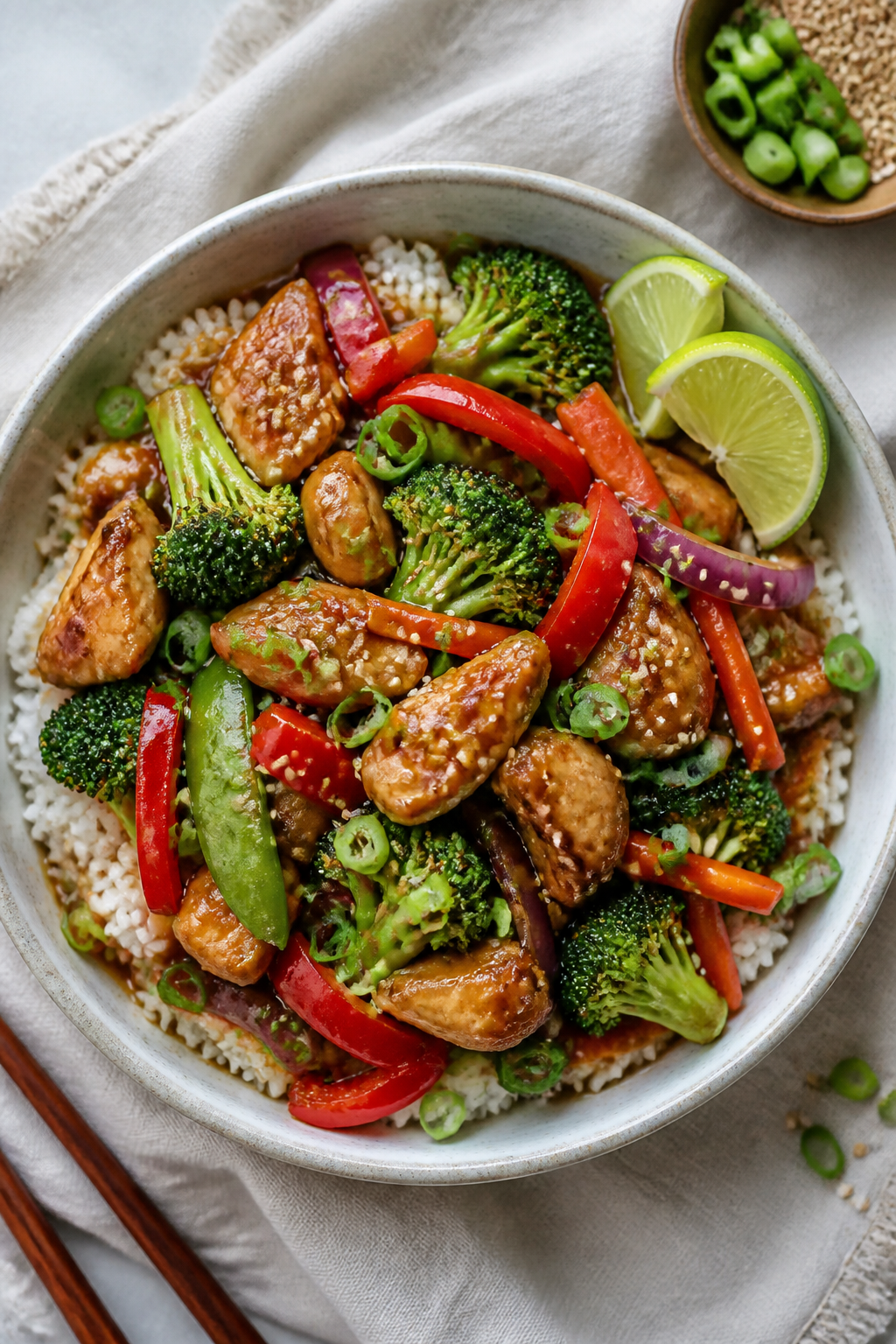
Benefits of This Recipe
- High protein, low fuss: Chicken breast delivers lean protein without a heavy prep list.
- Smart carbs and fiber: Veggies and rice give steady energy and keep you satisfied.
- Customizable calories: Use cauliflower rice for a lighter bowl or add extra rice for training days.
- Budget-friendly: Uses everyday ingredients and stretches well for multiple meals.
- Great for leftovers: The sauce keeps everything moist and tasty even the next day.
Common Mistakes to Avoid
- Overcrowding the pan: Too much at once steams the chicken and veggies. Cook in batches if needed.
- Skipping the cornstarch on the chicken: That light coating seals in moisture and helps browning.
- Not pre-mixing the sauce: Cornstarch clumps if added dry. Always whisk it into the liquid first.
- Overcooking the vegetables: Aim for crisp-tender.
They’ll soften a bit more as the sauce thickens.
- Forgetting to taste at the end: A tiny splash of soy, vinegar, or heat can make the flavors pop.
Alternatives
Never wonder what's for dinner again.
Get 7 healthy, family-friendly dinners complete with recipes, grocery lists, and simple meal plans delivered straight to your inbox.
- Protein swaps: Use chicken thighs, turkey breast, lean beef strips, shrimp, or extra-firm tofu. For tofu, press and cube, toss with cornstarch, and sear until golden before adding veggies.
- Gluten-free: Replace soy sauce with tamari or coconut aminos. Check labels on oyster and hoisin sauces.
- Veggie variations: Try mushrooms, baby corn, zucchini, cabbage, bok choy, or green beans.
Keep total volume similar to avoid crowding.
- Low-carb: Serve over cauliflower rice and reduce the hoisin or honey.
- No oyster sauce: Add an extra teaspoon of soy sauce and a dash more hoisin, or a splash of fish sauce for depth.
- No hoisin: Use a little extra oyster sauce and a pinch of sugar, or 1 teaspoon of maple syrup.
- Nutty finish: Toss in roasted cashews or peanuts at the end for crunch and extra protein.
FAQ
Can I make this without a wok?
Yes. A large stainless steel or cast-iron skillet works well. The key is high heat, hot oil, and not crowding the pan.
How do I keep the chicken tender?
Slice it thinly against the grain, coat lightly with cornstarch, and cook quickly over high heat.
Don’t let it sit in the pan once it’s cooked; remove and add back with the sauce.
Can I use frozen vegetables?
You can. Don’t thaw first. Add them straight to a hot pan with oil and cook off excess moisture before adding the sauce.
Expect a slightly softer texture.
Is there a way to reduce sodium?
Use low-sodium soy sauce and broth, and skip the added salt. Balance with acid (rice vinegar or lime) and aromatics (garlic and ginger) to keep flavor high.
What if I don’t like spicy food?
Leave out the sriracha and add a touch more hoisin or honey. You’ll still get a glossy, flavorful sauce without the heat.
How can I add more protein?
Stir in edamame, toss in roasted cashews, or add a scrambled egg at the end.
You can also increase the chicken to 1.5 pounds and bump the sauce by 25%.
Can I meal prep this for the week?
Absolutely. Portion into containers with rice, keep toppings separate, and refrigerate up to 4 days. It reheats well and holds texture if you don’t overcook the veggies.
In Conclusion
Protein Packed Chicken Stir Fry is the kind of reliable, tasty meal that fits any schedule.
It’s fast to cook, easy to customize, and delivers that satisfying mix of lean protein, crisp veggies, and bold sauce. Keep the ingredients simple, cook hot and quick, and finish by tasting and adjusting. With a few smart steps, you’ll have a go-to stir fry that beats takeout and keeps you fueled all week.
Printable Recipe Card
Want just the essential recipe details without scrolling through the article? Get our printable recipe card with just the ingredients and instructions.
Loved This Recipe?
If you're looking for more simple, healthy dinners your family will actually eat, grab my FREE 7-Day Easy Dinner Reset. You'll get 7 easy dinner recipes, simple grocery lists, and a done-for-you plan that takes the stress out of mealtime.