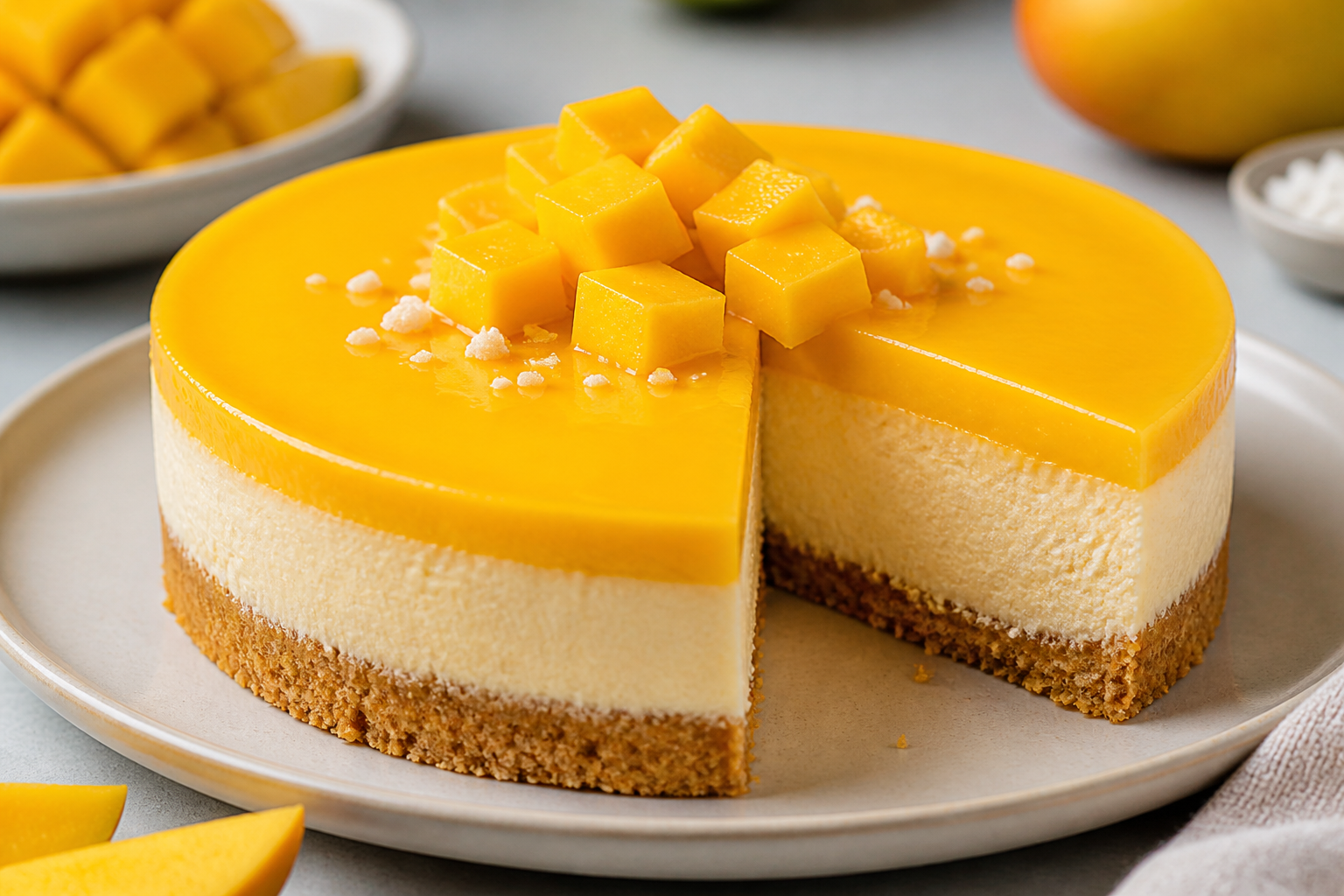
High Protein Mango Cheesecake – Creamy, Fresh, and Satisfying
This cheesecake tastes like a tropical dessert but packs a serious protein boost. It’s creamy, lightly sweet, and bright with real mango. You don’t need fancy techniques, and you won’t be stuck in the kitchen all day.
Stop wondering what's for dinner.
Get 7 healthy, family-friendly dinners complete with recipes and simple meal plans delivered straight to your inbox.
The texture is smooth and silky, with a refreshing fruit finish. If you love cheesecake but want something lighter that still feels indulgent, this one hits the spot.
Ingredients
Method
- Prep the pan and oven: Heat the oven to 325°F (160°C). Line a 9-inch springform pan with parchment on the bottom. Lightly grease the sides.
- Make the crust: In a bowl, mix oats, almond flour, melted coconut oil or butter, honey, and a pinch of salt. It should look sandy and clump when pressed. Press firmly into the pan’s base. Bake for 8–10 minutes until just set. Cool slightly.
- Blend the dairy base: Blend cottage cheese in a blender until silky. Add Greek yogurt, protein powder, sweetener, vanilla, lime zest, cornstarch, and salt. Blend until smooth. Taste and adjust sweetness.
- Add the eggs: Blend or whisk in eggs just until combined. Don’t overmix—this helps prevent cracks.
- Fill and bake: Pour the filling over the crust. Tap the pan gently on the counter to release air bubbles. Bake for 40–50 minutes. The edges should be set, and the center should jiggle slightly, like gelatin.
- Cool gradually: Turn off the oven, crack the door, and let the cheesecake sit for 30 minutes. Move to a rack and cool to room temperature.
- Chill: Cover and refrigerate for at least 6 hours, preferably overnight. This step fully sets the texture.
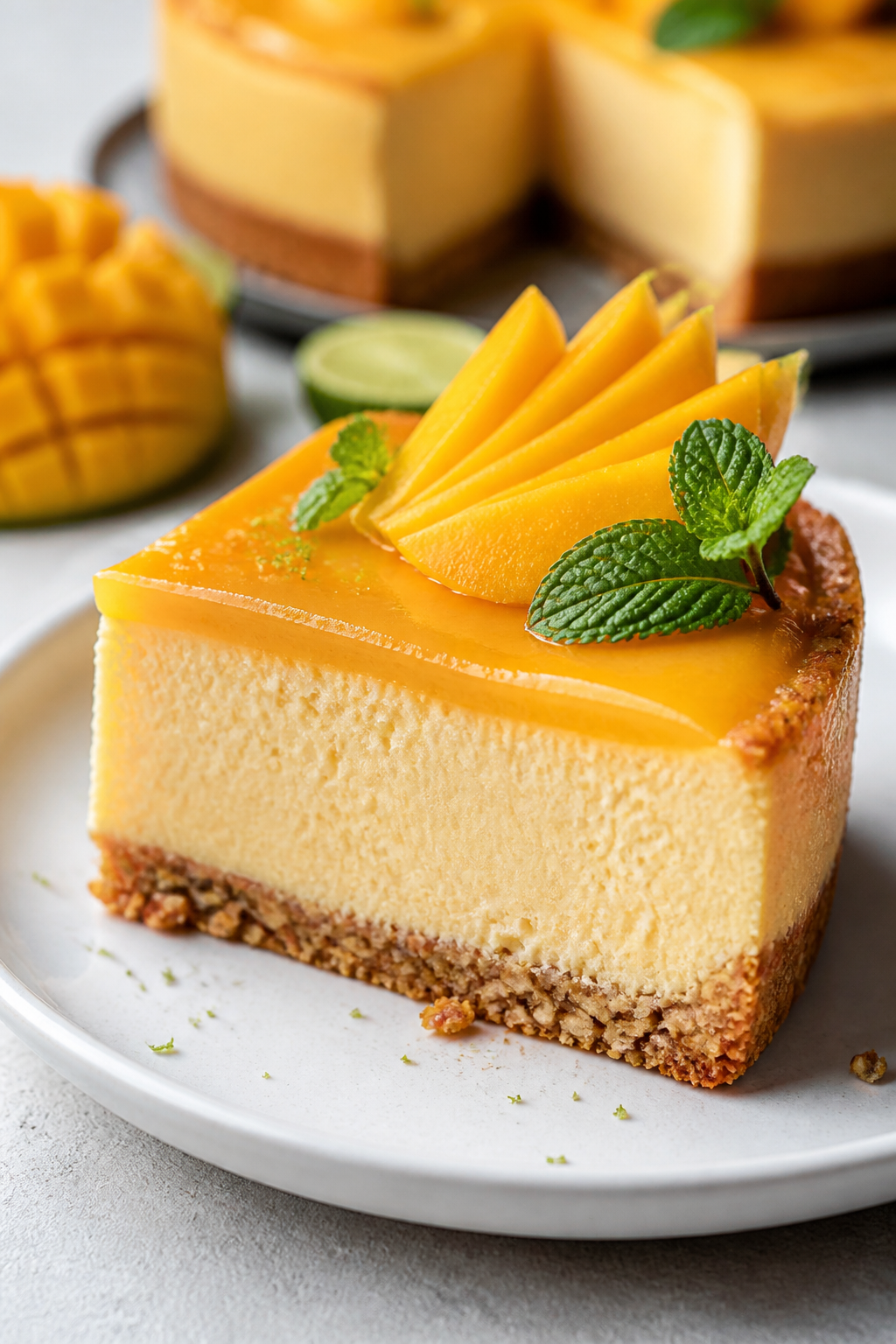
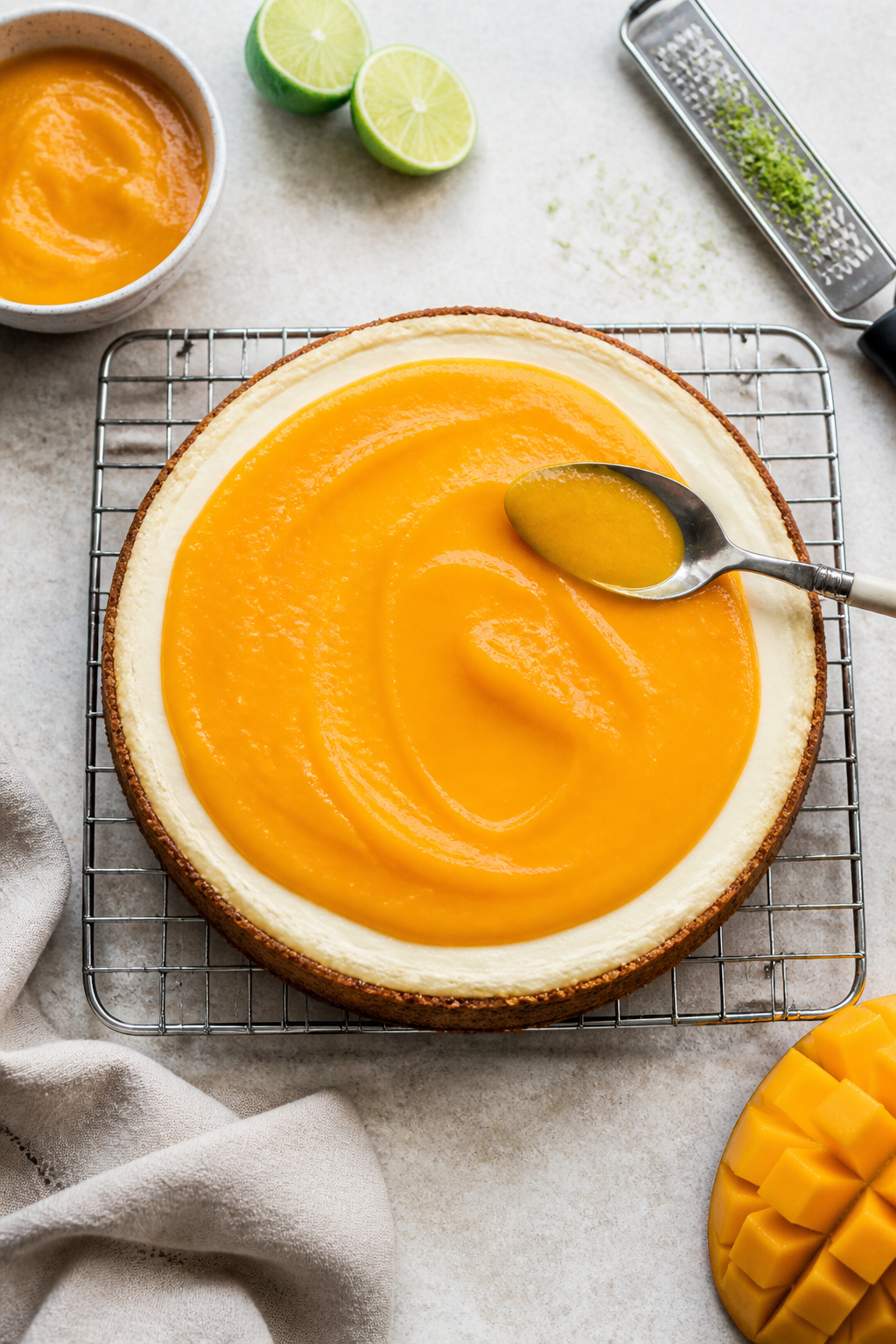
- Make the mango layer: Stir mango purée with lime juice and sweetener. For a firmer topping, bloom gelatin in 1 tablespoon cold water for 5 minutes, gently warm until melted, and whisk into the purée. Spread over the chilled cheesecake.
- Final chill and serve: Chill 30–60 minutes to set the topping. Run a knife around the edge, remove the springform, slice with a hot knife, and garnish with fresh mango and lime zest.
What Makes This Recipe So Good
- Protein-packed but still indulgent: Greek yogurt, cottage cheese, and protein powder create a rich, creamy texture without heavy cream.
- Real mango flavor: Fresh mango purée adds natural sweetness and a sunny, fruity note.
- No-fuss crust: A simple oat-and-almond crust holds together well and adds a nutty crunch.
- Lighter on sugar: Just enough sweetness to balance the tang and fruit. You can use honey, maple syrup, or a zero-calorie sweetener.
- Make-ahead friendly: Bakes in under an hour, chills overnight, and slices beautifully the next day.
What You’ll Need
- For the crust:
- 1 cup rolled oats (or oat flour)
- 1/2 cup almond flour
- 2 tablespoons coconut oil or unsalted butter, melted
- 2 tablespoons honey or maple syrup
- Pinch of salt
- For the filling:
- 2 cups low-fat cottage cheese (blended smooth)
- 1 1/2 cups plain Greek yogurt (2% or 0%)
- 1/2 cup vanilla or unflavored whey or casein protein powder
- 2 large eggs
- 1/3 cup honey, maple syrup, or granulated sweetener of choice (adjust to taste)
- 2 teaspoons vanilla extract
- Zest of 1 lime (optional but brightens the mango)
- 1 tablespoon cornstarch or arrowroot
- 1/4 teaspoon salt
- For the mango layer:
- 1 1/2 cups ripe mango, puréed (fresh or thawed frozen)
- 2 tablespoons lime juice
- 1–2 tablespoons honey or sweetener, to taste
- 1 teaspoon powdered gelatin (optional, for a firmer set)
- To finish:
- Fresh mango slices or cubes
- Extra lime zest or a few mint leaves
Instructions
- Prep the pan and oven: Heat the oven to 325°F (160°C).
Line a 9-inch springform pan with parchment on the bottom. Lightly grease the sides.
- Make the crust: In a bowl, mix oats, almond flour, melted coconut oil or butter, honey, and a pinch of salt. It should look sandy and clump when pressed.
Press firmly into the pan’s base. Bake for 8–10 minutes until just set. Cool slightly.
- Blend the dairy base: Blend cottage cheese in a blender until silky.
Add Greek yogurt, protein powder, sweetener, vanilla, lime zest, cornstarch, and salt. Blend until smooth. Taste and adjust sweetness.
- Add the eggs: Blend or whisk in eggs just until combined.
Don’t overmix—this helps prevent cracks.
- Fill and bake: Pour the filling over the crust. Tap the pan gently on the counter to release air bubbles. Bake for 40–50 minutes.
The edges should be set, and the center should jiggle slightly, like gelatin.
- Cool gradually: Turn off the oven, crack the door, and let the cheesecake sit for 30 minutes. Move to a rack and cool to room temperature.
- Chill: Cover and refrigerate for at least 6 hours, preferably overnight. This step fully sets the texture.
- Make the mango layer: Stir mango purée with lime juice and sweetener.
For a firmer topping, bloom gelatin in 1 tablespoon cold water for 5 minutes, gently warm until melted, and whisk into the purée. Spread over the chilled cheesecake.
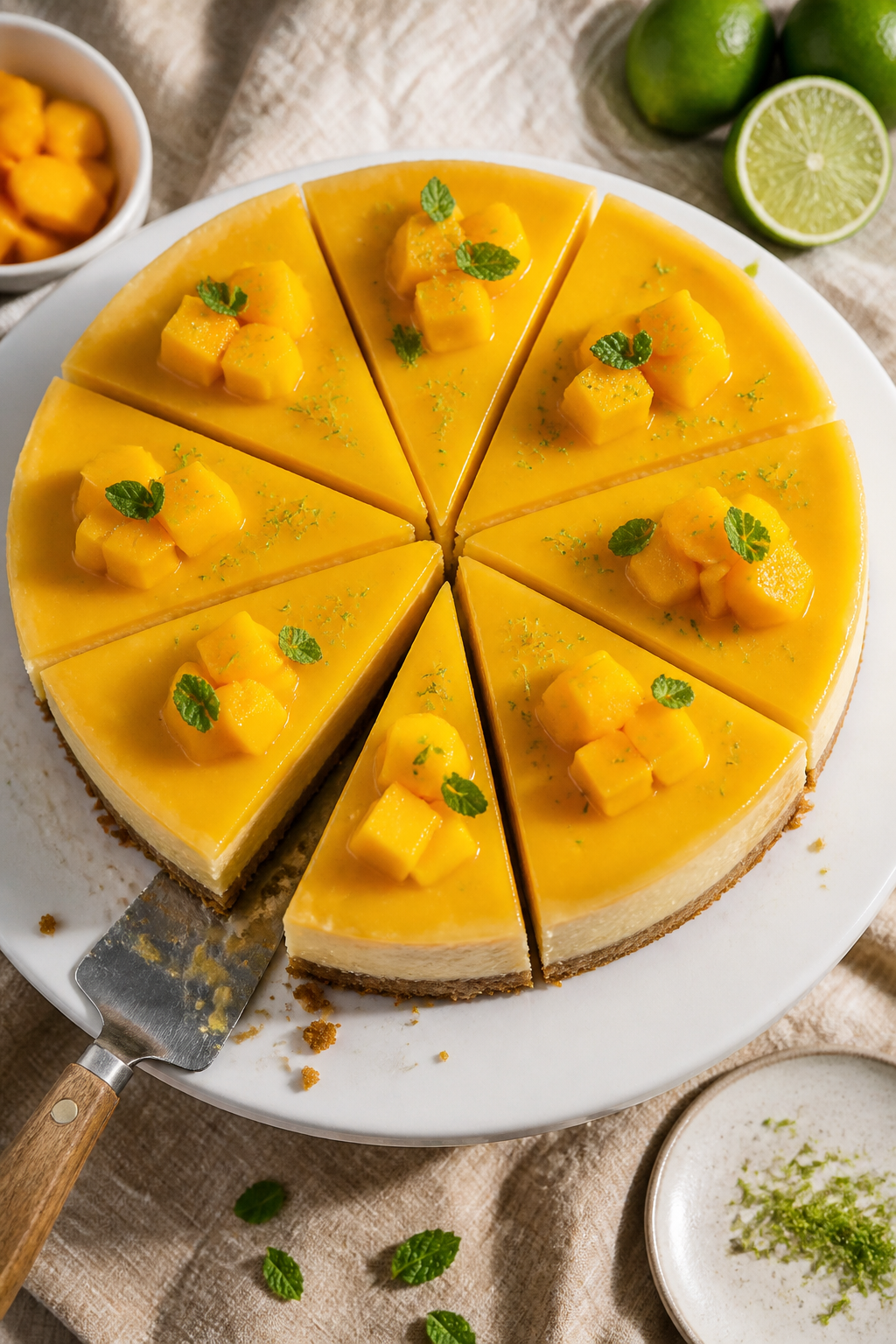
- Final chill and serve: Chill 30–60 minutes to set the topping. Run a knife around the edge, remove the springform, slice with a hot knife, and garnish with fresh mango and lime zest.
Storage Instructions
- Refrigerator: Cover and store for up to 5 days.
Keep it in the springform base or a sealed container to prevent drying out.
- Freezer: Slice first, then freeze on a tray. Wrap slices and store for up to 2 months. Thaw overnight in the fridge for best texture.
- Travel tip: If taking to a party, keep it chilled in a cooler.
Add the fresh mango garnish right before serving.
Why This is Good for You
- High-quality protein: Greek yogurt, cottage cheese, and protein powder deliver a balanced mix of casein and whey. This helps with satiety and muscle repair.
- Lower sugar than classic cheesecake: The mango brings natural sweetness, so you can use less added sugar.
- Nutritious fats and fiber: Almond flour and oats add fiber and healthy fats that support steady energy.
- Vitamins and antioxidants: Mango is rich in vitamin C, vitamin A precursors, and polyphenols for immune and skin health.
What Not to Do
- Don’t skip the chill time: Cutting too soon leads to a messy slice and a softer set.
- Don’t overbake: A slight jiggle is good. Overbaking dries the texture and encourages cracks.
- Don’t add eggs too early: Blend the dairy smooth first.
Overworking the eggs traps air and puffs the cheesecake.
- Don’t pour hot mango purée on top: If you warm it to dissolve gelatin, let it cool to lukewarm before spreading.
- Don’t use unripe mango: It will taste flat and sour. Frozen ripe mango is a great backup.
Variations You Can Try
- No-bake version: Skip the eggs and cornstarch. Increase gelatin in the filling (about 2–2.5 teaspoons, bloomed and melted), and chill until set.
Use a freezer-set crust with extra coconut oil.
- Coconut twist: Replace half the yogurt with light coconut yogurt, and add shredded toasted coconut to the crust.
- Lime swirl: Reserve 1/2 cup filling, mix with extra lime zest and juice, and swirl into the top before baking.
- Mango-passion combo: Replace 1/2 cup of mango purée with passion fruit pulp for a tangy kick.
- Gluten-free and dairy notes: The base recipe is gluten-free if you use certified GF oats. For dairy-light, use lactose-free yogurt and cottage cheese.
- Different protein: Casein makes a thicker, custardy texture. Whey keeps it lighter.
Plant protein can work, but add 2–3 extra tablespoons liquid if the batter gets too thick.
FAQ
Can I make this without a springform pan?
Yes. Use a 9-inch deep pie dish or an 8-inch square pan lined with parchment. You won’t get the clean side release, but it will taste the same.
Never wonder what's for dinner again.
Get 7 healthy, family-friendly dinners complete with recipes, grocery lists, and simple meal plans delivered straight to your inbox.
Cut directly from the dish once chilled.
My cheesecake cracked. What happened?
Cracks usually come from overbaking or cooling too fast. Next time, pull it while the center still jiggles, and cool gradually with the oven door cracked.
A mango topping also hides minor cracks nicely.
Can I use fat-free dairy?
You can, but the texture will be less creamy. For the best balance of taste and macros, 2% Greek yogurt and low-fat cottage cheese work well. If you go fat-free, add an extra tablespoon of melted coconut oil to the filling.
What if I don’t have cornstarch?
Arrowroot or tapioca starch works.
Use the same amount. It helps stabilize the protein-rich batter so it sets cleanly.
How much protein is in a slice?
It varies based on brands, but a typical slice (1/10 of the cake) lands around 18–24 grams of protein. Using casein and higher-protein yogurt bumps that number up.
Is the mango layer necessary?
Not strictly.
The cheesecake is delicious on its own. The mango layer adds brightness, a touch of sweetness, and a beautiful finish, so it’s worth it if you have ripe fruit.
Can I sweeten this with stevia or erythritol?
Yes. Use a granulated blend that measures 1:1 with sugar or adjust to taste.
If using pure stevia, start small and add more carefully to avoid bitterness.
How do I know it’s done?
Gently shake the pan. The edges should be set, and the center should shimmy like a soft custard. That slight wobble firms up during chilling.
Can I make mini cheesecakes?
Absolutely.
Use a lined muffin tin. Bake 14–18 minutes and check for that little jiggle. Chill completely before topping with mango.
What mangoes work best?
Ataulfo (honey) or Kent mangoes are great—sweet and silky.
If using frozen mango, thaw and drain excess liquid before puréeing so the topping isn’t watery.
Wrapping Up
This High Protein Mango Cheesecake brings you the best of both worlds: a creamy, classic dessert with a fresh tropical finish and a satisfying macro profile. It’s simple to make, easy to customize, and reliable for meal prep or gatherings. Slice it thick, add a little extra mango on top, and enjoy a treat that feels special without weighing you down.
Printable Recipe Card
Want just the essential recipe details without scrolling through the article? Get our printable recipe card with just the ingredients and instructions.
Loved This Recipe?
If you're looking for more simple, healthy dinners your family will actually eat, grab my FREE 7-Day Easy Dinner Reset. You'll get 7 easy dinner recipes, simple grocery lists, and a done-for-you plan that takes the stress out of mealtime.