High Protein Salted Caramel Cheesecake – Creamy, Light, and Satisfying
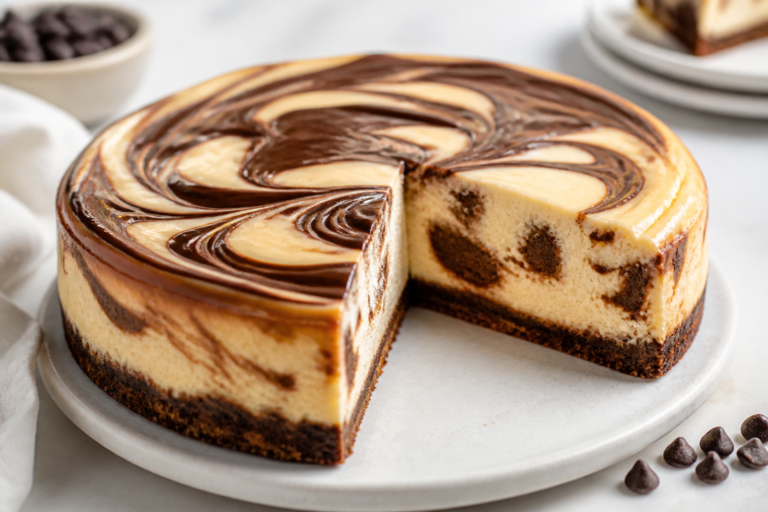
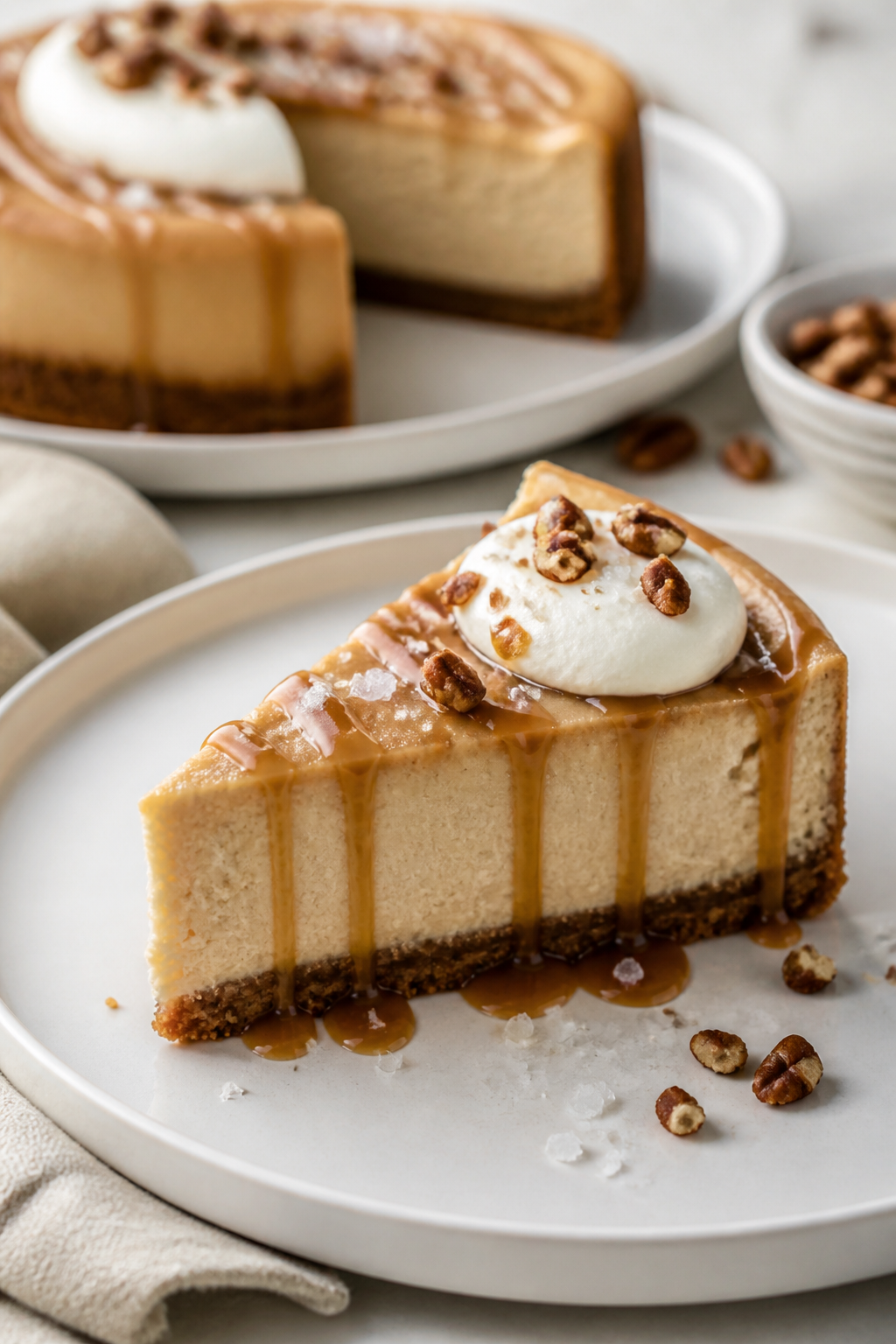
This high protein salted caramel cheesecake tastes like a bakery treat but fits right into a balanced routine. It’s silky, sweet, and has that irresistible salted caramel finish. The crust is crisp, the filling is creamy, and every slice packs a solid protein boost.
Stop wondering what's for dinner.
Get 7 healthy, family-friendly dinners complete with recipes and simple meal plans delivered straight to your inbox.
You won’t need fancy techniques or special equipment—just a few common ingredients and a little patience while it chills.

Ingredients
Method
- Prep your pan. Line the bottom of a 9-inch springform pan with parchment and lightly grease the sides. Preheat the oven to 325°F (163°C).
- Make the crust. In a bowl, mix crumbs, sweetener, melted butter, and a pinch of salt until it resembles wet sand. Press firmly into the pan, going slightly up the sides. Bake for 8–10 minutes, then cool while you make the filling.
- Beat the cream cheese. In a large bowl, beat cream cheese until smooth, about 1 minute. Scrape the bowl so there are no lumps.
- Add yogurt and sweetener. Mix in Greek yogurt, sweetener, vanilla, cornstarch, and salt. Blend until silky.
- Incorporate protein powder. Sprinkle protein powder over the mixture and blend on low. Avoid overmixing. You want a smooth, thick batter.
- Add eggs last. Beat in eggs one at a time on low speed just until combined. Overmixing adds air and can cause cracks.
- Fill and smooth. Pour the batter over the crust. Tap the pan gently on the counter to release bubbles. Run a spatula over the top to smooth.
- Bake with a water buffer. Place the springform on a baking sheet. Set a separate pan of hot water on the rack below to create steam. Bake 45–55 minutes, until edges are set and the center has a slight wobble.
- Cool gradually. Turn off the oven, crack the door, and let the cheesecake sit for 30 minutes. Then remove to a rack and cool to room temperature.
- Chill fully. Cover and refrigerate at least 6 hours, preferably overnight. This sets the protein and improves texture.
- Make the salted caramel. In a small saucepan, combine sugar and water over medium heat. Swirl (don’t stir) until the mixture turns a deep amber, 6–8 minutes. Remove from heat, carefully whisk in butter and milk, then stir in vanilla and salt. Cool to room temperature; it will thicken as it cools.
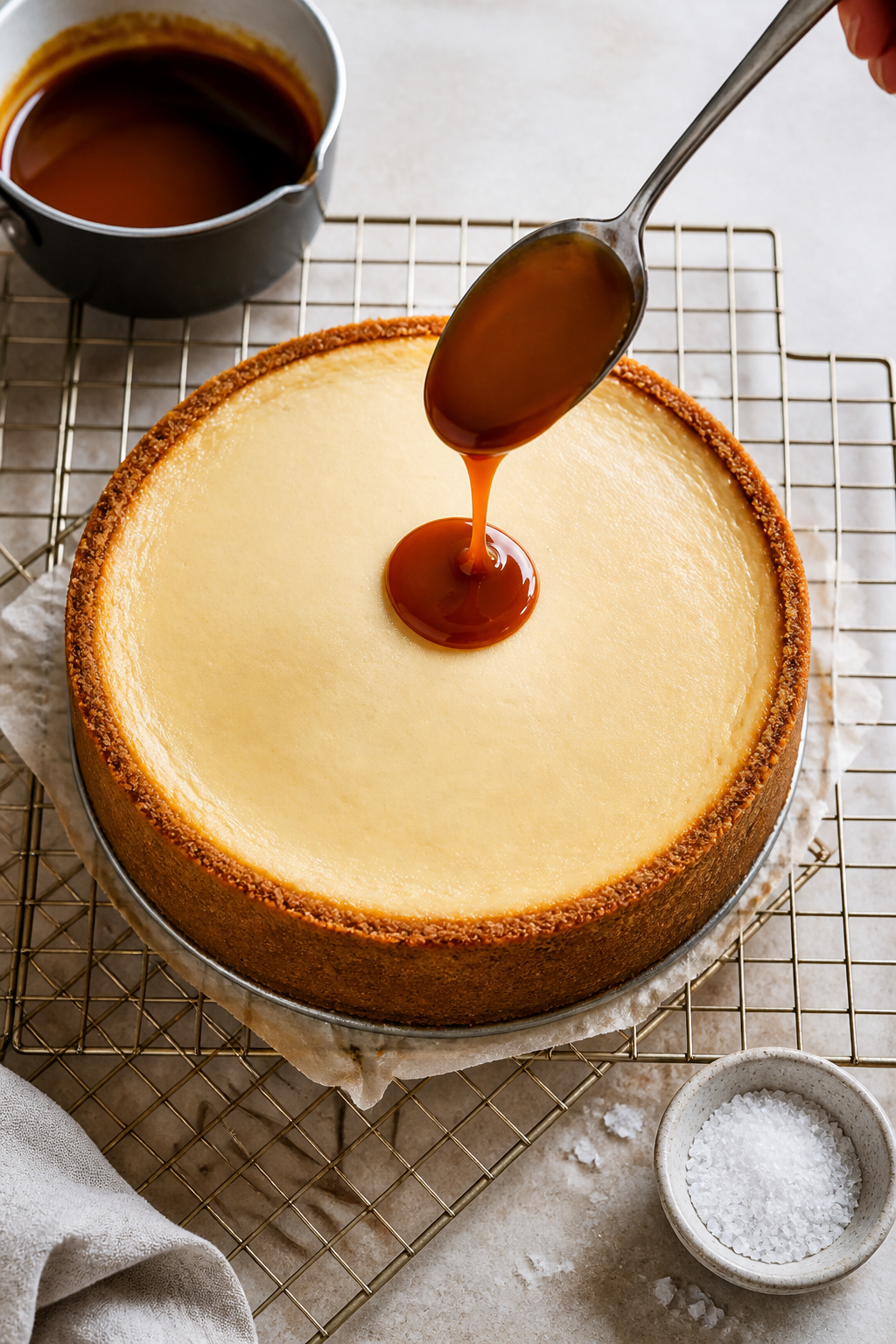
- Finish and serve. Unmold the cheesecake. Spoon or drizzle salted caramel over the top, letting some drip down the sides. Sprinkle with a pinch of flaky sea salt. Slice with a warm, dry knife for clean edges.
What Makes This Special
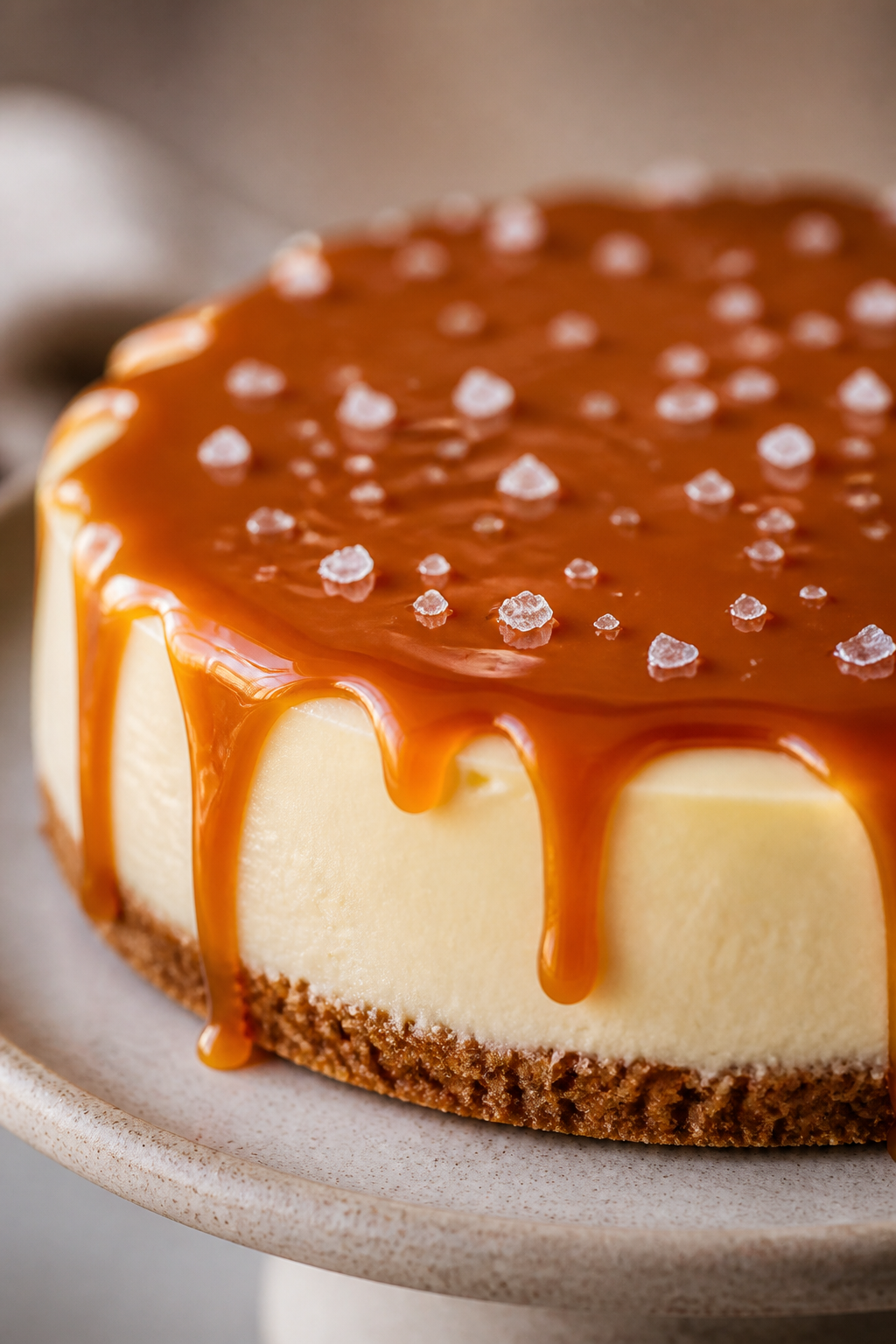
This cheesecake delivers the flavor and texture you expect from a classic, with better macros. Greek yogurt and light cream cheese keep it creamy without being heavy, while vanilla whey protein adds body and a gentle sweetness. A quick stovetop salted caramel ties it all together, giving you that glossy finish and a hint of salt to balance the richness.
It’s the kind of dessert you can serve to guests and also enjoy after a workout.
Shopping List
- For the crust:
- 1 1/2 cups (150 g) graham cracker crumbs or digestive biscuit crumbs
- 2 tablespoons granulated sweetener or sugar
- 4 tablespoons (55 g) light butter or regular unsalted butter, melted
- Pinch of salt
- For the filling:
- 16 oz (450 g) light cream cheese, room temperature
- 1 1/2 cups (340 g) plain 2% Greek yogurt, room temperature
- 2 large eggs, room temperature
- 1/2 cup (45 g) vanilla whey or casein-whey blend protein powder
- 1/2 cup (100 g) granulated sweetener or sugar
- 2 teaspoons vanilla extract
- 1 tablespoon cornstarch
- Pinch of fine sea salt
- For the salted caramel:
- 1/2 cup (100 g) granulated sugar
- 2 tablespoons water
- 2 tablespoons light butter
- 1/3 cup (80 ml) milk or reduced-fat cream
- 1/2 teaspoon flaky sea salt (plus extra for topping)
- 1/2 teaspoon vanilla extract
- Optional garnishes:
- Greek yogurt whipped topping
- Extra flaky sea salt
- Protein bar crumbles or toasted pecans
Step-by-Step Instructions
- Prep your pan. Line the bottom of a 9-inch springform pan with parchment and lightly grease the sides. Preheat the oven to 325°F (163°C).
- Make the crust. In a bowl, mix crumbs, sweetener, melted butter, and a pinch of salt until it resembles wet sand. Press firmly into the pan, going slightly up the sides.
Bake for 8–10 minutes, then cool while you make the filling.
- Beat the cream cheese. In a large bowl, beat cream cheese until smooth, about 1 minute. Scrape the bowl so there are no lumps.
- Add yogurt and sweetener. Mix in Greek yogurt, sweetener, vanilla, cornstarch, and salt. Blend until silky.
- Incorporate protein powder. Sprinkle protein powder over the mixture and blend on low.
Avoid overmixing. You want a smooth, thick batter.
- Add eggs last. Beat in eggs one at a time on low speed just until combined. Overmixing adds air and can cause cracks.
- Fill and smooth. Pour the batter over the crust.
Tap the pan gently on the counter to release bubbles. Run a spatula over the top to smooth.
- Bake with a water buffer. Place the springform on a baking sheet. Set a separate pan of hot water on the rack below to create steam.
Bake 45–55 minutes, until edges are set and the center has a slight wobble.
- Cool gradually. Turn off the oven, crack the door, and let the cheesecake sit for 30 minutes. Then remove to a rack and cool to room temperature.
- Chill fully. Cover and refrigerate at least 6 hours, preferably overnight. This sets the protein and improves texture.
- Make the salted caramel. In a small saucepan, combine sugar and water over medium heat.
Swirl (don’t stir) until the mixture turns a deep amber, 6–8 minutes. Remove from heat, carefully whisk in butter and milk, then stir in vanilla and salt. Cool to room temperature; it will thicken as it cools.
- Finish and serve. Unmold the cheesecake.
Spoon or drizzle salted caramel over the top, letting some drip down the sides. Sprinkle with a pinch of flaky sea salt. Slice with a warm, dry knife for clean edges.
Storage Instructions
- Refrigerator: Store covered for up to 5 days.
Keep the caramel separate if you want the top to stay neat.
- Freezer: Freeze slices without caramel for up to 2 months. Wrap tightly in plastic and foil. Thaw overnight in the fridge, then add caramel before serving.
- Meal prep tip: Slice into portions and store in individual containers for easy grab-and-go desserts.
Benefits of This Recipe
Never wonder what's for dinner again.
Get 7 healthy, family-friendly dinners complete with recipes, grocery lists, and simple meal plans delivered straight to your inbox.
- High protein per slice: Greek yogurt, light cream cheese, and whey protein create a filling dessert with staying power.
- Lighter than classic cheesecake: Reduced fat ingredients lower calories while keeping a creamy texture.
- Balanced sweetness: The salted caramel adds richness, so you can use less sugar in the filling.
- Make-ahead friendly: Chilling improves the texture and flavor, perfect for parties and meal prep.
- Customizable: Easy to adapt for different flavors, toppings, and dietary needs.
Common Mistakes to Avoid
- Using cold ingredients: Cold dairy clumps and traps air.
Bring everything to room temperature for a smooth batter.
- Overmixing the eggs: Too much air leads to cracks and a spongy texture. Mix on low just until combined.
- Skipping the steam: A humid oven reduces cracking. Use a pan of hot water on the rack below rather than a risky water bath.
- Overbaking: Pull it when the center jiggles slightly.
It will set as it cools.
- Rushing the chill: Six hours is the minimum. Overnight is best for clean slices and a creamy set.
- Stirring caramel while it colors: Swirl the pan instead. Stirring can cause crystals and grainy sauce.
Recipe Variations
- No-bake version: Skip the eggs and cornstarch.
Fold 2 teaspoons gelatin bloomed in 2 tablespoons water into the filling. Chill 8 hours. Make the crust with a bit more butter to help it set.
- Chocolate caramel twist: Add 2 tablespoons cocoa powder to the crust and 1/4 cup mini dark chocolate chips to the batter.
Drizzle with caramel and a little melted chocolate.
- Gluten-free: Use certified gluten-free cookie crumbs or almond flour (1 1/2 cups) with 3 tablespoons butter and a tablespoon of sweetener for the crust.
- Lower sugar: Use a granular zero-calorie sweetener in both crust and filling. For caramel, use an allulose-based caramel since it browns and stays smooth.
- Dairy tweaks: Swap light cream cheese for Neufchâtel and choose lactose-free Greek yogurt if needed. Use a protein powder that sits well with you.
- Salted maple caramel: Replace sugar with pure maple syrup for the caramel and simmer to reduce until thick.
Finish with flaky salt.
How Much Protein Is In a Slice?
Exact numbers depend on brands and slice size, but a 1/10th slice typically lands around 15–20 grams of protein when using 2% Greek yogurt, light cream cheese, and vanilla whey.
Can I Use Fat-Free Greek Yogurt?
You can, but 2% gives a creamier finish and better stability. Fat-free works in a pinch; just expect a slightly tangier, lighter texture.
What If I Don’t Have a Springform Pan?
Use a deep 9-inch cake pan lined with a wide strip of parchment along the sides and a circle on the base. Chill well and lift out by the parchment.
Slice carefully.
Which Protein Powder Works Best?
A whey or whey-casein blend delivers the smoothest texture. Pure casein can make the filling too thick, and some plant proteins may turn grainy. If using plant-based, blend extra smooth and add 1–2 tablespoons milk if needed.
How Do I Prevent Cracks?
Use room-temperature ingredients, avoid overmixing, bake gently with steam, and cool slowly with the oven door cracked.
If a crack happens, cover it with caramel—problem solved.
In Conclusion
This high protein salted caramel cheesecake proves you can enjoy a rich dessert without going overboard. It’s creamy, balanced, and easy to make ahead. Keep the steps simple, don’t rush the chill, and finish with a glossy salted caramel drizzle.
You’ll have a crowd-pleasing treat that works for weekday cravings and special occasions alike.
Printable Recipe Card
Want just the essential recipe details without scrolling through the article? Get our printable recipe card with just the ingredients and instructions.
Loved This Recipe?
If you're looking for more simple, healthy dinners your family will actually eat, grab my FREE 7-Day Easy Dinner Reset. You'll get 7 easy dinner recipes, simple grocery lists, and a done-for-you plan that takes the stress out of mealtime.