High Protein Peanut Butter Cheesecake – Creamy, Satisfying, and Better-For-You
If you love peanut butter and crave cheesecake, this recipe brings both together in a lighter, protein-packed way. It’s creamy, rich, and tastes indulgent without feeling heavy. The texture is smooth and custardy, and the peanut butter flavor shines through in every bite.
Stop wondering what's for dinner.
Get 7 healthy, family-friendly dinners complete with recipes and simple meal plans delivered straight to your inbox.
You can make it with a classic graham crust or keep it gluten-free and lower carb. Best of all, it’s simple to prep and great for make-ahead desserts or post-workout treats.
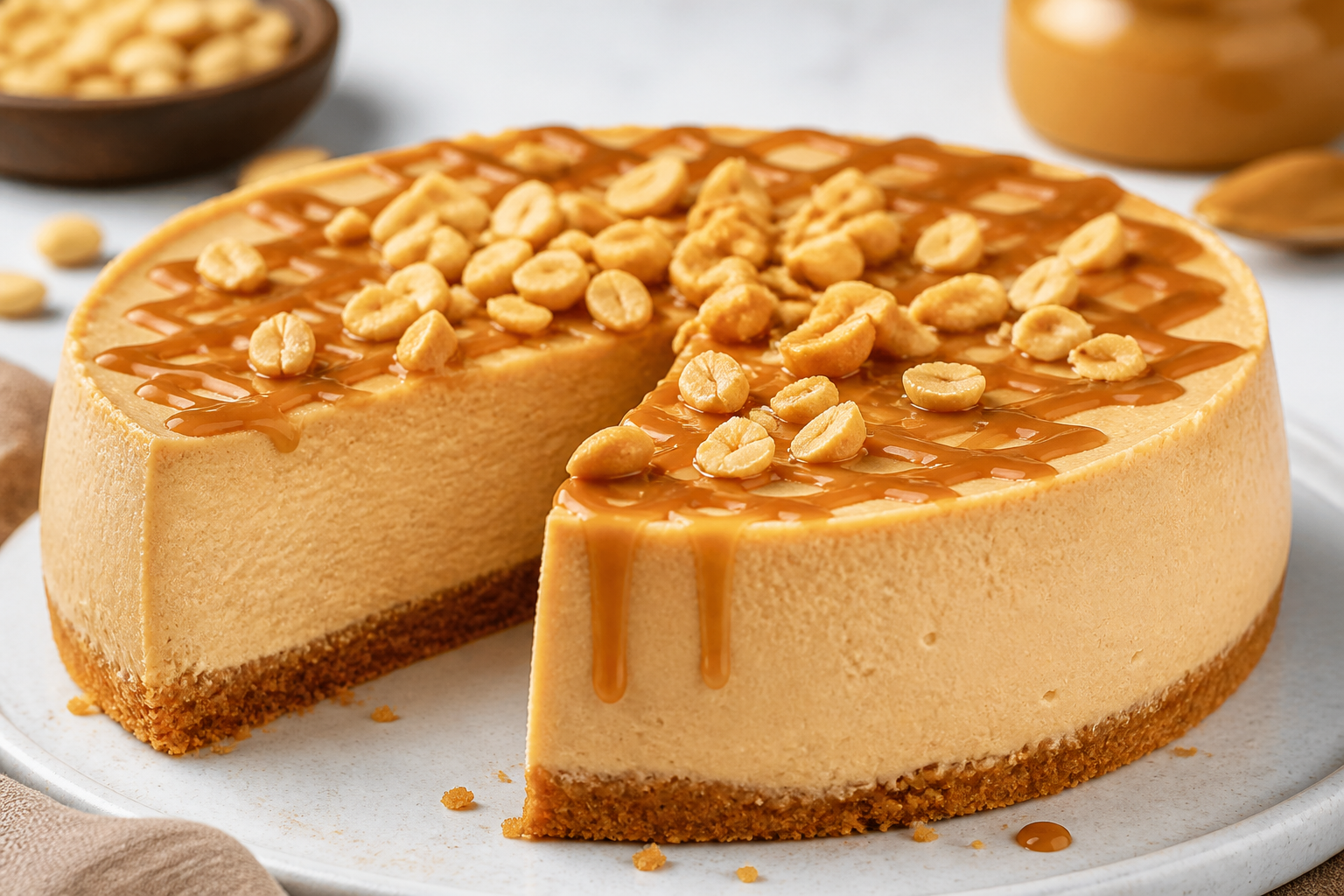
High Protein Peanut Butter Cheesecake - Creamy, Satisfying, and Better-For-You
Ingredients
Method
- Bring ingredients to room temp. Set out cream cheese, eggs, and yogurt for at least 30–45 minutes. This helps the batter blend smoothly and prevents lumps.
- Prep the pan and oven. Heat the oven to 325°F (163°C). Line the bottom of a springform pan with parchment and lightly grease the sides. Wrap the outside with foil if you plan to use a water bath.
- Make the crust (optional). Stir crumbs, melted butter, sweetener, and salt until the texture resembles wet sand. Press firmly into the pan in an even layer. Bake 8–10 minutes, then cool while you mix the filling.
- Beat the cream cheese. In a large bowl, beat softened cream cheese on medium speed for 1–2 minutes until very smooth. Scrape the bowl to avoid lumps.
- Add peanut butter and sweetener. Mix in peanut butter, sweetener, vanilla, and salt. Beat until fully combined and creamy.
- Blend in Greek yogurt and protein powder. Add yogurt and protein powder. Start on low speed, then move to medium until the batter is silky. If it feels too thick, mix in 2–4 tablespoons of milk, 1 tablespoon at a time, just to loosen.
- Add eggs last. Beat in eggs one at a time on low speed until just combined. Avoid overmixing to keep the texture tender and prevent cracks.
- Pour and smooth. Pour the batter over the crust (or into a prepared pan without crust). Tap the pan gently on the counter to pop air bubbles. Sprinkle any optional add-ins on top or fold them in.
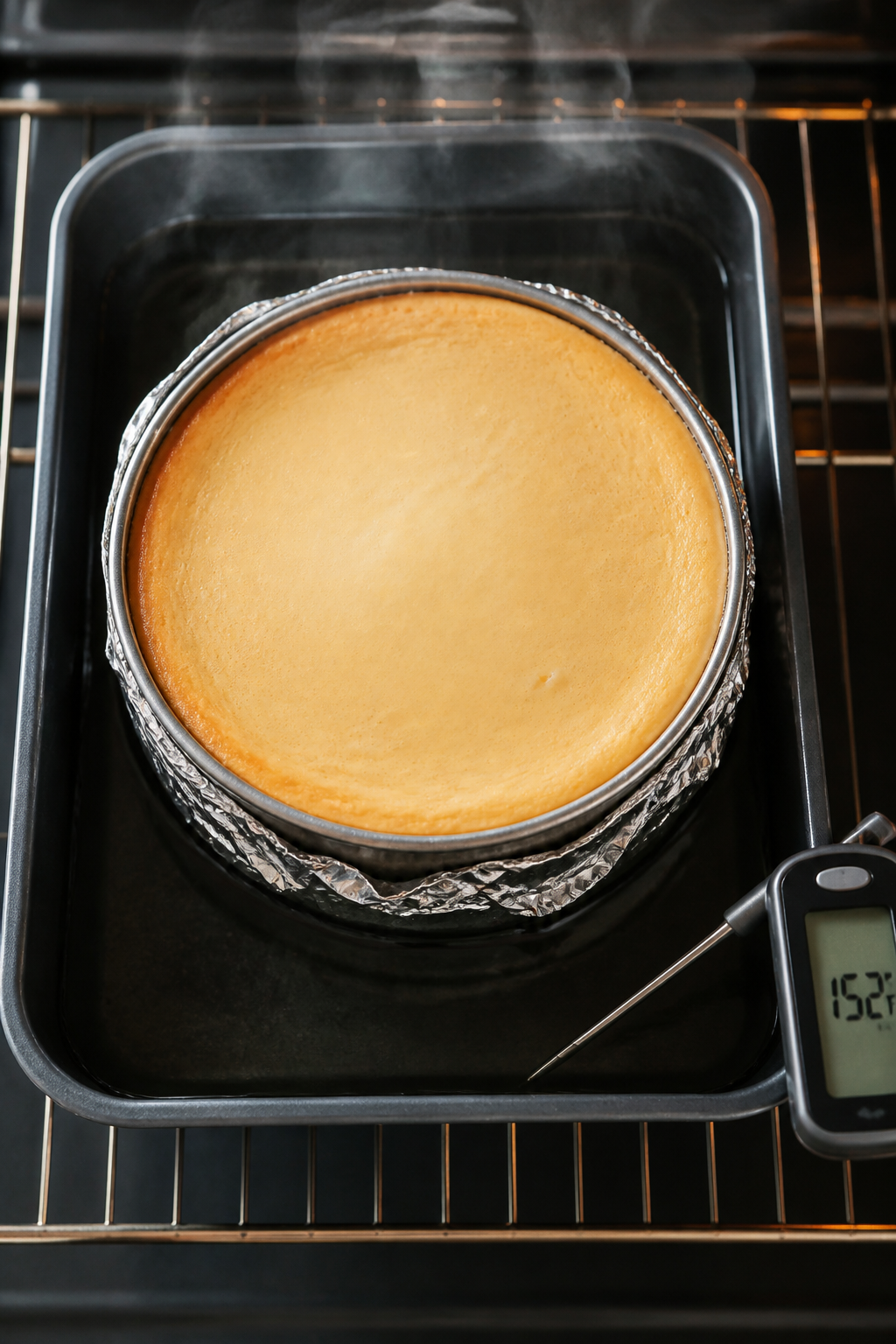
- Choose your bake method. Water bath (most crack-proof): Place the pan in a larger roasting pan. Pour hot water around it to reach halfway up the sides. Bake 40–55 minutes at 325°F until the edges are set and the center has a slight wobble.
- No water bath: Bake 45–60 minutes at 300–325°F. If the top browns too fast, tent lightly with foil.
- Cool gradually. Turn off the oven, crack the door, and let the cheesecake sit for 30 minutes. Then remove and cool to room temperature. This slow cool helps avoid surface cracks.
- Chill before slicing. Cover and refrigerate at least 6 hours, ideally overnight. The flavor deepens and the texture firms up.
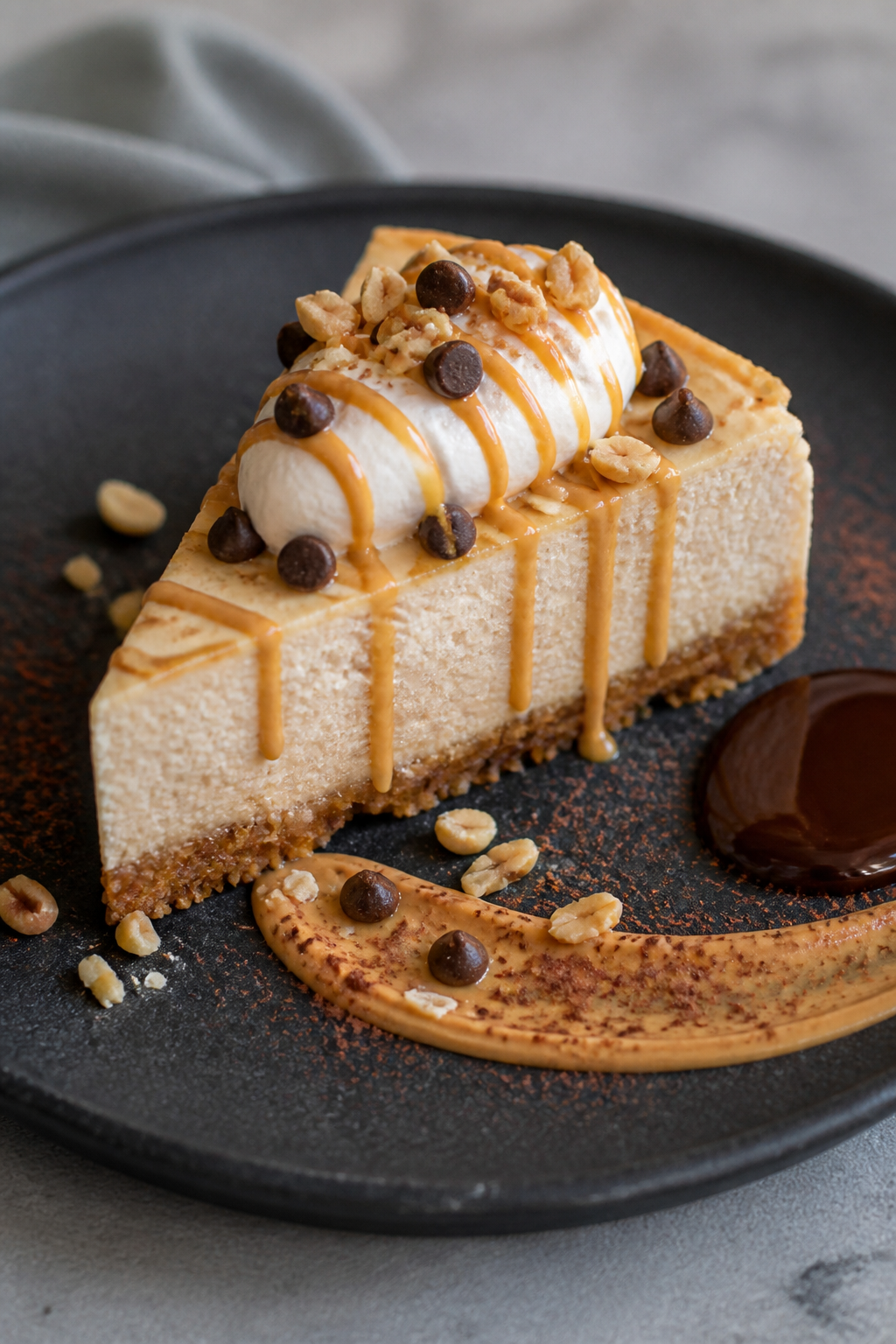
- Slice and serve. Warm a sharp knife under hot water and wipe between cuts for clean slices. Top with a drizzle of melted peanut butter, Greek yogurt “whip,” shaved dark chocolate, or crushed peanuts.
What Makes This Special
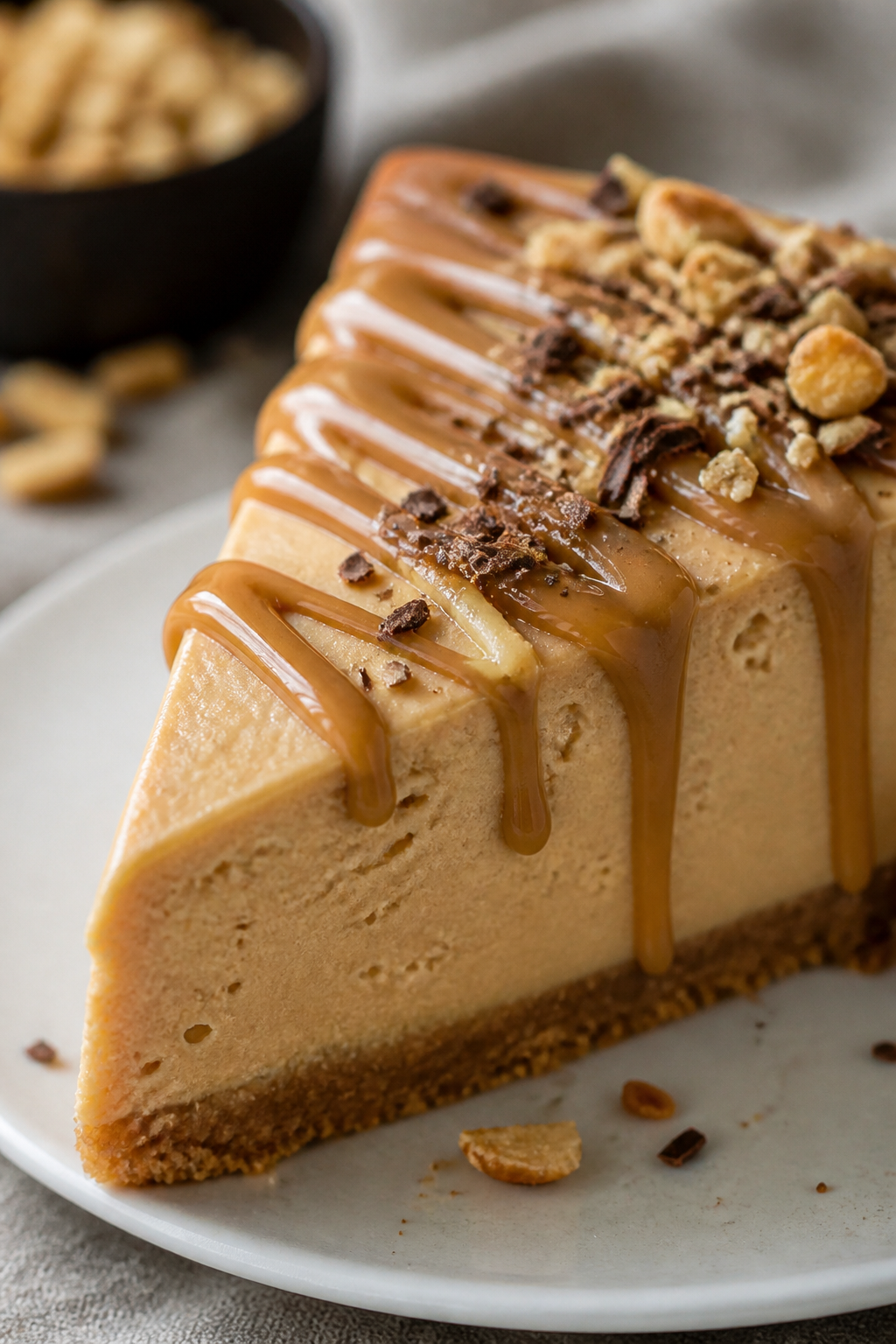
This cheesecake keeps the flavor you want while boosting nutrition. It uses Greek yogurt and protein powder to add body and protein without loads of added sugar.
Natural peanut butter gives it that deep, roasted flavor with a silky finish. It’s baked low and slow to avoid cracks and keep it creamy. Even better, it chills beautifully and gets better the next day.
What You’ll Need
- Cream cheese: 16 oz (two 8-oz blocks), softened to room temperature.
- Plain Greek yogurt: 1 cup (2% or 0% both work; 2% gives a creamier texture).
- Natural peanut butter: 1/2 cup, well-stirred (use a no-sugar-added brand for best control).
- Whey or casein protein powder: 1/2 cup vanilla or unflavored.
Whey keeps it lighter; casein yields a denser, custard-like texture.
- Eggs: 3 large, at room temperature.
- Sweetener: 1/3–1/2 cup granulated sugar or a zero-calorie sweetener like allulose or erythritol. Adjust to taste.
- Vanilla extract: 1 teaspoon.
- Salt: 1/4 teaspoon to balance the sweetness.
- Milk: 2–4 tablespoons (dairy or unsweetened almond milk) to loosen the batter if needed.
- Optional add-ins: 2 tablespoons mini chocolate chips or chopped peanuts for texture.
- For the crust (optional):
- 1 1/2 cups graham cracker crumbs (or almond flour for gluten-free)
- 3 tablespoons melted butter (or coconut oil)
- 1 tablespoon sweetener
- Pinch of salt
- Pan: 8- or 9-inch springform pan (or a 9-inch deep pie dish).
Step-by-Step Instructions
- Bring ingredients to room temp. Set out cream cheese, eggs, and yogurt for at least 30–45 minutes. This helps the batter blend smoothly and prevents lumps.
- Prep the pan and oven. Heat the oven to 325°F (163°C).
Line the bottom of a springform pan with parchment and lightly grease the sides. Wrap the outside with foil if you plan to use a water bath.
- Make the crust (optional). Stir crumbs, melted butter, sweetener, and salt until the texture resembles wet sand. Press firmly into the pan in an even layer.
Bake 8–10 minutes, then cool while you mix the filling.
- Beat the cream cheese. In a large bowl, beat softened cream cheese on medium speed for 1–2 minutes until very smooth. Scrape the bowl to avoid lumps.
- Add peanut butter and sweetener. Mix in peanut butter, sweetener, vanilla, and salt. Beat until fully combined and creamy.
- Blend in Greek yogurt and protein powder. Add yogurt and protein powder.
Start on low speed, then move to medium until the batter is silky. If it feels too thick, mix in 2–4 tablespoons of milk, 1 tablespoon at a time, just to loosen.
- Add eggs last. Beat in eggs one at a time on low speed until just combined. Avoid overmixing to keep the texture tender and prevent cracks.
- Pour and smooth. Pour the batter over the crust (or into a prepared pan without crust).
Tap the pan gently on the counter to pop air bubbles. Sprinkle any optional add-ins on top or fold them in.
- Choose your bake method.
- Water bath (most crack-proof): Place the pan in a larger roasting pan. Pour hot water around it to reach halfway up the sides.
Bake 40–55 minutes at 325°F until the edges are set and the center has a slight wobble.
- No water bath: Bake 45–60 minutes at 300–325°F. If the top browns too fast, tent lightly with foil.
- Water bath (most crack-proof): Place the pan in a larger roasting pan. Pour hot water around it to reach halfway up the sides.
- Cool gradually. Turn off the oven, crack the door, and let the cheesecake sit for 30 minutes. Then remove and cool to room temperature.
This slow cool helps avoid surface cracks.
- Chill before slicing. Cover and refrigerate at least 6 hours, ideally overnight. The flavor deepens and the texture firms up.
- Slice and serve. Warm a sharp knife under hot water and wipe between cuts for clean slices. Top with a drizzle of melted peanut butter, Greek yogurt “whip,” shaved dark chocolate, or crushed peanuts.
Storage Instructions
- Refrigerate: Keep covered in the fridge for up to 5 days.
A cake box or inverted bowl prevents fridge odors from seeping in.
- Freeze: Freeze whole or in slices. Wrap tightly in plastic, then foil, and store for up to 2 months. Thaw overnight in the fridge.
- Meal prep tip: Portion into individual slices and freeze with parchment between layers for easy grab-and-go servings.
Benefits of This Recipe
- Higher protein: Greek yogurt and protein powder boost the protein content, making each slice more filling.
- Balanced sweetness: You control the sweetener and can use lower-sugar options without sacrificing taste.
- Healthy fats: Peanut butter adds satisfying fats and a rich flavor that reduces the need for lots of cream and sugar.
- Customizable: Works with regular or gluten-free crusts, dairy or dairy-free milk, and different protein powders.
- Meal-prep friendly: Keeps well, freezes well, and tastes even better after chilling.
Pitfalls to Watch Out For
- Overmixing after adding eggs: This traps air and can cause cracks.
Mix low and just until combined.
- Using cold ingredients: Cold cream cheese leads to a lumpy batter. Let everything come to room temp first.
- Overbaking: The center should have a gentle jiggle. If it’s fully firm in the oven, it will be dry when cooled.
- Incorrect protein powder: Some powders thicken too much.
If the batter becomes pasty, add milk a tablespoon at a time until smooth and pourable.
- Natural peanut butter separation: Stir thoroughly. Unmixed oil can create greasy pockets in the cheesecake.
Alternatives
- No-bake version: Skip eggs and baking. Use 12 oz cream cheese, 1 cup Greek yogurt, 1/2 cup peanut butter, 1/2 cup protein powder, and sweetener to taste.
Bloom 2 teaspoons powdered gelatin in 1/4 cup cold water, melt gently, and whisk in. Pour into a prepared crust and chill 6–8 hours.
- Dairy-light option: Replace half the cream cheese with extra Greek yogurt and add 1 tablespoon cornstarch to help it set.
- Chocolate swirl: Melt 2 oz dark chocolate and swirl into the top of the batter before baking. Or add 2 tablespoons cocoa powder and a splash more milk.
- Gluten-free crust: Use almond flour (1 1/2 cups) with 3 tablespoons butter, 1 tablespoon sweetener, and a pinch of salt.
Prebake as directed.
- Nut-free option: Swap peanut butter with sunflower seed butter. Taste and adjust sweetener since it can be slightly more bitter.
- Lower fat: Use Neufchâtel (1/3 less fat) cream cheese and 0% Greek yogurt; add 1 tablespoon cornstarch to maintain structure.
FAQ
Never wonder what's for dinner again.
Get 7 healthy, family-friendly dinners complete with recipes, grocery lists, and simple meal plans delivered straight to your inbox.
How much protein is in a slice?
It depends on your protein powder and slice size, but a typical 1/10 slice can land around 14–20 grams of protein when using whey and Greek yogurt. For the most accurate number, plug your exact brands into a nutrition calculator.
Can I use powdered peanut butter (PB2)?
Yes, you can replace some or all of the peanut butter with powdered peanut butter to cut fat.
Rehydrate it to a peanut-butter-like consistency before adding. The flavor is milder, so consider adding a touch more vanilla or a pinch of salt.
What if my cheesecake cracks?
It’s usually from overbaking, rapid cooling, or overmixing. The good news: it still tastes great.
Cover cracks with a thin yogurt-peanut butter topping or a chocolate drizzle, and next time try a water bath and slower cool.
Can I make it without a crust?
Absolutely. Grease and line the pan, pour in the batter, and bake as directed. Crustless versions run a bit leaner and set nicely when cooled overnight.
Which protein powder works best?
Whey blends nicely and stays light.
Casein gives a denser, custard-like finish. Plant protein can work, but you may need extra milk to loosen the batter and a touch more sweetener to balance any earthy notes.
How will I know it’s done?
The edges will be set and the middle will wobble slightly, like soft Jell-O. Internal temp at the center should be around 150–155°F if you use an instant-read thermometer.
Can I reduce the sugar even more?
Yes.
Allulose works especially well because it dissolves cleanly and doesn’t crystallize. Erythritol can be used, but it may feel slightly cooling on the tongue. Taste the batter and adjust before baking.
Do I need a springform pan?
It helps with clean release, but you can use a deep pie dish or an 8×8 square pan.
Line with parchment for easy removal and adjust bake time slightly, checking a few minutes earlier.
Final Thoughts
This High Protein Peanut Butter Cheesecake brings the best of both worlds: a rich dessert that satisfies and a smart ingredient list that supports your goals. It’s easy to customize, friendly for meal prep, and a hit with peanut butter lovers. Make it once, then tweak the sweetness, crust, and add-ins until it’s your signature version.
Chill it well, slice it clean, and enjoy a dessert that feels good to eat and even better to share.
Printable Recipe Card
Want just the essential recipe details without scrolling through the article? Get our printable recipe card with just the ingredients and instructions.
Loved This Recipe?
If you're looking for more simple, healthy dinners your family will actually eat, grab my FREE 7-Day Easy Dinner Reset. You'll get 7 easy dinner recipes, simple grocery lists, and a done-for-you plan that takes the stress out of mealtime.