Lemon Garlic Salmon Salad Bowls – Fresh, Bright, and Satisfying
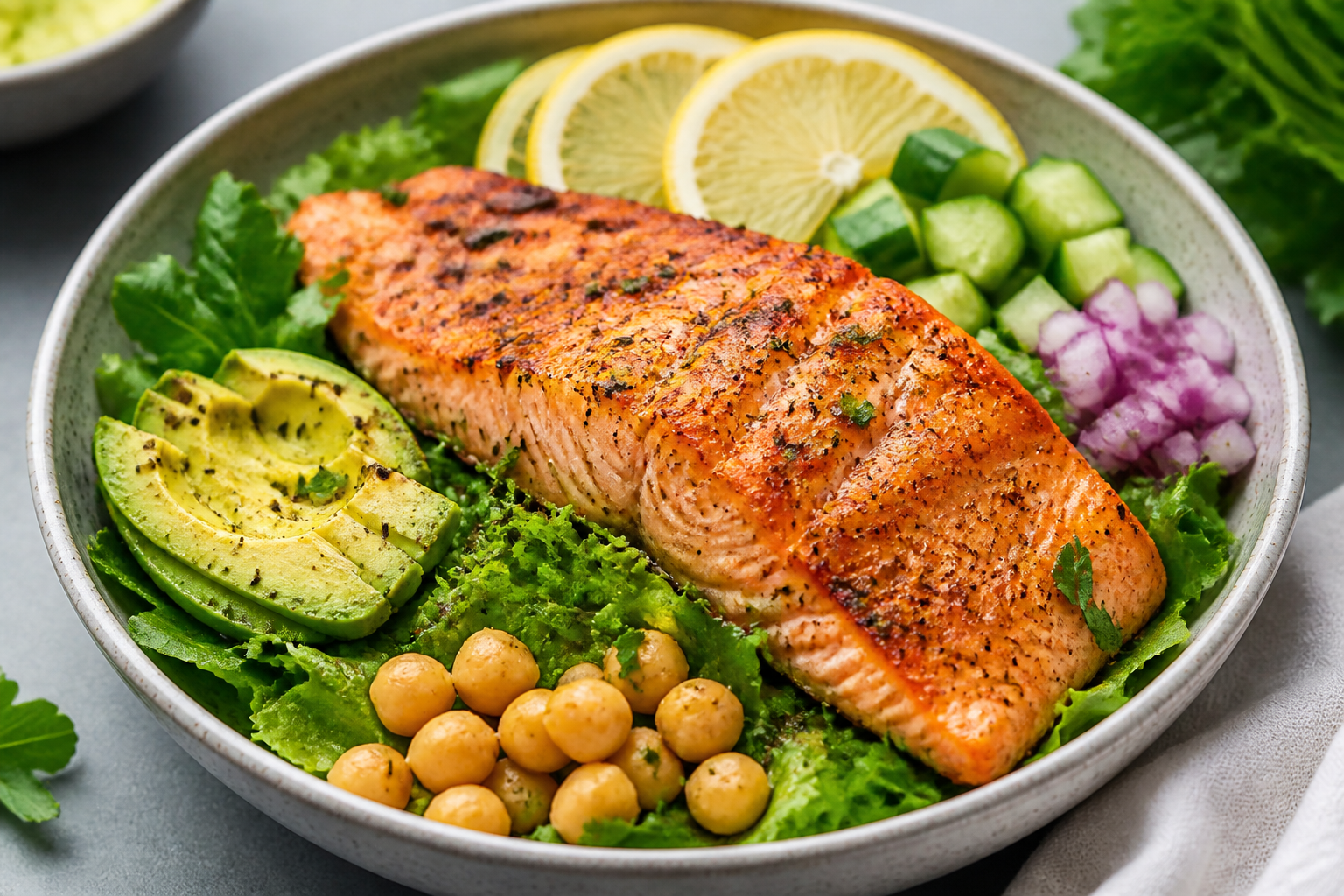
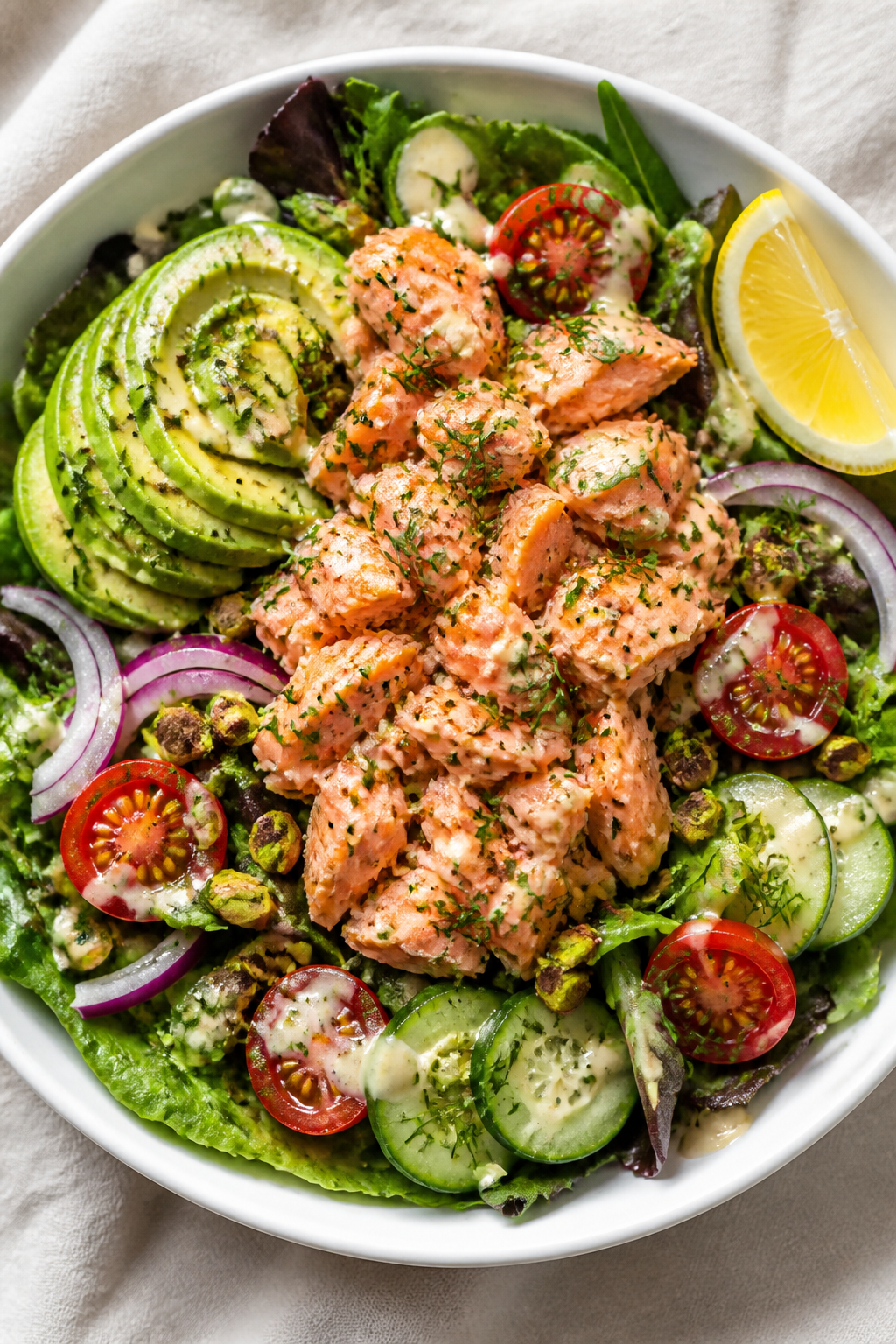
These bowls are all about big flavor with minimal fuss. Tender salmon gets a quick lemon-garlic treatment, then lands on a crisp salad with creamy avocado and a punchy dressing. It’s the kind of meal that feels light but still keeps you full.
Stop wondering what's for dinner.
Get 7 healthy, family-friendly dinners complete with recipes and simple meal plans delivered straight to your inbox.
You can prep parts ahead, swap in what you have, and serve it warm or chilled. Whether it’s a work lunch or a weeknight dinner, this bowl delivers.
Ingredients
Method
- Prep the salmon. Pat the fillets dry with paper towels. Season both sides with salt and pepper. Dry fish browns better and tastes cleaner.
- Make a quick marinade. In a small bowl, combine lemon zest, half the lemon juice, 1 tablespoon olive oil, and minced garlic. Brush over the salmon and let it sit 10–15 minutes while you prep the salad. Don’t marinate too long or the acid can start to “cook” the fish.
- Whisk the dressing. In a jar or bowl, whisk remaining lemon juice, 2 tablespoons olive oil, Dijon, honey, a pinch of salt, and black pepper. Taste and adjust—add more honey for balance or more lemon for brightness.
- Assemble the salad base. In a large bowl, combine greens, cucumber, tomatoes, red onion, and herbs. Drizzle with half the dressing and toss gently to coat. Save the rest for finishing.
- Cook the salmon—stovetop method. Heat a nonstick or cast-iron skillet over medium-high. Add a thin film of oil. Place salmon skin-side down and cook 4–5 minutes until the skin is crisp and the color turns opaque halfway up the sides. Flip and cook 2–3 more minutes, depending on thickness. Aim for medium, about 125–130°F internal.
- Or cook in the oven. Heat the oven to 400°F (200°C). Place salmon on a lined sheet pan, skin-side down. Bake 10–12 minutes, until just opaque and flaky.
- Rest and flake. Let the salmon rest 3 minutes. Remove skin if you prefer, then flake into large pieces with a fork. Keep them chunky for a better bite.
- Build the bowls. Divide the dressed greens among bowls. Top with salmon, avocado, and nuts. Spoon over more dressing. Finish with extra dill, a squeeze of lemon, and a crack of black pepper.
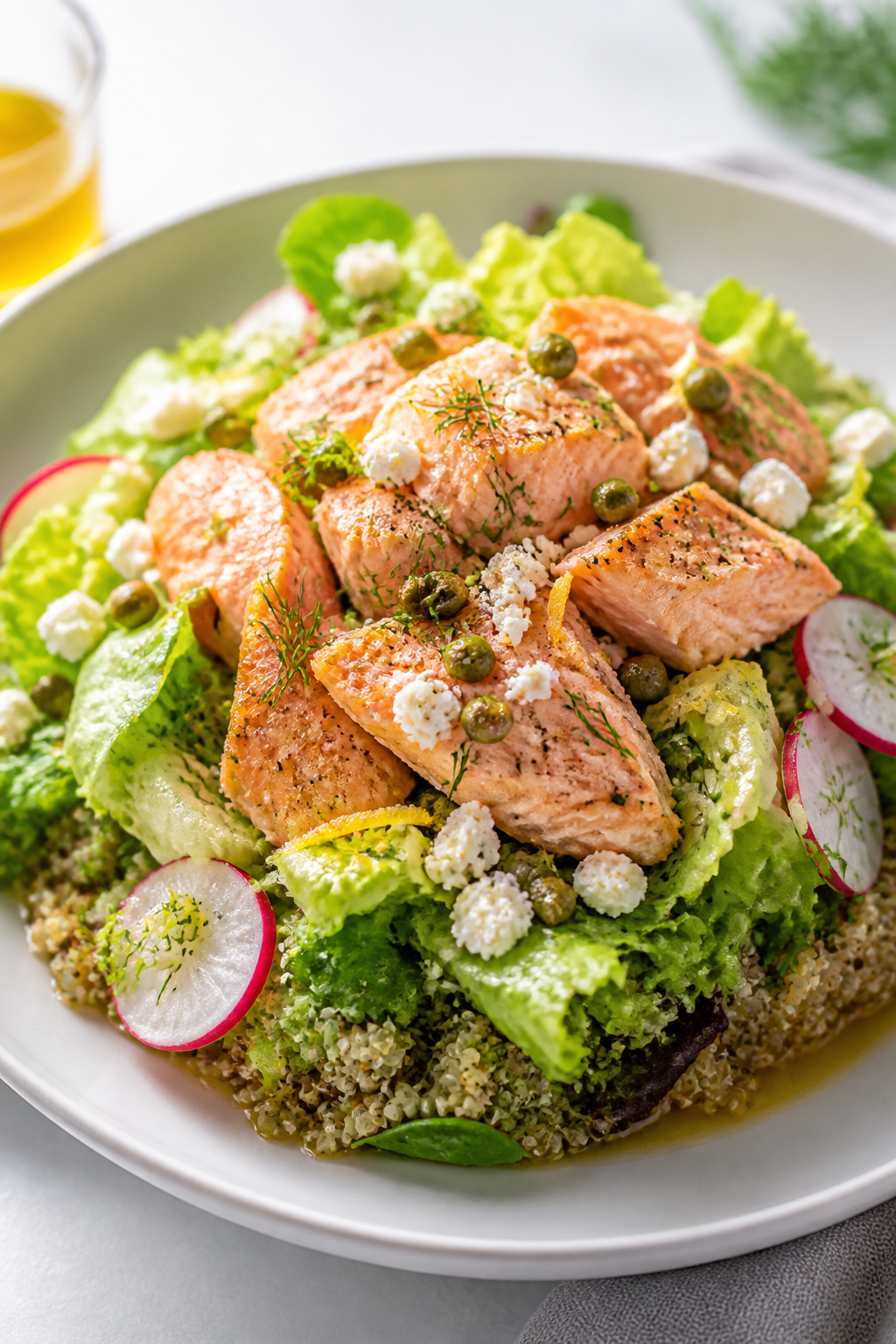
- Optional upgrade. Add a scoop of warm quinoa or farro under the greens for a heartier bowl, or sprinkle on feta for a salty pop.
Why This Recipe Works
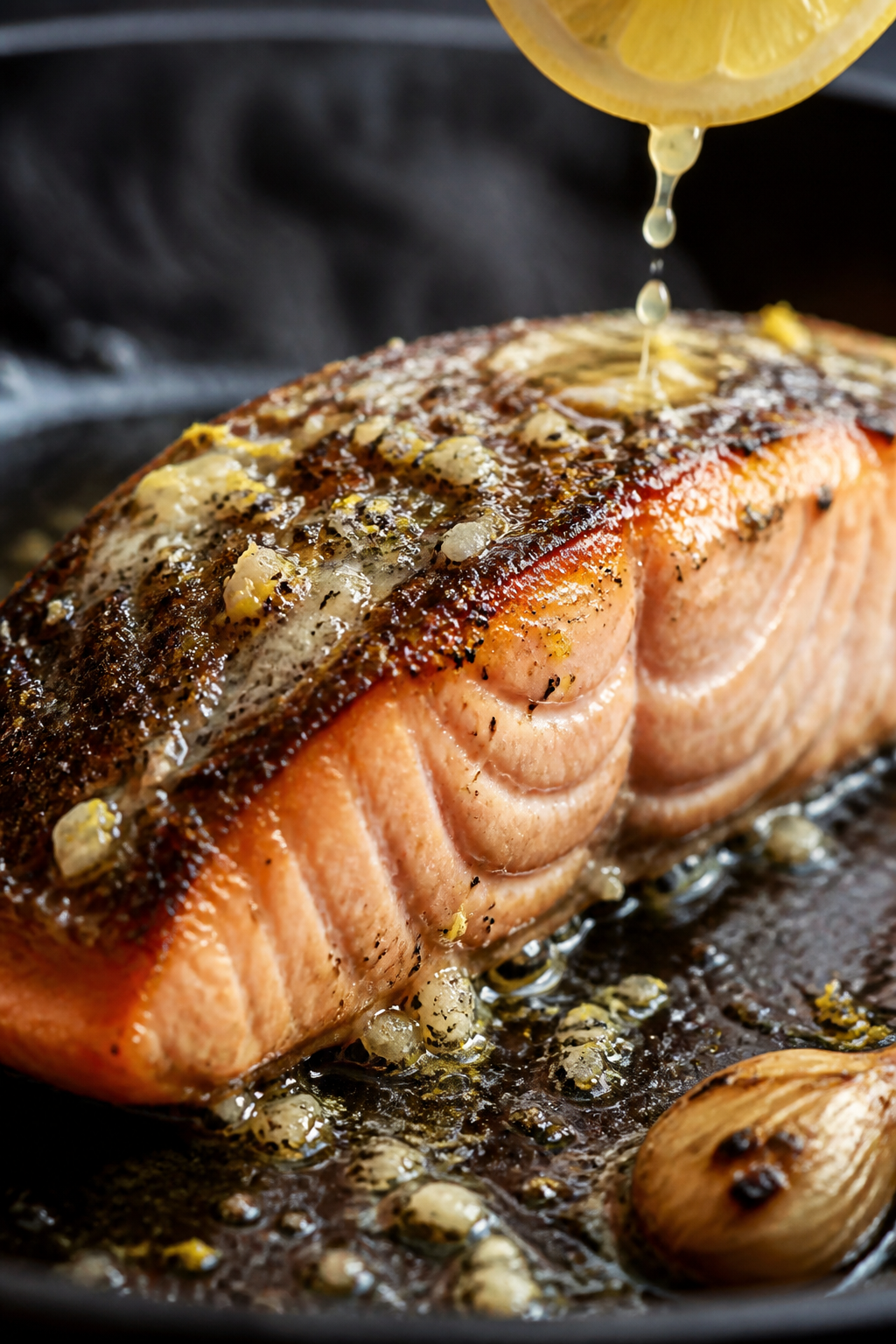
Simple ingredients do the heavy lifting here. Lemon brightens the salmon and cuts through its richness, while garlic adds depth without overpowering.
A crisp base—like romaine or mixed greens—stays sturdy under a warm fillet. The dressing echoes the marinade, so every bite tastes cohesive. Add texture with cucumber, radish, and nuts, and you’ve got balance in flavor, crunch, and creaminess.
What You’ll Need
- Salmon: 1 to 1.25 pounds skin-on salmon fillets (4 small or 2 large pieces)
- Lemon: Zest and juice of 1 large lemon
- Garlic: 2–3 cloves, finely minced
- Olive oil: 3 tablespoons, divided
- Dijon mustard: 1 teaspoon (for dressing)
- Honey or maple syrup: 1–2 teaspoons (to balance acidity)
- Greens: 6–8 cups romaine, baby spinach, or spring mix
- Cucumber: 1 small, thinly sliced
- Cherry tomatoes: 1 cup, halved
- Avocado: 1 large, sliced or diced
- Red onion: 1/4 small, thinly sliced
- Fresh herbs: 1/4 cup chopped dill, parsley, or a mix
- Crunch: 1/4 cup toasted almonds, pistachios, or pumpkin seeds
- Salt and pepper: To taste
- Optional add-ins: Cooked quinoa, farro, or brown rice; feta or goat cheese; capers
How to Make It
- Prep the salmon. Pat the fillets dry with paper towels.
Season both sides with salt and pepper. Dry fish browns better and tastes cleaner.
- Make a quick marinade. In a small bowl, combine lemon zest, half the lemon juice, 1 tablespoon olive oil, and minced garlic. Brush over the salmon and let it sit 10–15 minutes while you prep the salad.
Don’t marinate too long or the acid can start to “cook” the fish.
- Whisk the dressing. In a jar or bowl, whisk remaining lemon juice, 2 tablespoons olive oil, Dijon, honey, a pinch of salt, and black pepper. Taste and adjust—add more honey for balance or more lemon for brightness.
- Assemble the salad base. In a large bowl, combine greens, cucumber, tomatoes, red onion, and herbs. Drizzle with half the dressing and toss gently to coat.
Save the rest for finishing.
- Cook the salmon—stovetop method. Heat a nonstick or cast-iron skillet over medium-high. Add a thin film of oil. Place salmon skin-side down and cook 4–5 minutes until the skin is crisp and the color turns opaque halfway up the sides.
Flip and cook 2–3 more minutes, depending on thickness. Aim for medium, about 125–130°F internal.
- Or cook in the oven. Heat the oven to 400°F (200°C). Place salmon on a lined sheet pan, skin-side down.
Bake 10–12 minutes, until just opaque and flaky.
- Rest and flake. Let the salmon rest 3 minutes. Remove skin if you prefer, then flake into large pieces with a fork. Keep them chunky for a better bite.
- Build the bowls. Divide the dressed greens among bowls.
Top with salmon, avocado, and nuts. Spoon over more dressing. Finish with extra dill, a squeeze of lemon, and a crack of black pepper.
- Optional upgrade. Add a scoop of warm quinoa or farro under the greens for a heartier bowl, or sprinkle on feta for a salty pop.
How to Store
Store components separately for the best texture.
Keep the salmon in an airtight container in the fridge for up to 3 days. The dressing will hold for 1 week. Washed and dried greens can last 3–4 days if wrapped in paper towels.
If packing lunches, keep the dressing and avocado separate until serving.
Reheat salmon gently in a skillet over low heat or enjoy it cold. Avoid microwaving too long, which can dry it out.
Why This Is Good for You
Salmon is rich in omega-3 fats, which support heart and brain health. Lean protein helps keep you full without feeling heavy.
Leafy greens bring fiber, vitamin K, and folate. Colorful veggies add antioxidants, and avocado provides monounsaturated fats for steady energy.
The dressing uses olive oil instead of heavy, creamy bases, so you get flavor with a lighter touch. A sprinkle of nuts adds crunch along with magnesium and vitamin E.
Pitfalls to Watch Out For
- Overcooking the salmon: Dry fish is the fastest way to ruin the bowl.
Pull it off heat when it’s just turning opaque and flakes easily.
- Watery greens: If you don’t dry your lettuce well, the dressing won’t cling. Spin or pat greens dry before tossing.
- Over-marinating: Lemon juice can toughen the surface of the fish if left too long. Keep it under 20 minutes.
- Under-seasoning: Salt in layers—fish, salad, and dressing each need a little to shine.
- Mushy avocado: Add avocado at the end and season it lightly with salt and lemon to keep it bright.
Alternatives
- Protein swaps: Try shrimp, chicken, or canned salmon or tuna for convenience.
- Greens: Use kale (massage with a bit of olive oil and salt), arugula for peppery bite, or a romaine-spinach mix.
- Grains: Quinoa, farro, bulgur, or brown rice turn this into a more filling bowl.
- Dairy: Feta, goat cheese, or shaved Parmesan add creaminess and tang.
- No nuts? Use roasted chickpeas or sunflower seeds for crunch.
- Dressing twist: Add a spoon of yogurt for creaminess, or swap honey for maple to keep it refined-sugar free.
- Herbs: Dill is classic with salmon, but parsley, basil, or chives all work.
FAQ
Can I use frozen salmon?
Never wonder what's for dinner again.
Get 7 healthy, family-friendly dinners complete with recipes, grocery lists, and simple meal plans delivered straight to your inbox.
Yes.
Thaw it overnight in the fridge, then pat very dry before marinating. Frozen fillets can release extra moisture, so give them a good sear on the first side to help brown the surface.
What if I don’t like raw onion?
Soak sliced red onion in cold water for 10 minutes to mellow the bite, or swap in thinly sliced scallions or pickled onions for a gentler flavor.
How do I know when the salmon is done?
Look for opaque flesh that flakes with a fork and an internal temperature around 125–130°F for medium. If you prefer it more done, go to 135°F, but be careful not to overshoot.
Can I meal prep this?
Absolutely.
Prep the greens, slice veggies (save avocado for serving), cook the salmon, and make the dressing. Store separately and assemble in 2–3 minutes when you’re ready to eat.
Is there a dairy-free option?
Yes, the base recipe is dairy-free. If you add cheese, simply skip it to keep the bowl dairy-free.
What pan is best for cooking the salmon?
Cast iron gives the best sear, but a nonstick skillet makes flipping easier.
If you’re worried about sticking, start with a nonstick until you’re comfortable.
Can I grill the salmon?
Yes. Oil the grates well and grill over medium-high heat for 3–4 minutes per side, depending on thickness. A grilling basket or foil can help prevent sticking.
How do I keep the dressing from separating?
Whisk vigorously or shake in a jar.
A touch of Dijon acts as an emulsifier so it stays blended longer. If it separates, just shake again before using.
What can I use instead of honey?
Maple syrup or a pinch of sugar both work. The sweetness balances the lemon and rounds out the dressing.
Can I make it spicy?
Yes.
Add red pepper flakes to the dressing or finish with a drizzle of chili crisp or a few slices of fresh chili.
Final Thoughts
Lemon Garlic Salmon Salad Bowls hit that sweet spot of simple, fresh, and deeply satisfying. With a short ingredient list and easy methods, they’re weeknight-friendly but polished enough for guests. Keep the components flexible and season with confidence.
Once you make it once, you’ll have a new go-to that’s as good cold from the fridge as it is right off the stove. Bright, clean, and full of texture—this is a bowl you’ll crave on repeat.
Printable Recipe Card
Want just the essential recipe details without scrolling through the article? Get our printable recipe card with just the ingredients and instructions.
Loved This Recipe?
If you're looking for more simple, healthy dinners your family will actually eat, grab my FREE 7-Day Easy Dinner Reset. You'll get 7 easy dinner recipes, simple grocery lists, and a done-for-you plan that takes the stress out of mealtime.