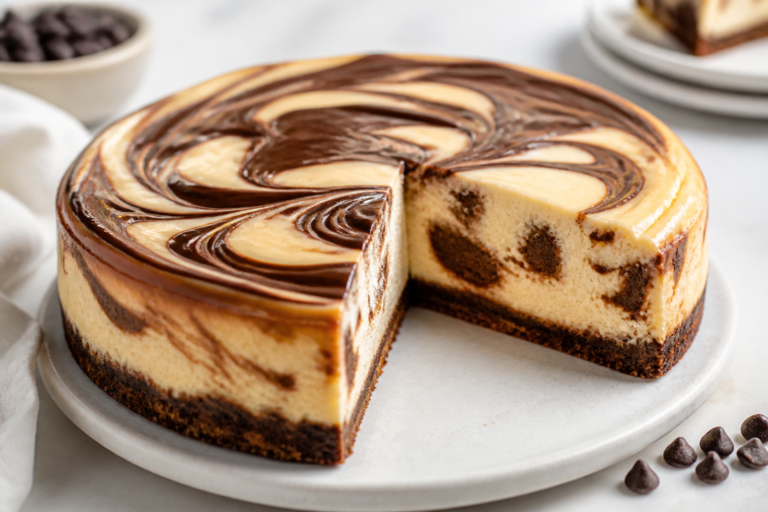
High Protein Butterfinger Cheesecake – A Lighter Take on a Candy Bar Favorite
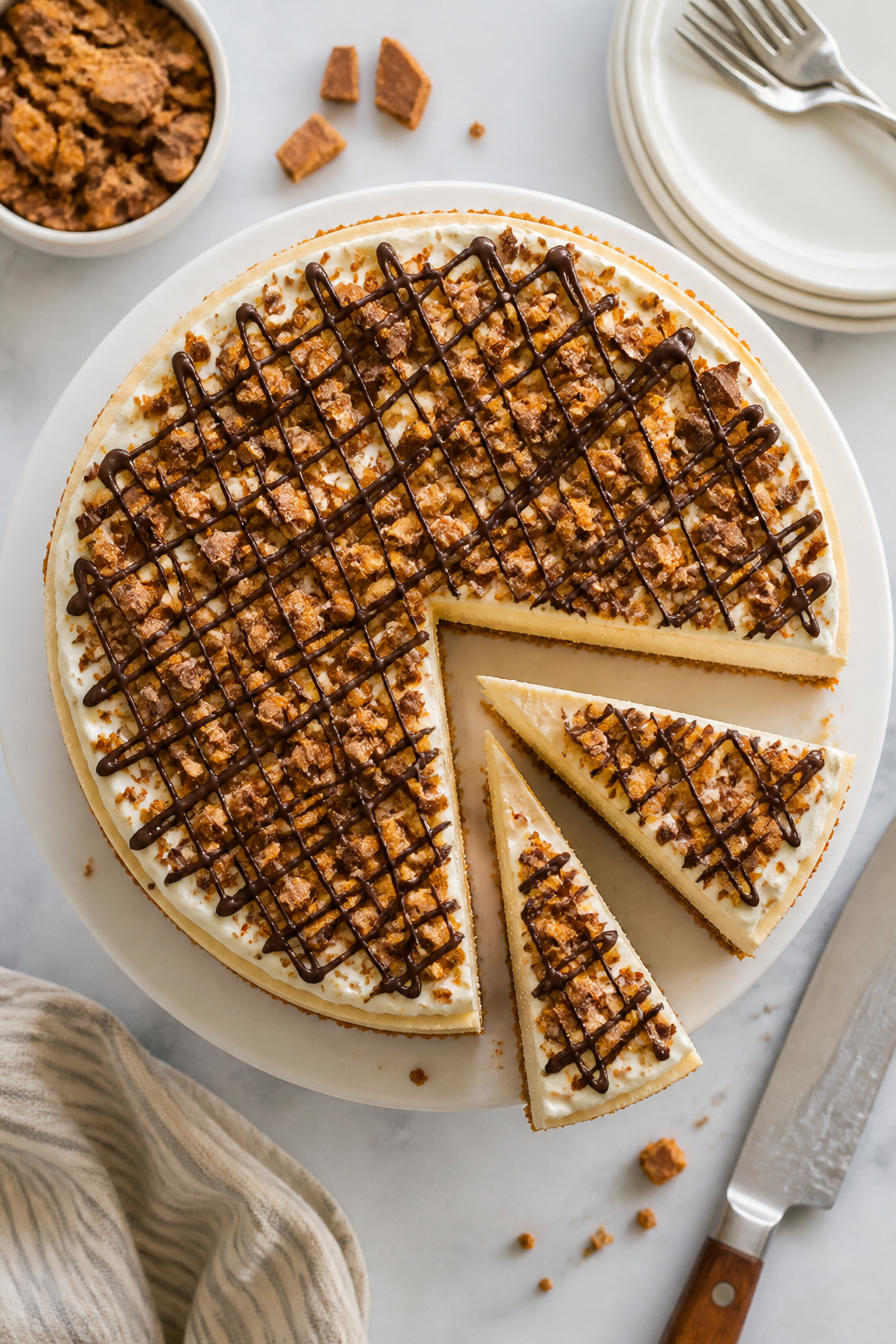
If you love Butterfinger bars and creamy cheesecake, this recipe gives you the best of both without sending your macros off the rails. It’s rich, fluffy, and full of that peanutty, crunchy candy flavor, yet packed with protein to keep you satisfied. The texture is smooth and velvety, with a crunchy crust that holds up well.
Stop wondering what's for dinner.
Get 7 healthy, family-friendly dinners complete with recipes and simple meal plans delivered straight to your inbox.
You don’t need fancy equipment or a water bath—just a mixing bowl, a pan, and some patience while it chills.
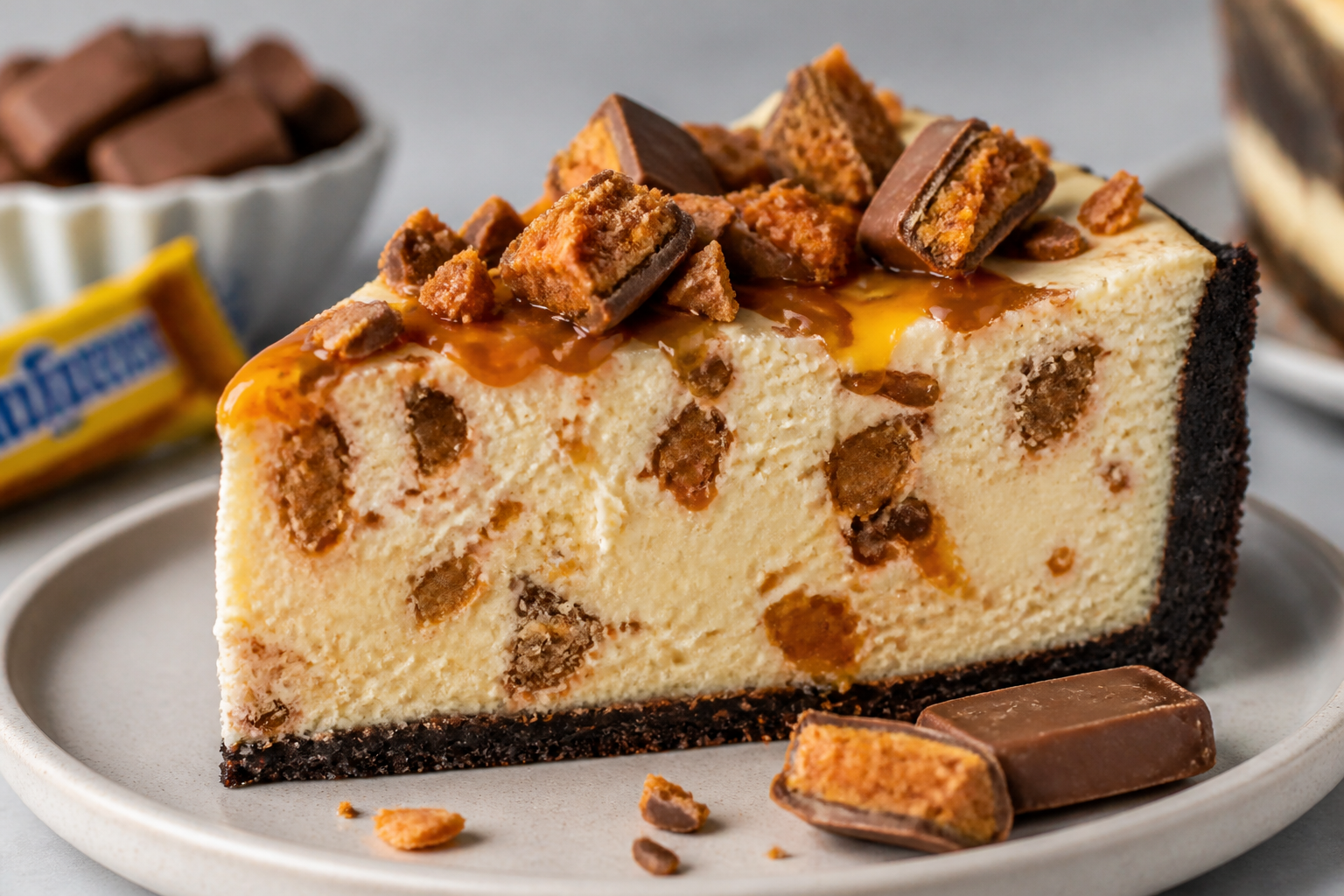
High Protein Butterfinger Cheesecake - A Lighter Take on a Candy Bar Favorite
Ingredients
Method
- Prep the pan. Lightly grease a 9-inch springform pan. Line the bottom with parchment if you have it. Preheat the oven to 325°F (165°C). Place the pan on a foil-lined baking sheet.
- Make the crust. In a bowl, mix graham crumbs, peanut butter powder, brown sugar, and salt. Stir in melted butter. Add milk 1 tablespoon at a time until the mixture holds together when pressed.
- Press and pre-bake. Firmly press the crust into the bottom of the pan and slightly up the sides. Bake for 8–10 minutes until fragrant. Cool for 5 minutes while you make the filling.
- Beat the cream cheese. In a large bowl, beat light cream cheese on medium speed until smooth and lump-free, about 1–2 minutes. Scrape the bowl.
- Add yogurt and sweetener. Mix in Greek yogurt, granulated sweetener, vanilla, and salt. Beat just until combined.
- Incorporate protein and starch. Sprinkle in the protein powder and cornstarch. Mix on low until smooth. Avoid overbeating to keep air bubbles minimal.
- Add eggs. Beat in eggs one at a time on low speed, just until incorporated. Scrape the bowl once more.
- Fold in Butterfinger. Gently fold in 1/2 cup finely chopped Butterfinger. Reserve larger chunks for topping.
- Fill and smooth. Pour the batter over the crust and smooth the top with a spatula. Tap the pan lightly on the counter to release air bubbles.
- Bake. Bake at 325°F for 40–50 minutes. The edges should be set, and the center should jiggle slightly like Jell-O. If it browns too fast, tent loosely with foil.
- Cool gradually. Turn off the oven, crack the door, and let the cheesecake rest inside for 30 minutes. Move to the counter and cool to room temperature, about 1 hour.
- Chill. Cover and refrigerate for at least 4–6 hours, preferably overnight. This firms up the protein-based filling for clean slices.
- Make the topping. Stir Greek yogurt with powdered sweetener and vanilla until smooth. Spread a thin layer over the chilled cheesecake.
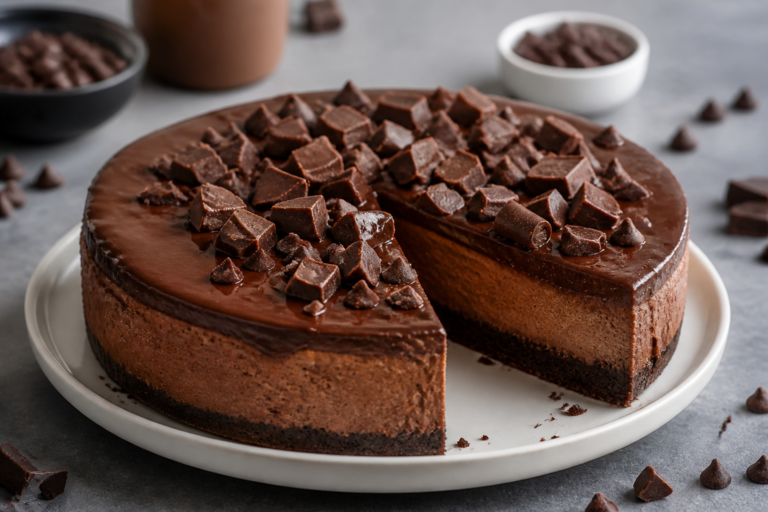
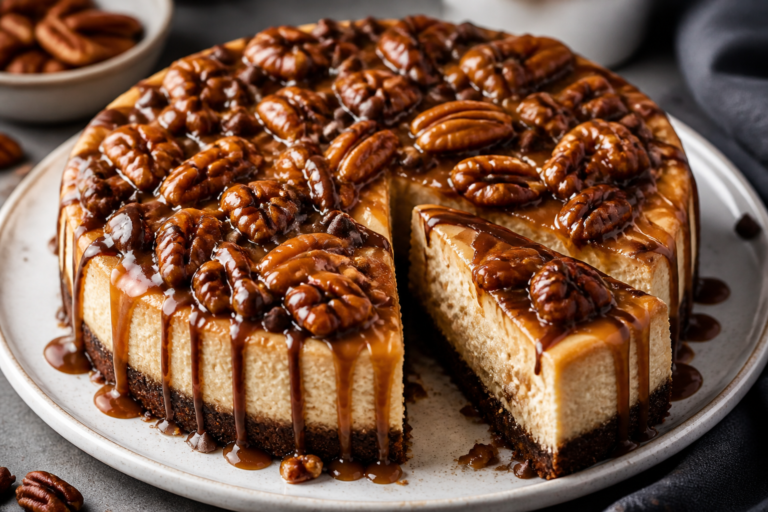
- Garnish and serve. Sprinkle with chopped Butterfinger and drizzle melted peanut butter or chocolate syrup if you like. Slice with a warm, clean knife for neat edges.
Why This Recipe Works
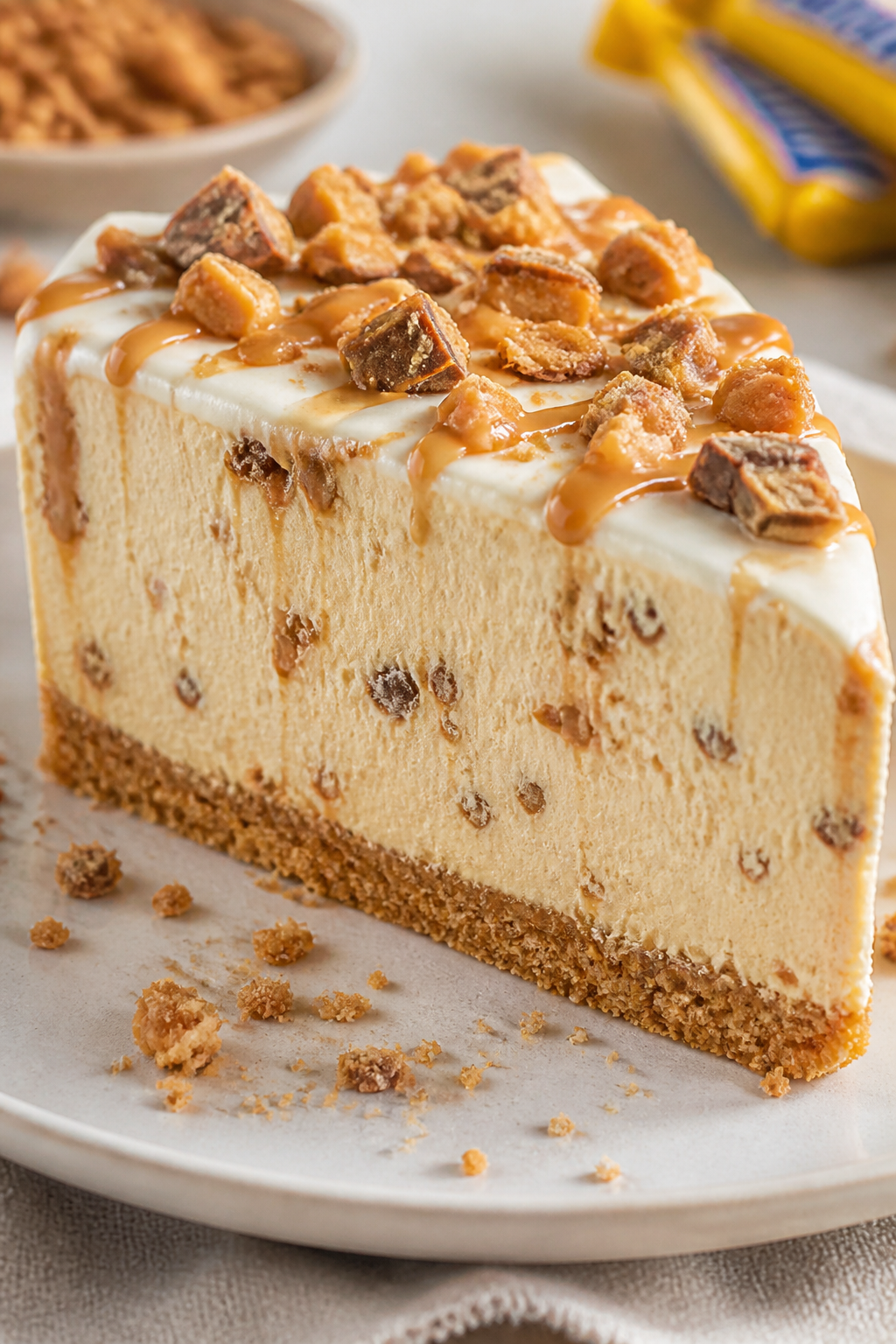
This cheesecake blends light cream cheese and Greek yogurt to create a creamy filling without the heaviness. A dose of vanilla whey or casein protein adds body and sweetness while boosting protein. The crust uses graham crumbs and peanut butter powder for a toasty, Butterfinger-like base that stays crisp.
Chopped Butterfinger pieces are folded in and sprinkled on top for the signature flavor and crunch. The result is balanced: indulgent taste, lighter macros, and no fussy baking methods.
What You’ll Need
- Crust
- 1 1/2 cups graham cracker crumbs (or digestive biscuit crumbs)
- 1/4 cup peanut butter powder (like PB2)
- 2 tablespoons light brown sugar
- 4 tablespoons unsalted butter, melted
- 1–2 tablespoons milk, as needed to moisten
- Pinch of salt
- Filling
- 16 ounces light cream cheese, room temperature
- 1 1/2 cups nonfat or 2% plain Greek yogurt
- 3 large eggs, room temperature
- 1/2 cup granulated sweetener of choice (sugar or a baking-friendly zero-calorie blend)
- 2/3 cup vanilla whey or casein protein powder
- 2 teaspoons vanilla extract
- 1/4 teaspoon salt
- 2 tablespoons cornstarch or vanilla pudding mix (for stability)
- 1/2 cup finely chopped Butterfinger candy bars (about 2 fun-size bars)
- Topping
- 1/2 cup plain Greek yogurt
- 1–2 tablespoons powdered sugar or sweetener
- 1/2 teaspoon vanilla extract
- 1/2–3/4 cup chopped Butterfinger for garnish
- Optional drizzle: 2 tablespoons melted peanut butter or sugar-free chocolate syrup
- Tools
- 9-inch springform pan (or 8-inch for a taller cheesecake)
- Mixing bowls and hand mixer (or stand mixer)
- Rubber spatula
- Foil-lined baking sheet (to catch any drips)
Instructions
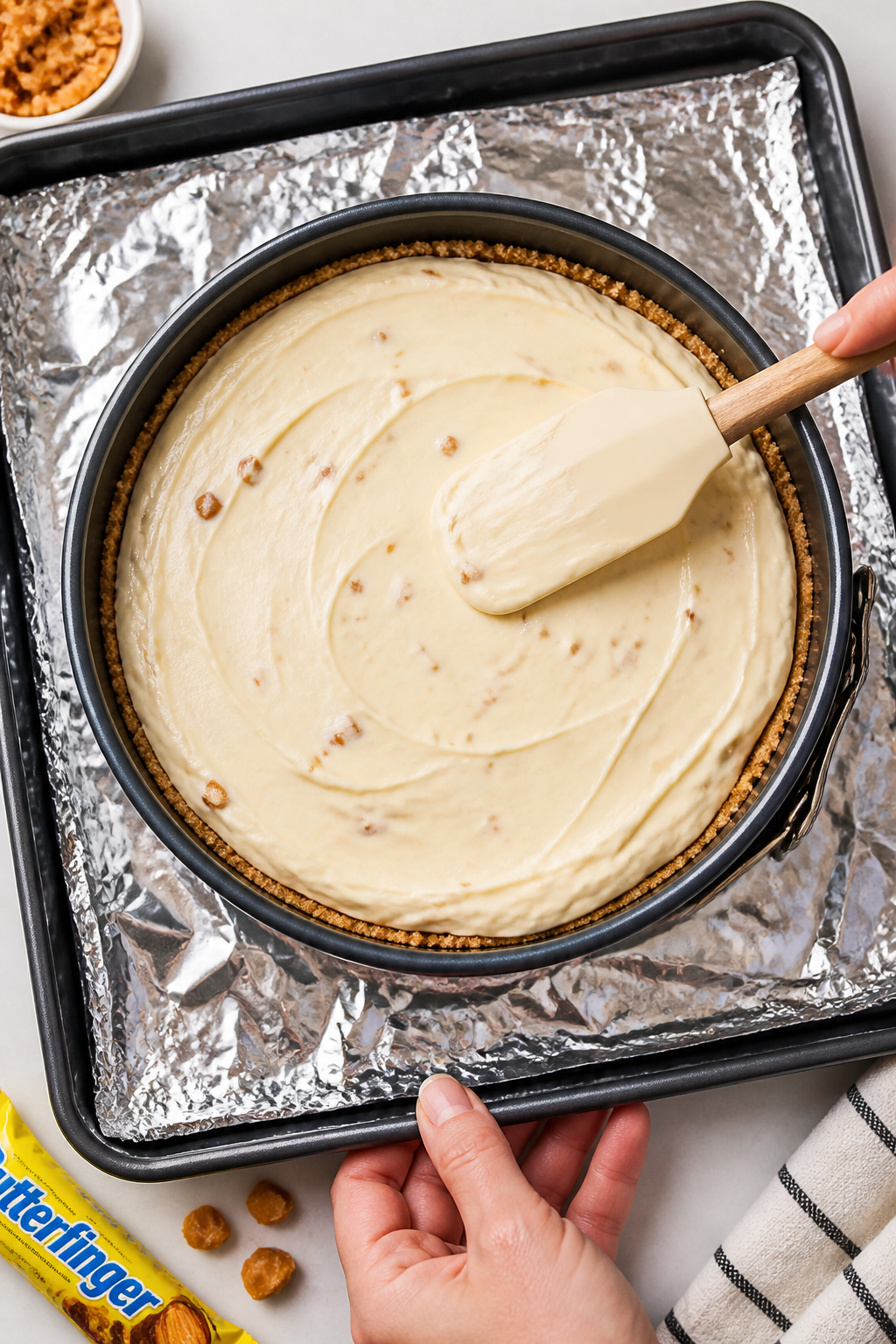
- Prep the pan. Lightly grease a 9-inch springform pan. Line the bottom with parchment if you have it.
Preheat the oven to 325°F (165°C). Place the pan on a foil-lined baking sheet.
- Make the crust. In a bowl, mix graham crumbs, peanut butter powder, brown sugar, and salt. Stir in melted butter.
Add milk 1 tablespoon at a time until the mixture holds together when pressed.
- Press and pre-bake. Firmly press the crust into the bottom of the pan and slightly up the sides. Bake for 8–10 minutes until fragrant. Cool for 5 minutes while you make the filling.
- Beat the cream cheese. In a large bowl, beat light cream cheese on medium speed until smooth and lump-free, about 1–2 minutes.
Scrape the bowl.
- Add yogurt and sweetener. Mix in Greek yogurt, granulated sweetener, vanilla, and salt. Beat just until combined.
- Incorporate protein and starch. Sprinkle in the protein powder and cornstarch. Mix on low until smooth.
Avoid overbeating to keep air bubbles minimal.
- Add eggs. Beat in eggs one at a time on low speed, just until incorporated. Scrape the bowl once more.
- Fold in Butterfinger. Gently fold in 1/2 cup finely chopped Butterfinger. Reserve larger chunks for topping.
- Fill and smooth. Pour the batter over the crust and smooth the top with a spatula.
Tap the pan lightly on the counter to release air bubbles.
- Bake. Bake at 325°F for 40–50 minutes. The edges should be set, and the center should jiggle slightly like Jell-O. If it browns too fast, tent loosely with foil.
- Cool gradually. Turn off the oven, crack the door, and let the cheesecake rest inside for 30 minutes.
Move to the counter and cool to room temperature, about 1 hour.
- Chill. Cover and refrigerate for at least 4–6 hours, preferably overnight. This firms up the protein-based filling for clean slices.
- Make the topping. Stir Greek yogurt with powdered sweetener and vanilla until smooth. Spread a thin layer over the chilled cheesecake.
- Garnish and serve. Sprinkle with chopped Butterfinger and drizzle melted peanut butter or chocolate syrup if you like.
Slice with a warm, clean knife for neat edges.
Storage Instructions
- Refrigerator: Store covered for up to 5 days. Keep toppings separate until serving to preserve crunch.
- Freezer: Freeze slices without the yogurt topping for up to 2 months. Wrap tightly in plastic and foil.
Thaw overnight in the fridge.
- Meal prep tip: Portion into individual containers. Add the Butterfinger garnish right before eating to maintain texture.
Benefits of This Recipe
- High protein: Protein powder, Greek yogurt, and light cream cheese deliver staying power and help curb cravings.
- Lighter macros: Using light dairy and peanut butter powder keeps calories and fat in check without losing flavor.
- No water bath: The lower-temp bake and gradual cooling reduce cracks with less hassle.
- Balanced sweetness: The candy adds indulgence, while the filling stays clean and not overly sweet.
- Great texture: Silky, creamy center with a crisp, nutty crust and crunchy candy on top.
What Not to Do
- Don’t overmix the batter. Too much air can cause cracks and a spongy texture.
- Don’t skip room-temperature dairy. Cold cream cheese forms lumps and mixes poorly with protein powder.
- Don’t overbake. Pull it when the center still jiggles. Overbaking leads to dryness and a rubbery bite.
- Don’t add the candy too early on top. Wait until after chilling; otherwise it can melt or get soggy.
- Don’t slice warm. Warm cheesecake won’t set properly and will smear.
Alternatives
- Protein options: Casein creates a thicker, custardy texture; whey stays lighter.
A 50/50 blend works well. Use an unflavored or lightly sweet vanilla for best taste.
- Sweetener swaps: Use regular sugar, allulose, or a baking blend. Avoid straight stevia drops—they can taste bitter in baked dairy.
- Crust variations: Try chocolate wafer crumbs, crushed cornflakes with a bit of cocoa, or a gluten-free graham alternative.
- Dairy-free route: Use dairy-free cream cheese and thick coconut yogurt, plus a plant-based protein like soy or pea.
Texture will be slightly denser.
- Candy substitutes: If Butterfinger isn’t available, use peanut brittle shards, toffee bits mixed with crushed cornflakes, or chopped peanut-stuffed chocolate.
- Mini cheesecakes: Bake in a lined muffin tin for 16–20 minutes. Great for portion control and quick chilling.
Never wonder what's for dinner again.
Get 7 healthy, family-friendly dinners complete with recipes, grocery lists, and simple meal plans delivered straight to your inbox.
FAQ
How do I prevent cracks without a water bath?
Use room-temperature ingredients, avoid overmixing, bake at 325°F, and let the cheesecake cool gradually in the oven with the door cracked. Finish with a thin yogurt topping to hide minor surface lines and add creaminess.
Can I make this no-bake?
Yes.
Skip the eggs. Use 12 ounces light cream cheese, 2 cups Greek yogurt, 1 cup vanilla protein, 1/2 cup sweetener, 2 teaspoons vanilla, and 2 teaspoons gelatin bloomed in 3 tablespoons cold water then melted. Chill 6–8 hours.
The texture will be lighter and mousse-like.
What if I only have chocolate protein powder?
It works. Reduce the sweetener slightly and add 1/2 teaspoon extra vanilla. Expect a chocolate-peanut vibe, which pairs nicely with Butterfinger.
Can I cut calories further?
Use nonfat Greek yogurt, stick with light cream cheese, and scale the candy garnish to 1/4 cup.
You can also replace part of the crust with crushed high-fiber cereal to reduce fat.
Why add cornstarch or pudding mix?
It stabilizes the protein-rich batter, helps it set cleanly, and creates a creamier bite. Without it, the texture can weep or feel slightly grainy once chilled.
How do I get clean slices?
Fully chill the cheesecake, then use a long, sharp knife dipped in hot water and wiped dry between cuts. Don’t rush—cleaning the blade each time keeps edges sharp.
Can I make it ahead?
Absolutely.
Cheesecake tastes best the next day. Bake, chill overnight, and add the yogurt topping and candy right before serving.
Is this suitable for gluten-free diets?
Use certified gluten-free graham crumbs and confirm your protein powder and candy are gluten-free. The rest of the ingredients are typically safe, but always check labels.
Final Thoughts
This High Protein Butterfinger Cheesecake brings candy-bar comfort with a lighter, macro-friendly twist.
It’s creamy, satisfying, and easy enough for a weeknight project yet special enough for guests. Follow the simple cues—gentle mixing, low heat, and a patient chill—and you’ll get bakery-worthy results at home. Keep a few slices in the freezer for a high-protein treat whenever the craving hits.
Printable Recipe Card
Want just the essential recipe details without scrolling through the article? Get our printable recipe card with just the ingredients and instructions.
Loved This Recipe?
If you're looking for more simple, healthy dinners your family will actually eat, grab my FREE 7-Day Easy Dinner Reset. You'll get 7 easy dinner recipes, simple grocery lists, and a done-for-you plan that takes the stress out of mealtime.